
REVIEW · WALKING TOURS
Copenhagen: A guided walk for first-timers in the city
Copenhagen makes sense in two hours. This guided walk for first-timers strings together the city’s big sights with an English expert and nonstop context, starting at Copenhagen City Hall.
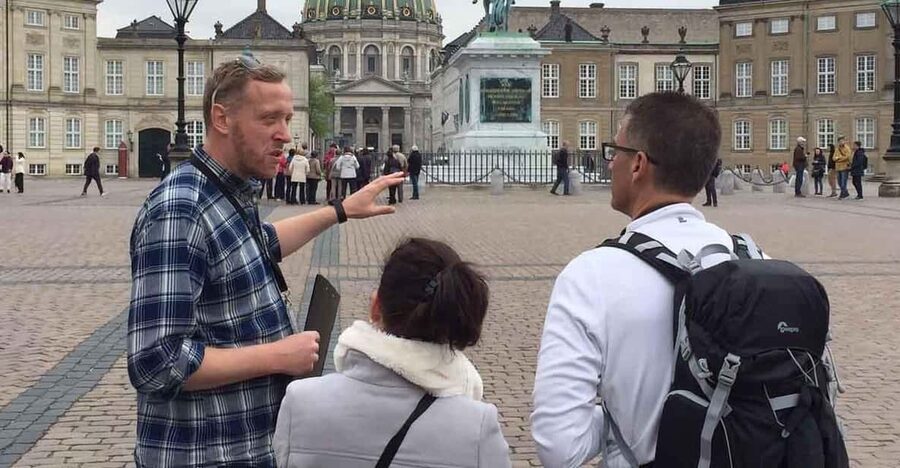
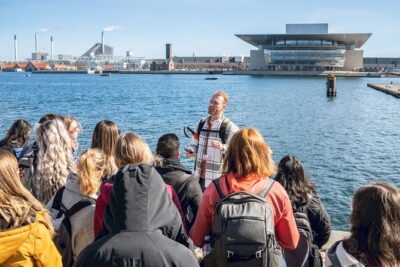
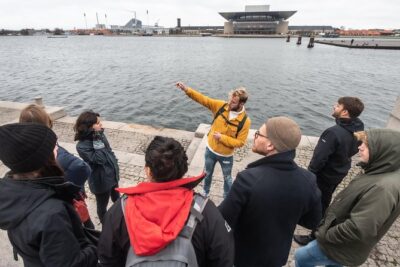
I especially like the small group size and the headset setup, which makes it easy to hear the guide even on busy streets. You also get real backstory, like why Copenhagen leans so hard into bicycles and how the city rose to dominance in the Middle Ages.
One possible drawback to plan around is the walk-first format. It covers about 3 kilometers (1.8 miles) and does not include entering any attractions, so if you were hoping for museums or long inside visits, this may feel lighter than expected.
In This Review
- Quick Take
- A Two-Hour Walk That Gets You Oriented Fast
- Headsets, Small Groups, and the Comfort of Asking Questions
- Price and Value: What You Get for $46
- Starting at the Andersen Statue: A Familiar Door Into City Stories
- City Hall and the Civic Heart of Copenhagen
- Christiansborg Palace: Where Past Power Meets Present Function
- Biskop Absalon, Børsen, and the City’s Old-Energy Corners
- Church of Holmen and Christian IV’s Brewhouse: Small Stops, Big Context
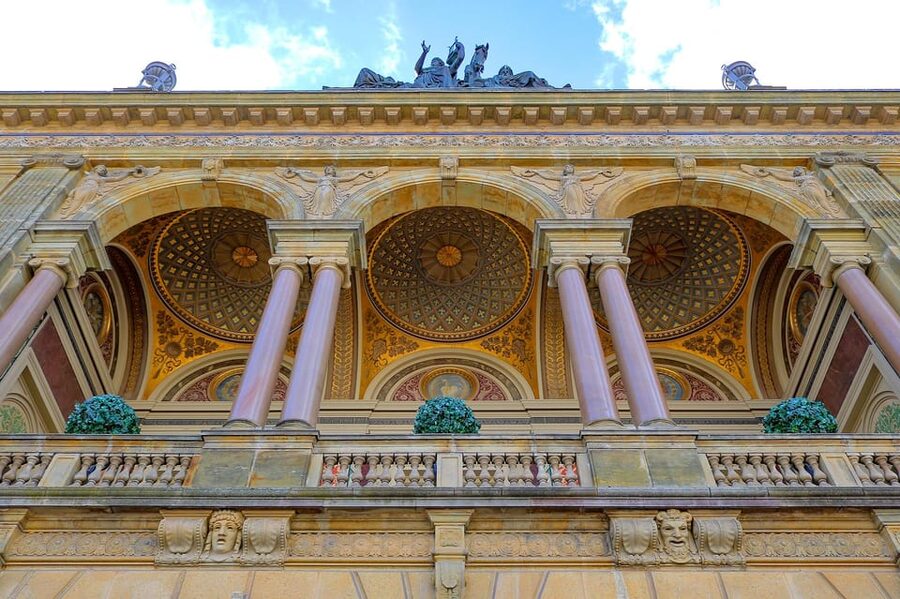
- The Black Diamond, King’s New Square, and the Royal Danish Theatre
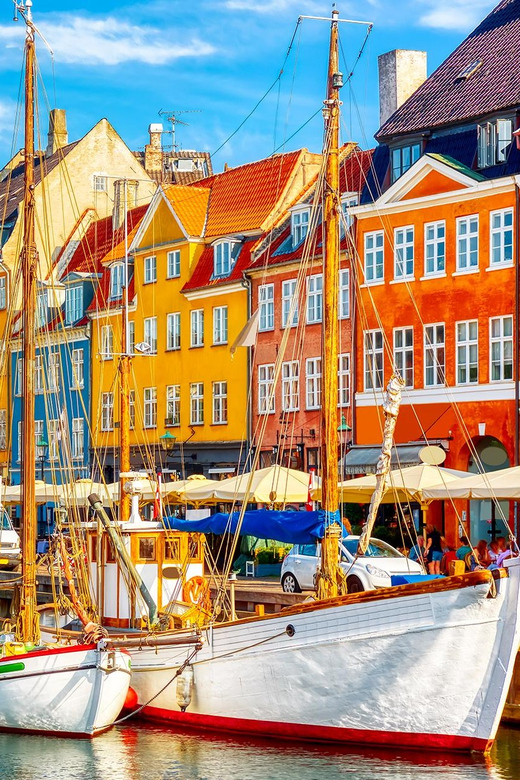
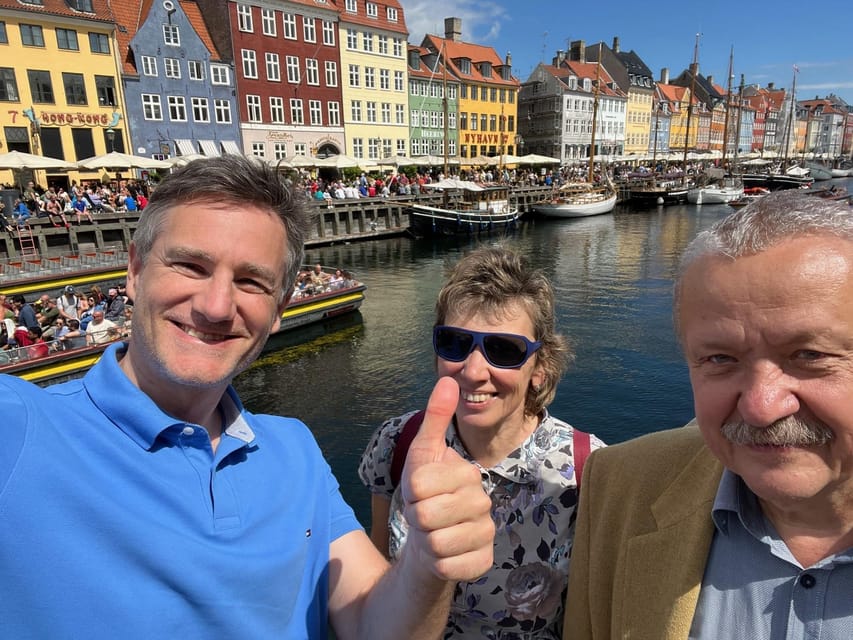
- Nyhavn and Amalienborg: Finishing Near the Most Convenient Next Steps
- How the 3 Kilometers Actually Feel in Real Life
- Who This Walk Is Best For
- Should You Book This Guided Walk?
- FAQ
- How long is the Copenhagen guided walk for first-timers?
- How far do you walk during the tour?
- Where does the tour start?
- What sights does the tour include?
- Is the tour in English?
- How large is the group?
- Is this tour suitable for wheelchair users?
- What do I get after the walk?
Quick Take
- Headsets that keep you in the conversation so you do not miss the guide’s explanations
- Small-group pacing with a cap that’s usually around 10 participants (and no more than 16 in the broader listing)
- A 3 kilometer route built to get you oriented fast in central Copenhagen
- Story themes that travel beyond postcards, including bikes and the Middle Ages
- A map and suggested follow-up routes after the walk, so you can keep exploring on your own
- Ends near the royal zone at Amalienborg, a natural anchor for continuing your day
A Two-Hour Walk That Gets You Oriented Fast
Copenhagen is the kind of city where you want your first day to feel easy, not like a scavenger hunt. This walk is designed for that moment when you step off the plane, look around, and think, Okay, where do I even begin?
The big value is that the route focuses on central landmarks and the connective tissue between them. In just two hours, you cover roughly 3 kilometers (about 1.8 miles) and get a clear sense of the city’s layout, neighborhoods, and mood. You are not just moving from photo spot to photo spot. You’re learning how the city works, including the practical “why” behind what you’re seeing.
More of Copenhagen, reviewed one tour at a time
- Copenhagen: Canal Cruise with Guide
★ 4.6 · 9,115 reviews - Copenhagen: Hop-On Hop-Off Bus Tour with Boat Tour Option
★ 3.9 · 4,122 reviews - Private Walking Grand Tour of Copenhagen
★ 5.0 · 3,953 reviews - From Copenhagen: Lund and Malmö 2-Country Tour
★ 4.7 · 2,772 reviews
Headsets, Small Groups, and the Comfort of Asking Questions
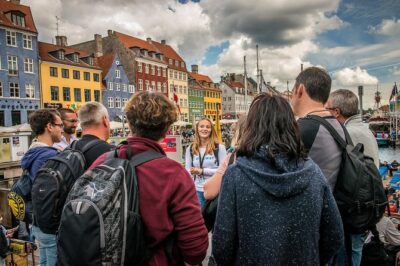
This tour has a smart detail that matters more than you might think: headsets. With them, you can keep walking and still hear the guide clearly at all times. In a city like Copenhagen, where streets can get noisy and you often end up side-by-side with other pedestrians, this turns the tour into something close to a guided conversation.
The other comfort feature is the group size. It’s kept small, limited to 10 participants in the description, with a maximum of 16 noted in the broader listing. That small size usually means you can ask questions without feeling like you’re competing for attention.
The guide is also positioned as a genuine Q and A resource. If you want to understand why the city is so bike-friendly, how the historic city grew, or what you should do next after the walk, you’re not stuck guessing.
Price and Value: What You Get for $46
At $46 per person for a 2-hour walk, you’re not paying for entrance tickets. You’re paying for time with a guide plus the “infrastructure” that makes it workable, including the headsets and a map after the walk.
That trade-off is worth it if your goal is orientation and stories, not museum hours. The walk is built to help you start exploring immediately. Afterward, the guide gives you a Copenhagen map and suggests routes depending on what you want next, whether that means heading back toward your hotel or pivoting to a canal cruise and a drink in Nyhavn.
If you’re the type who likes to read a plaque, snap a photo, and move on fast, this might feel like more than you need. But if you want context for what you’re seeing, and you value not having to plan an efficient first loop, the price starts to make sense.
Starting at the Andersen Statue: A Familiar Door Into City Stories
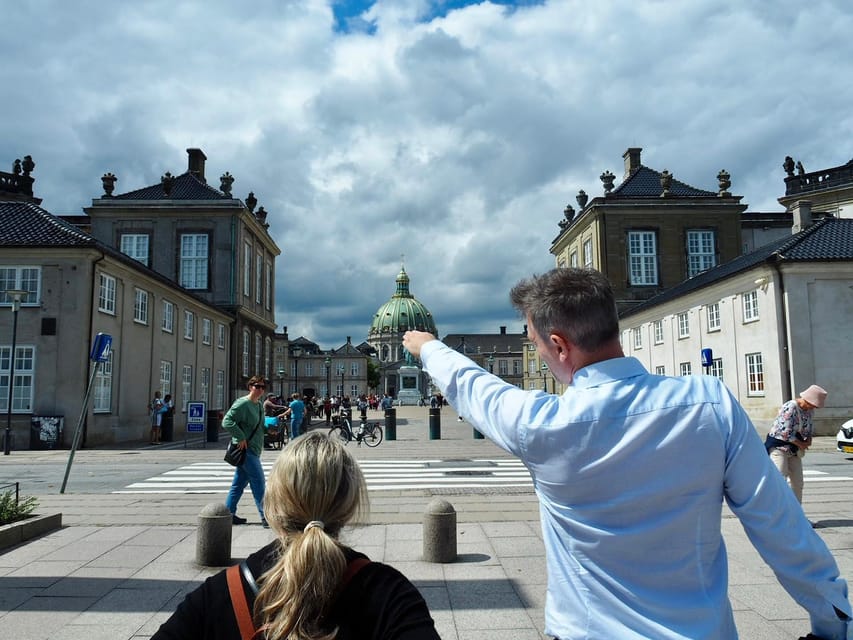
The meeting point is the Andersen statue, and that matters because it sets the tone right away. Instead of starting at a random transit hub or a ticket office, you begin at a landmark that signals Copenhagen’s identity and its storytelling tradition.
From there, the route clicks into the civic core quickly. You are not wandering. You’re getting guided positioning, so the stops feel connected rather than scattered. For first-timers, that connection is what keeps the day feeling coherent.
More Danish towns covered on foot
- Private Walking Grand Tour of Copenhagen★ 5.0 · 3,953 reviews
- Copenhagen Highlights Walking Tour★ 5.0 · 2,324 reviews
- Politically Incorrect Private Highlights Walking Tour★ 5.0 · 1,244 reviews
- Copenhagen: Group Walking Tour – City Highlights – 2 Hours★ 4.7 · 1,088 reviews
- 3h walking tour, small group max 10 people Copenhagen★ 5.0 · 686 reviews
City Hall and the Civic Heart of Copenhagen
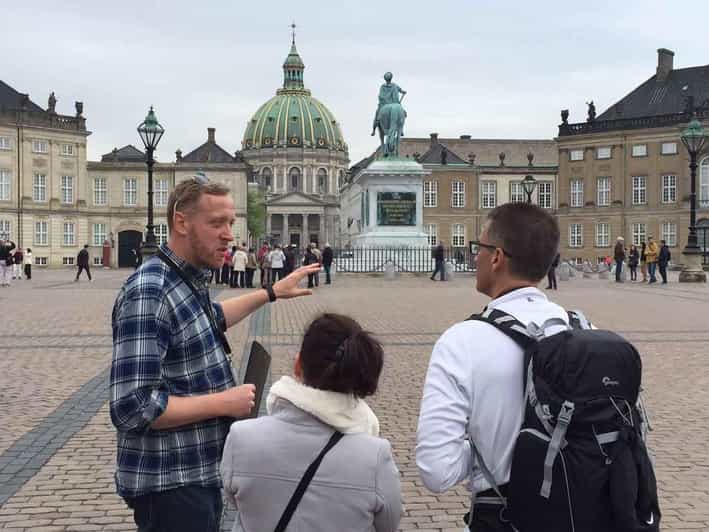
One of the first major stops is Copenhagen City Hall, with a short sightseeing moment built in. City Hall is a strong “you are in the center” signal, and it also gives your guide room to talk about Copenhagen as a living system: how the city organizes itself, how decisions get made, and what that means for everyday life.
This is also where the bigger themes start to take shape. The guide explains things like the reasons bikes are so common. That bicycle focus is not just trivia. It helps you understand why the city feels the way it does when you’re walking around, looking at street design, and seeing motion everywhere.
In practical terms, this is also a good energy point early in the walk. You are freshly alert, and you can absorb the guide’s framework before you move into smaller, more layered corners.
Christiansborg Palace: Where Past Power Meets Present Function
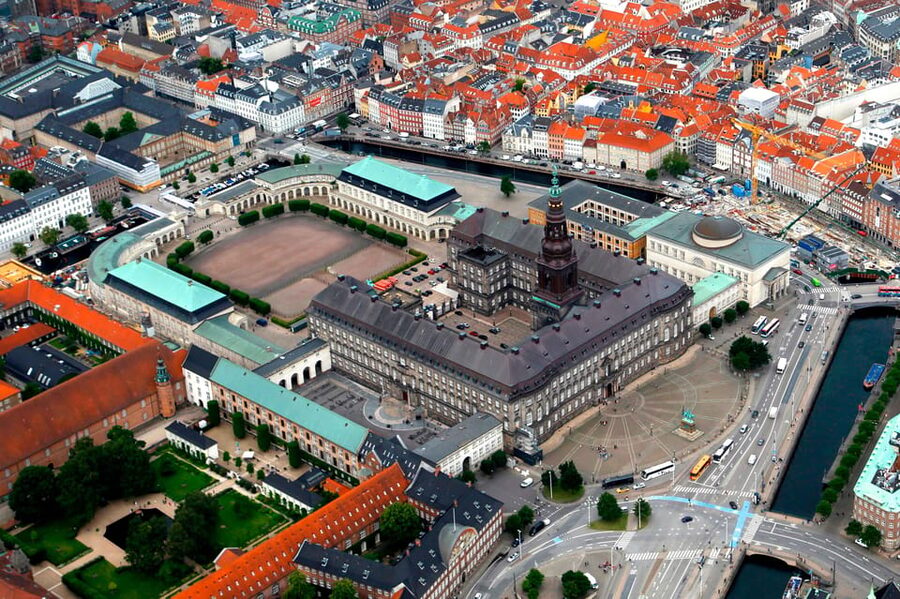
Next up is Christiansborg Palace. You get a walking segment to reach it and then a longer sightseeing window. Palace stops often risk turning into passive staring, but here the guide’s job is to keep you oriented by explaining what you’re looking at and how Copenhagen’s identity evolved.
This is also a natural spot for the guide’s historical thread to show up. Expect stories that connect Copenhagen’s medieval strength with the way the city became a center of influence. You’ll hear about how Copenhagen dominated Scandinavia in the Middle Ages, and how that long arc still shows up in what stands where.
One practical note: since the tour does not enter sights, the value here is what the guide tells you while you’re outside. You’re learning how to read the place, not just taking a picture.
Biskop Absalon, Børsen, and the City’s Old-Energy Corners
From Christiansborg, the walk continues into areas tied to the city’s older foundations. You stop at Biskop Absalon, then continue to Børsen, with short, focused sightseeing at each.
These are the kind of stops where a good guide saves you time. Without guidance, you can easily walk past landmarks and think, Nice building. With the guide, you’re more likely to understand why the landmark matters and how it fits the city’s story.
You also get a sense of Copenhagen’s mix of old and new. The walk moves through spaces that feel historic, then shifts so you’re not stuck in the past. That balance is a big reason this tour works as a first-timer experience. It teaches you how Copenhagen thinks, not only what it used to be.
Church of Holmen and Christian IV’s Brewhouse: Small Stops, Big Context
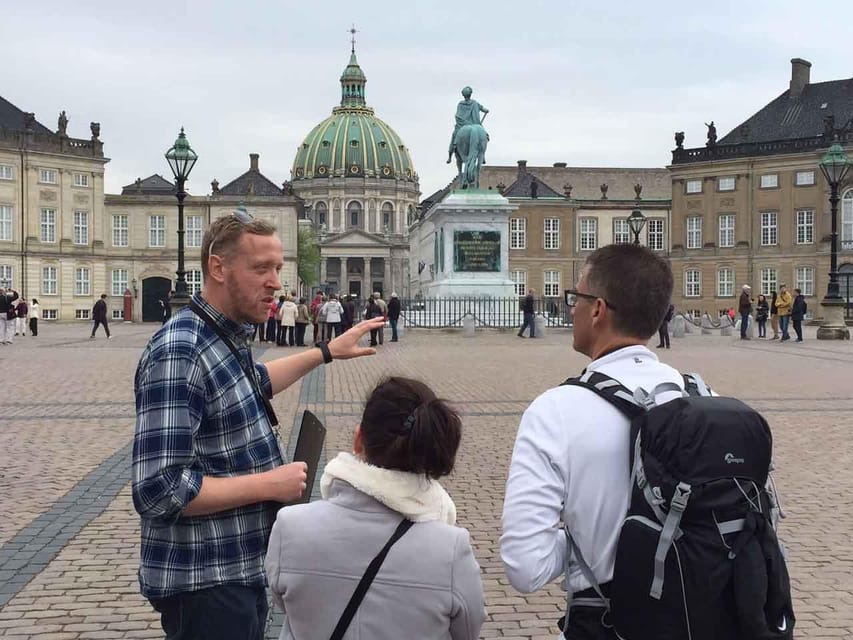
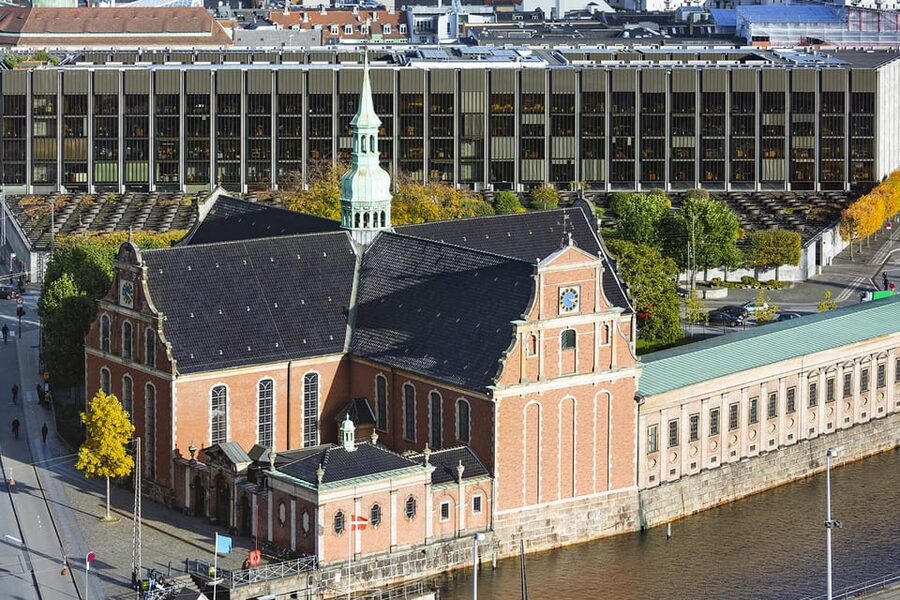
Next you’ll reach Church of Holmen and then Christian IV’s Brewhouse. Each one is given a short sightseeing window, which means you get to see them without burning your whole tour on one block.
These stops are useful because they broaden the story. Copenhagen is not only palaces and big institutions. The city also has religious and everyday life anchors, and the guide can connect them to how the city developed and how it operates now.
If you like history but do not want a long lecture, this is a comfortable format. You get enough detail to spark questions later, and then you keep moving.
One thing to keep in mind is that you are not going inside. So you should think of these as “outside orientation points.” If you want interior access, you’ll need a separate plan for that later.
The Black Diamond, King’s New Square, and the Royal Danish Theatre
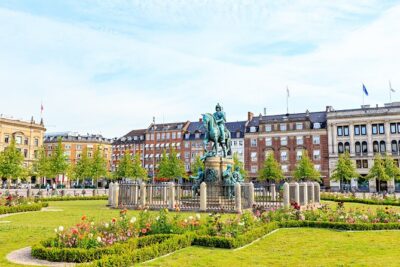
The tour then shifts toward the waterfront-adjacent cultural zone with a stop at the Black Diamond, followed by King’s New Square, and then the Royal Danish Theatre.
This section is a good example of why the headset matters. You’re walking, traffic and pedestrians change your pace, and yet you can stay tuned to the guide’s explanations. The stops are quick enough to keep momentum, but not so rushed that you feel lost.
The guide’s storytelling is also what ties this area together. You do not just see important buildings. You learn how modern Copenhagen sits on top of older layers, and you start noticing contrasts as you move.
If you’re the type who likes architecture and city planning, you’ll probably enjoy this segment. Even if you are not a detail-spotter, the route helps you place landmarks on your mental map, which is the real win.
Nyhavn and Amalienborg: Finishing Near the Most Convenient Next Steps
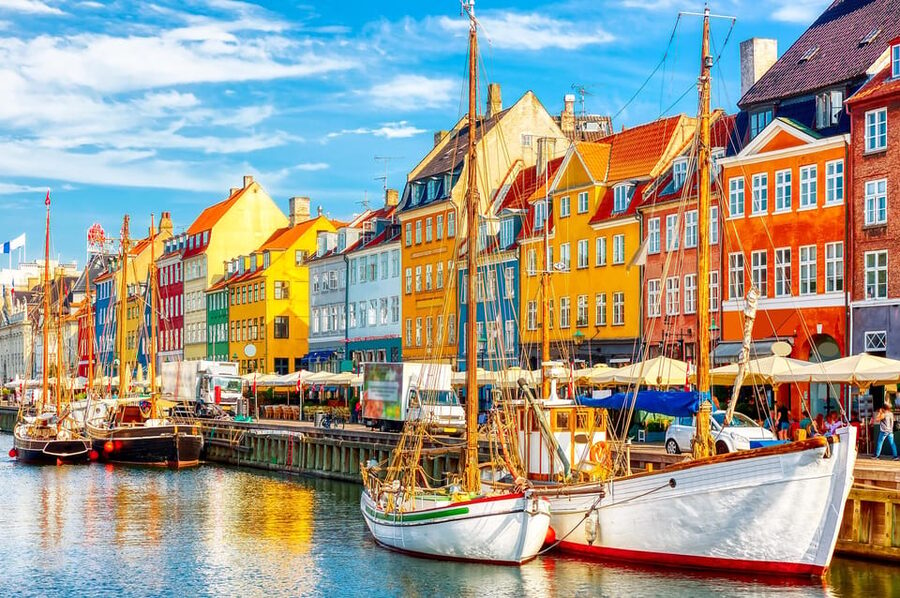
You end this walk in grand fashion, starting with Nyhavn and finishing at Amalienborg.
Nyhavn is where the tour becomes immediately useful. It’s also where the guide’s suggestions after the walk really pay off. If you want to follow up with a canal tour and a drink, Nyhavn is exactly the kind of place that makes that easy.
Then you walk to Amalienborg Palace, the finish point. Ending near the royal zone is a clever choice for first-timers because it gives you a strong, recognizable anchor for the rest of your day. You’re not wandering back to a random starting point. You’re positioned in an area that makes it simple to continue sightseeing, grab food, or take public transport.
How the 3 Kilometers Actually Feel in Real Life
The tour covers about 3 kilometers (1.8 miles) in 2 hours. That pacing usually works out to short walks between stops with enough time at each landmark for the guide’s explanation.
Still, there’s a practical consideration: this is not a slow, sit-everywhere style tour. It’s designed for people who can handle continuous walking with a few brief sightseeing pauses. It is not suitable for wheelchair users, and people with low fitness may find it tough.
If you’re comfortable walking around a city for a couple of hours, you’ll likely find it manageable. If not, consider choosing a different format with less walking or more time off your feet.
Who This Walk Is Best For
This is a great fit if you want your first day in Copenhagen to feel efficient and explanatory.
You’ll likely enjoy it most if:
- You are new to Copenhagen and want a guided loop that covers the inner city
- You care about learning the why behind the city’s look and habits, like bikes and historical power
- You prefer short stops and active walking over museum-style time
- You want a map afterward and a clear plan for the next chunk of your trip
It may not be the best choice if you:
- Need wheelchair access
- Want long interior visits or guided entry to attractions
- Prefer a monument checklist where every landmark promised in a brochure is covered in depth
Should You Book This Guided Walk?
Yes, if your priority is orientation with context. This tour’s strongest promise is not just that it shows you important places. It helps you understand them, then hands you a map so you can keep going independently right away.
Book it if you like small-group tours, clear audio, and history that connects to modern life, especially the bicycle story and the city’s Middle Ages rise. If you’re chasing deep museum time or strict step-by-step landmark coverage, you might want a different style of tour.
FAQ
How long is the Copenhagen guided walk for first-timers?
The tour lasts 2 hours.
How far do you walk during the tour?
The route is about 3 kilometers, which is 1.8 US miles.
Where does the tour start?
The meeting point is at the Andersen statue.
What sights does the tour include?
The tour does not enter any sights. You’ll view the landmarks from the outside.
Is the tour in English?
Yes, the live tour guide speaks English.
How large is the group?
The tour is a small group, limited to 10 participants, with a maximum of 16 mentioned in the tour description.
Is this tour suitable for wheelchair users?
No, it is not suitable for wheelchair users.
What do I get after the walk?
You receive a map of Copenhagen and route suggestions for exploring more on your own.
On Foot Around Denmark




All Our Denmark Reviews


Copenhagen, Reviewed
Other Danish days out we have written up



Walking Tours, compared.
 ★ 5.0Private Walking Grand Tour of CopenhagenFrom $3423,953 reviews
 ★ 5.0Copenhagen Highlights Walking TourFrom $402,324 reviews
 ★ 5.0Politically Incorrect Private Highlights Walking TourFrom $3741,244 reviews
 ★ 4.7Group Walking Tour – City Highlights – 2 HoursFrom $391,088 reviews
 ★ 5.03h walking tour, small group max 10 people CopenhagenFrom $50686 reviews
 ★ 5.0Walk & Canal Tour: Copenhagen Highlights + Changing of the GuardsFrom $77580 reviews
 ★ 4.9Hygge and Happiness Culture Walking TourFrom $80539 reviews
 ★ 5.0Politically Incorrect Beer WalkFrom $68516 reviews
Browse the lists this tour appears in