
REVIEW · CHRISTIANSHAVN & CHRISTIANIA TOURS
Copenhagen Alternative Private Tour: Vesterbro & Christianshavn
Copenhagen reveals itself in side streets. This private tour stitches together Vesterbro and Christianshavn in a way that feels more like a local walk than a checklist. You also get a strong thread of real stories, from charity housing history to WW2 radio resistance.
I love the guide-led pace and attention to what you care about. Names like Alessandro, Grazi, and Karolina show up in the best experiences, and the common theme is that you get personal context and room to ask questions, not just a lecture.
I also like that many stops are quick, free to visit, and built around walkable streets, so you keep moving without feeling rushed. One consideration: the guide will not go into Freetown Christiania with you, so you will see it from the tour edge rather than having an inside walk.
In This Review
- Key highlights in plain terms
- Why Vesterbro plus Christianshavn feels like Copenhagen, not Copenhagen Lite
- From Viktoriagade to fortifications turned streetwork
- Det Ny Teater: big public space, practical urban planning
- Beer gardens, butchers, and housing pressure on Værnedamsvej and Saxogade
- Skydemuren and Istedgade: where war, conflict, and daily life collide
- Istedgade 31 and Stjerne Radio: resistance tech on a street corner
- Meatpacking District and Oksnehallen: from cattle market capacity to modern crowds
- Halmtorvet haymarket and the city that fed animals
- Men’s Home and Maria Church: the support side of Vesterbro
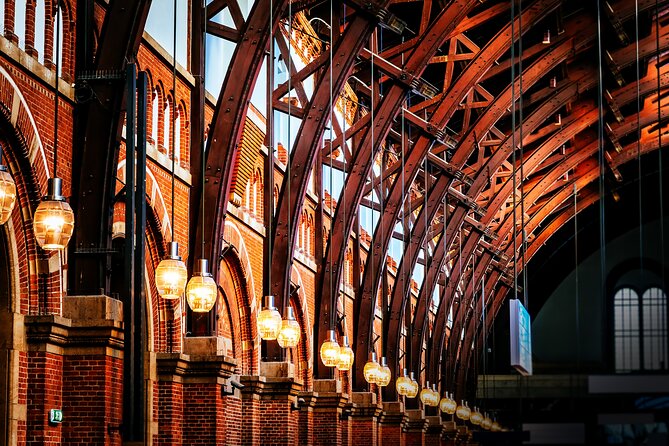
- Copenhagen to København H: station architecture as civic pride
- Crossing to Christianshavn over Knippelsbro
- Christians Kirke and Strandgade 4: churches and industrial beginnings
- Asiatisk Plads to Sankt Annae Kirke: from trade empires to protected houses
- Wildersgade and Wilders Plads 10: quiet cobblestones and old workshops
- Our Saviour Church and the climb story you will hear about
- Freetown Christiania: what you see, and what you do not
- Price and what you really get for $147.96 per person
- Who should book this tour, and who should think twice
- Should you book this private Vesterbro and Christianshavn tour?
- FAQ
- How long is the Copenhagen Alternative Private Tour: Vesterbro & Christianshavn?
- Where is the tour start and where does it end?
- Is this tour private, or do I join a larger group?
- What language is the tour offered in?
- What is included in the tour price?
- Are entrance tickets required at the stops?
- Will the guide take you inside Freetown Christiania?
- What if it rains or I need to cancel?
Key highlights in plain terms
- WW2 resistance made physical: Istedgade’s role and the BBC English broadcasts from Stjerne Radio at Istedgade 31.
- Vesterbro’s working-class texture: streets tied to beer gardens, butchers, housing protests, and tight one-room living.
- Old industrial Copenhagen, reused: Oksnehallen, Halmtorvet, and the Meatpacking District as a modern dining and nightlife zone.
- Crossing to Christianshavn via Knippelsbro: a drawbridge with toll operator history and canal-city atmosphere.
- Churches you remember for the shape: the twisted spire of Church of Our Saviour and rococo Christians Kirke.
- A respectful peek at Christiania: you reach Freetown Christiania as the endpoint, even if the guide cannot enter.
Why Vesterbro plus Christianshavn feels like Copenhagen, not Copenhagen Lite

Most first-time visitors focus on the big postcard sights. This route does something smarter. You start in Vesterbro, where everyday streets hold layers of working-class life, wartime danger, and postwar change. Then you shift to Christianshavn, a canal neighborhood with its own religious architecture, industry stories, and fortress-era street lines.
You also get an immediate payoff: the walking route explains the city instead of simply showing it. One moment you are looking at a street built over old fortifications, the next you are standing near a WWII-era radio site, and after that you are near a church famous for a twisted spire. It keeps your brain switched on.
If you like history but not museums on rails, this works well. If you want long indoor museum time at every stop, you might feel short-changed. The tour is designed for movement and orientation, not for deep solo exploration inside major attractions.
More of Copenhagen, reviewed one tour at a time
- Copenhagen: Canal Cruise with Guide
★ 4.6 · 9,115 reviews - Copenhagen: Hop-On Hop-Off Bus Tour with Boat Tour Option
★ 3.9 · 4,122 reviews - Private Walking Grand Tour of Copenhagen
★ 5.0 · 3,953 reviews - From Copenhagen: Lund and Malmö 2-Country Tour
★ 4.7 · 2,772 reviews
From Viktoriagade to fortifications turned streetwork
Your walk starts at Viktoriagade 8, and the story kicks off with city defenses. Long ago, the area was part of fortifications created under Christian IV around 1600. Those defenses were protected by a moat, and later redevelopment turned what had become an open sewer-like situation into something people could live with.
Here is the practical point for you: this is not abstract history. The street layout itself came from decisions, not chance. The land was sold in lots starting in 1856, and you can still read the social priorities in the buildings that went up, including structures tied to charity for groups like officers’ widows.
Quick stop, but it sets the tone for the whole day. You learn to notice how Copenhagen repurposes land, and how a “new” street can sit right on top of a much older purpose.
What to watch for: photo opportunities at the mid-1800s listed buildings around numbers 8, 10, and 12. Even if you only pause briefly, the architecture helps the stories stick.
Det Ny Teater: big public space, practical urban planning
Next up is Det Ny Teater. Opened in September 1908, it became one of Denmark’s largest theaters. But what I like is the civic planning angle. The theater was built so that at the same time it created a passage between Gammel Kongevej and the new Vesterbro Passage, which is now part of Vesterbrogade.
That means you are not just seeing a venue. You are seeing how the city connected movement through neighborhoods. In a few minutes, the tour helps you understand why Copenhagen feels walkable, even when it is busy.
Possible drawback: if you are the type who wants interior details, this stop is mostly external. The ticket time is free, but the window is short, so you may want to come back later if the theater is a big interest for you.
Beer gardens, butchers, and housing pressure on Værnedamsvej and Saxogade
Værnedamsvej starts with a beer collector story. Werner Dam acquired land in the 1700s and opened a popular beer garden. The same street was also known as Slagtergaden, literally Butchers’ Street, because there were many butchers doing business there.
Then the route turns sharper with Saxogade. Here residents sent a large protest in the early 1950s because housing conditions were miserable. The tour highlights why kids mattered most in the fight, since families often lived in overcrowded, small one-room apartments where sleeping space could stretch to as many as 10 people.
This is one of the more emotionally honest sections of the route, and it is also one of the most useful for you as a visitor. You start to recognize that city neighborhoods are not only about buildings. They are about pressure, daily survival, and local organizing.
Consideration: these stops are brief, so the lesson lands best if you pause and look at the street scale. If you rush, you might miss how the narrowness and density connect to the living conditions being described.
More walks over the bridge into Christianshavn
- Hippies & Christianshavn Walking Tour★ 5.0 · 249 reviews
- Private Walking Tour of Christianshavn★ 5.0 · 122 reviews
- Copenhagen: Christiania & Christianshavn Guided Walking Tour★ 4.7 · 119 reviews
- Private Hippies & Christianshavn Politically Incorrect Tour★ 5.0 · 114 reviews
- Copenhagen: 1.5-hour Private Walking Tour of Christianshavn★ 3.6 · 15 reviews
Skydemuren and Istedgade: where war, conflict, and daily life collide
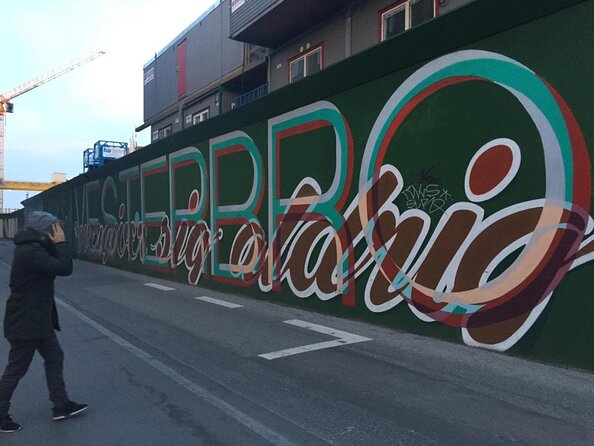
Skydemuren is a castle-like wall built as a bullet trap. It protected traffic along Istedgade from projectiles linked to the Royal Danish Army shooting range at Skydebane, which is tied to today’s Skydebanehaven. The wall also acts as a point de vue for Skydebanegade, where you find richly decorated residential houses in a uniform style.
Then you reach Istedgade, one of Vesterbro’s most important streets. The street name references the 1850 Battle of Isted in the First Schleswig War. During World War II, Istedgade served as a refuge for the Danish resistance, and the tour connects that to a popular resistance slogan about how certain places would never fall.
At the same time, Istedgade today is known for a tough edge, including drug-hit areas and the largest red light district in Scandinavia. You do not need to sensationalize it. The value here is context, so you understand that a street can hold multiple identities across time.
What to keep in mind for your walk: if you are sensitive to nightlife zones or people dealing with serious issues, adjust your expectations. You are not touring a clean museum zone. You are seeing a major Copenhagen street in real time, with history woven through.
Istedgade 31 and Stjerne Radio: resistance tech on a street corner
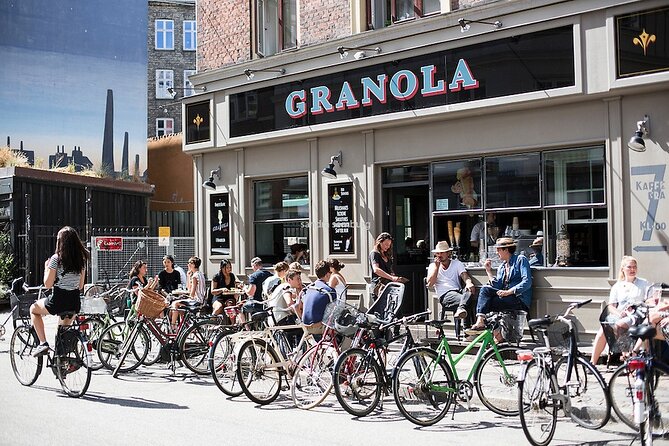
Stop 7 is one of the most standout moments for people who like story-driven travel. At Istedgade 31, Stjerne Radio opened in September 1942. Run by Carl Munck and JK Søndergård, it began transmitting English broadcasts of BBC radio through loudspeakers.
This matters because it turns radio into a physical tool of resistance. It is not only about big leaders and battles. It is about communication getting to people when it counted.
You also get a strong sense of why this neighborhood matters. The city did not only withstand war. It used everyday infrastructure and local courage.
Pro tip for you: take the extra 30 seconds to look up and around. Spots like this can be easy to pass by when you are focused on the street-level view.
Meatpacking District and Oksnehallen: from cattle market capacity to modern crowds
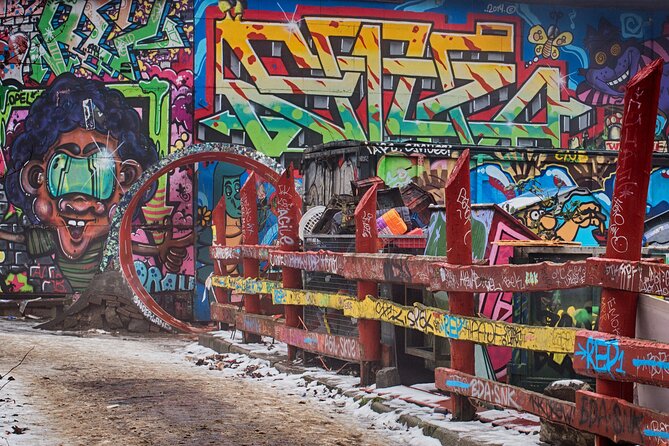
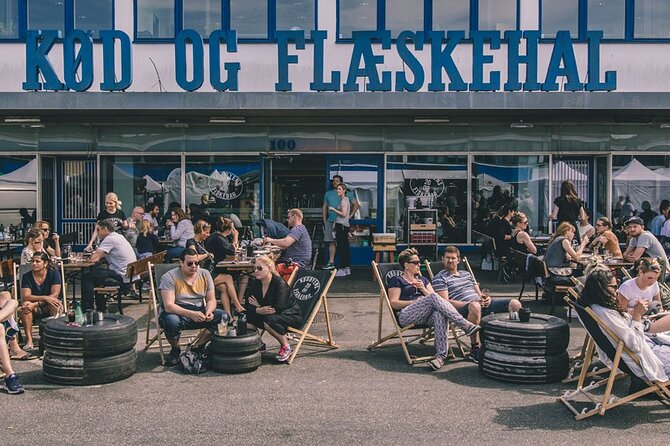
As you continue toward the Meatpacking District, the tour shifts into the theme of reuse. This revitalized industrial area is now known for trendy dining and lively nightlife. Even if you do not plan to go out, you will understand why the area turned into a magnet for both visitors and locals.
Then you stop at Oksnehallen. This exhibition space sits inside an old market. Built in 1891 to house merchant offices and accommodate up to 1,600 heads of cattle, it remained in use until the White Zone opened in the 1950s.
The practical value: you can see how scale and logistics shaped the building. Old markets and livestock halls were built for throughput. When those spaces get reused, they bring that same “big room” feeling that restaurants and events love.
If you want more: this is a great area for after-tour exploring, but your guide time is limited, so plan a return if you like industrial architecture.
Halmtorvet haymarket and the city that fed animals
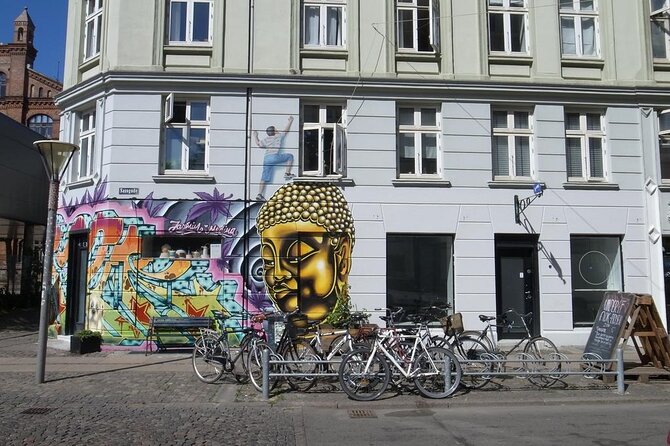
Halmtorvet explains where Copenhagen sourced hay and straw. The haymarket originally sat just inside the Western City Gate, in the area now associated with City Hall Square. It closed on January 1, 1888 and relocated outside the new Livestock Market, which opened in 1879.
Market days were Wednesday and Saturday, and the tour notes the sheer volume traded, including several hundred loads of hay and straw distributed to cattle and horse stables around the city.
This is a great reminder that big city centers run on supply chains. When you understand that, you stop treating “food” and “feeding” as an invisible process.
Men’s Home and Maria Church: the support side of Vesterbro
Stops 11 and 12 change the mood again, but they are essential if you want a real sense of neighborhood life.
Men’s Home for homeless, established in 1910, is a private organization subsidized by the Danish state. It focuses on helping homeless and vulnerable people use their own resources to build a good life and contribute to a diverse society.
Next is Maria Church, a small church opened in 1909. Today it serves as a shelter for homeless people, families in need, and socially marginalized groups. The tour also describes its active social involvement, including support for vulnerable people such as illegal immigrants, drug addicts, prostitutes, and people whose lives are criminalized.
You might not expect church buildings to function like a neighborhood service hub, but in Copenhagen this kind of work is part of the city’s fabric. If your travel style includes understanding how cities care for people, you will appreciate these stops.
Consideration: these sections can feel serious and personal. Even when the tour time is short, it is worth listening without rushing toward the next sight.
Copenhagen to København H: station architecture as civic pride
Depending on your option, you may take lunch at a classic Danish restaurant during Stop 13. This is only included in the Full Option, so if you choose not to add lunch, you can use that time to keep moving or grab your own bite nearby.
Then you reach København H, the city’s main rail hub. Built in 1911 and inspired by town hall style, it is the largest railway station in Denmark, with 7 platforms and 13 tracks. Nørreport St. has the highest daily passenger flow, but København H is bigger in sheer station size.
This stop is surprisingly valuable if you are a “how does this city work” traveler. You see how Copenhagen builds big public infrastructure to feel official and human at the same time.
Crossing to Christianshavn over Knippelsbro
Knippelsbro is a drawbridge about 115 meters long, built in 1937. It connects Copenhagen to Christianshavn. The name comes from Hans Knip, who operated the bridge and collected tolls from ships in 1641, with his family living on the bridge.
This is a nice break in the narrative thread. After streets and institutions, you transition to water, crossings, and long-term city trade logic.
If you like canal cities, pause for a moment and look at the movement of people around the bridge area. Even on a tight schedule, it helps you register scale.
Christians Kirke and Strandgade 4: churches and industrial beginnings
Christians Kirke is rococo, built between 1754 and 1759. It was originally called Frederik’s German Church, serving the German-speaking congregation that wanted their own church.
A few stops later, you reach Strandgade 4, tied to industry. This building dates from the 1780s and until recently housed the DieselHouse Museum, which moved to København SV. The story connects to B&W, starting back in 1843 with a one-man smithing workshop, expanding into one of Denmark’s largest workplaces, and eventually associated with MAN Energy Solutions.
The practical point for you: this is Copenhagen’s industrial identity, shown through place names and buildings, not through a museum label. It helps you spot what “industry” meant in everyday life.
Asiatisk Plads to Sankt Annae Kirke: from trade empires to protected houses
At Asiatisk Plads, you learn about the Danish Asia Company base from 1732 to 1843. Today it is tied to the Ministry of Foreign Affairs and a convention center, which shows how official power often shares real estate with past trading ambitions.
Then you get Sankt Annae Kirke, known for listed buildings from the 1600s to 1700s. The tour mentions the row of houses 8 to 22, with remnants from some of the oldest houses in Copenhagen, built around 1650. House number 14 is highlighted as the best preserved.
These are the kind of stops that make Christianshavn feel different from Vesterbro. Instead of the working-class narrative you get earlier in the route, you see preservation and older residential lines.
Wildersgade and Wilders Plads 10: quiet cobblestones and old workshops
Wildersgade dates from the founding of Christianshavn, between 1617 and 1622. It is now a quiet residential street with cobblestones, mansions, old houses, and warehouses from the 1700s to 1800s.
At Wilders Plads, the mood shifts again. It was once a busy market square but is now a place to relax and enjoy water views. The tour also points out an expensive marina area for yacht club members.
One of the more specific “place learning” moments includes Wilders Plads 10, a two-story timber-framed house built in 1736. It started as a sailmaker’s workshop and also served as housing.
For you, this kind of detail is the difference between seeing a neighborhood and understanding it. You start to remember how roles like sailmakers supported the whole water-based economy.
Our Saviour Church and the climb story you will hear about
The route ends with Church of Our Saviour. It is baroque and famous for its twisted spire, plus an external spiral staircase you can climb to reach the top. The tour also notes it functions as a living parish church for around 8,000 people.
Even if you do not climb, the church is a visual anchor for Christianshavn. It is the kind of landmark that makes your photos look instantly like the city you traveled through.
Freetown Christiania: what you see, and what you do not
Your walk finishes in Freetown Christiania. The tour frames it clearly: a partially self-governed neighborhood created in 1971 by hippies protesting a lack of housing on military land abandoned by the Danish army. The community is about 1,000 residents across roughly 34 hectares.
You also get the scale of interest. It is described as the second most visited sight in Copenhagen after Tivoli, with about half a million tourists per year.
Here is the big practical limitation: the guide will not go with you into Christiania because they are not allowed. That means you will have to experience at least part of Christiania without guided commentary. Still, ending the tour here is valuable because it gives you a real-world entry into one of Copenhagen’s most discussed places.
Consideration: if you are expecting the guide to narrate everything inside, adjust your plan. This tour gets you there, then hands you off.
Price and what you really get for $147.96 per person
At about $147.96 per person for roughly 3 hours 30 minutes to 4 hours, the value is in three places.
First, it is private. You only share the walk with your group, and that matters when you want to ask questions or adjust pace. The best experiences also highlight that guides bring personal stories tied to Copenhagen, which is hard to replicate in a self-guided stroll.
Second, many stops are free to access, and the route is built around quick, meaningful sights. You are not paying for lots of separate admissions along the way.
Third, included basics reduce friction. You get metro tickets, plus a mobile ticket. That is handy in a city where walking between neighborhoods is often easy, but getting to and from key points still takes planning.
About food: the Full Option includes a local tasting and a drink in a traditional restaurant, plus lunch at a classic Danish restaurant. A point to know is that this is not a full food tour. It is a short tasting stop as part of a history and neighborhood route. If you choose the Full Option for food expectations, it will feel more like a cultural taste and a sit-down moment than a multi-stop gastronomic crawl.
Who should book this tour, and who should think twice
This is a strong fit if you:
- like neighborhoods that are not only about royal buildings
- want WW2 resistance stories tied to real street locations
- enjoy architecture and city planning, even when the stops are short
- value a guide who answers questions and adapts to your interests
It is less ideal if you:
- want a museum-heavy day with long indoor time at major attractions
- expect the guide to walk inside Christiania with you
- are coming purely for a food-focused itinerary
Should you book this private Vesterbro and Christianshavn tour?
I would book it if you want a Copenhagen day that explains the city through daily life, wartime clues, and the way neighborhoods reinvent themselves. The walking route is tight, the stories connect across districts, and the tour is built around free-to-see places, so you do not feel like you are paying only for transit time.
If Christiania is your main goal, know the boundary: the guide cannot enter, so you are choosing a guided route to get you close, then doing part of the experience on your own. For most travelers, that tradeoff is worth it because the rest of the day is richly guided with practical, street-level context.
FAQ
How long is the Copenhagen Alternative Private Tour: Vesterbro & Christianshavn?
It runs about 3 hours 30 minutes to about 4 hours.
Where is the tour start and where does it end?
The tour starts at Viktoriagade 8, 1620 København, Denmark, and ends at Freetown Christiania.
Is this tour private, or do I join a larger group?
It is a private tour/activity, so only your group participates.
What language is the tour offered in?
The tour is offered in English.
What is included in the tour price?
It includes a private local guide for the duration, metro tickets, and a mobile ticket. A local tasting and drink in a traditional restaurant are included only in the Full Option, and lunch is also included only in the Full Option.
Are entrance tickets required at the stops?
The tour description indicates admission ticket free for the listed stops.
Will the guide take you inside Freetown Christiania?
No. The guide will not go with you into Christiania because they are not allowed.
What if it rains or I need to cancel?
The tour will not be cancelled in case of rain. Free cancellation is offered, with full refund if you cancel at least 24 hours in advance. Service animals are allowed, and the tour is near public transportation.
Norrebro And Vesterbro, Beyond The Centre



Christianshavn And Christiania, A Few More Ways


Copenhagen, Reviewed
Other Danish days out we have written up


Christianshavn & Christiania Tours, compared.
 ★ 5.0Hippies & Christianshavn Walking TourFrom $6249 reviews
 ★ 5.0Private Walking Tour of ChristianshavnFrom $276122 reviews
 ★ 4.7Christiania & Christianshavn Guided Walking TourFrom $49119 reviews
 ★ 5.0Private Hippies & Christianshavn Politically Incorrect TourFrom $374114 reviews
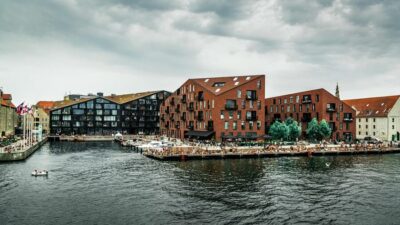 ★ 3.61.5-hour Private Walking Tour of ChristianshavnFrom $68315 reviews
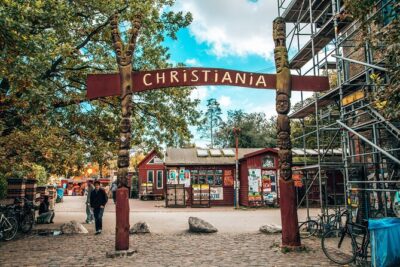 ★ 5.0Copenhagen Christiania: Hidden Stories Self-Guided AdventureFrom $78 reviews
 ★ 5.0Copenhagen Christianshavn Walking TourFrom $825 reviews
 ★ 5.0Copenhagen Old Town, Nyhavn, Canal Walking Tour & ChristianaFrom $2195 reviews
Browse the lists this tour appears in