
REVIEW · CHRISTIANSBORG & AMALIENBORG PALACE TOURS
Copenhagen: Amalienborg Palace Museum Entry Ticket
Royal rooms, still waiting for you. At Amalienborg Palace Museum, you get a close look at the Danish monarchy through preserved apartments and standout objects, plus a special showing called Frederik X: King of Tomorrow.
Two things I really like: the Fabergé Chamber with Danish-Russian royal links, and the way multiple rooms look paused in time like the family just stepped out.
One drawback to plan for is that it is not a huge museum, so if you want lots of content, you may feel the price before you finish.
In This Review
- Key moments to look for
- Amalienborg Palace Museum: what your ticket actually delivers
- Getting in smoothly: timing, entrance, and the 20-minute cutoff
- A smart order for the museum rooms (and why it feels good)
- The Fabergé Chamber: Russian jewelry and Danish-Russian royal ties
- Christian X’s dining room: a table set in history
- Christian X’s study: dark officer style, preserved on purpose
- Queen Louise’s private salon: family connections on the walls
- Gala Hall: height, gilding, and sculptor Bertel Thorvaldsen
- Special exhibition: Frederik X, King of Tomorrow
- Audio for kids: why this museum can work for the whole family
- The real-world time and energy you should plan
- What you get for $19, and who should buy
- Rules and restrictions that affect your day
- Should you book the Amalienborg Palace Museum ticket?
- FAQ
- Where is the Amalienborg Museum entrance?
- Do I need to scan my online ticket before going upstairs?
- How late can I arrive and still use my ticket?
- How long is the experience?
- Is a guided tour included with the ticket?
- Is the museum wheelchair accessible?
Key moments to look for
- Fabergé Chamber: Russian jewelry from 1860 to 1917, including the coronation brooch tied to Tsar Nicholas II
- Gala Hall scale: an 8-meter ceiling, gilding, and sculptures by Bertel Thorvaldsen
- Christian X’s preserved study: dark, officer-style furnishings kept as if he left the room
- Dining room accuracy: Christian X and Queen Alexandrine’s dining space, preserved from 1899 onward
- Queen Louise’s private salon: an interior style around 1895 with framed family photos
- Frederik X: King of Tomorrow: a special exhibition using photos, objects, video, paintings, and sound
Amalienborg Palace Museum: what your ticket actually delivers
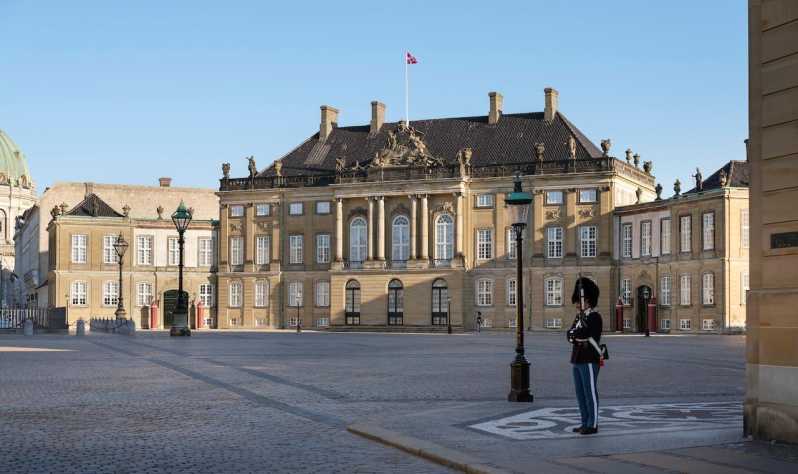
This museum sits right in the center of Copenhagen, at Amalienborg Square, inside one of the palaces that make up Amalienborg. The ticket is for the Amalienborg Palace Museum, part of Christian VIII’s Palace, and it is designed to take you through the Danish royal story across roughly the last 150 years.
You are not touring a random “royal-themed” building. You are seeing rooms that were used by the family, and the palace setting helps your brain understand the people behind the crown. It is family-friendly too, with audio content that is set up to work for children.
The other smart part: your entry includes all exhibitions, so the main museum route and the special exhibition are covered in the same ticket. No add-on, no extra cost once you are inside.
More of Copenhagen, reviewed one tour at a time
- Copenhagen: Canal Cruise with Guide
★ 4.6 · 9,115 reviews - Copenhagen: Hop-On Hop-Off Bus Tour with Boat Tour Option
★ 3.9 · 4,122 reviews - Private Walking Grand Tour of Copenhagen
★ 5.0 · 3,953 reviews - From Copenhagen: Lund and Malmö 2-Country Tour
★ 4.7 · 2,772 reviews
Getting in smoothly: timing, entrance, and the 20-minute cutoff

Start with logistics, because this museum works on a timed-entry rhythm. Your ticket is valid for 1 day, but you should still check the available starting times so you do not show up at a random moment.
Here is the practical entry detail that saves stress: the museum entrance is in the first building to your left if you enter Amalienborg Square from Frederiksgade or the area near the Marble Church. After you find the entrance, go downstairs to the cashier, where you present and scan your online ticket before heading up.
One rule matters a lot: if you arrive more than 20 minutes late, your ticket will no longer be valid. That is short enough that you should build in buffer time, especially if you are combining this with other sights in central Copenhagen.
A smart order for the museum rooms (and why it feels good)
The museum flow is set up so you are not just wandering room to room. The route is generally planned, and it helps to keep the story clear as you move between living spaces and ceremonial spaces.
A simple strategy: think of the visit in two tracks. First, you look at the preserved everyday rooms tied to specific royals, like the dining room and study. Then you shift your attention to the decorative showpieces, like the Gala Hall and the Fabergé display.
If you like structure, you will probably enjoy this. If you prefer going at your own pace with no schedule at all, you still can, but you will want to keep an eye on time because the ticket is valid for your selected entry slot.
Plan your pace for about 45 minutes to an hour for the museum itself. If you also spend time looking around the palace square outside, you may easily stretch the visit longer.
The Fabergé Chamber: Russian jewelry and Danish-Russian royal ties
The Fabergé Chamber is one of the easiest parts of the museum to get excited about, because it is visually strong and story-driven at the same time. You will see hand-crafted Russian jewelry made from 1860 to 1917, with a focus on the close ties between the Danish and the Russian monarchy.
One object in particular brings the cross-country connection home: the Fabergé coronation brooch created for the coronation of Tsar Nicholas II. Even if you are not a jewelry person, the item helps you see how European royal families were linked through marriages, alliances, and ceremonial moments.
This room also gives you a break from thinking only about Denmark. It reminds you that the Danish monarchy did not exist in isolation, and objects traveled along those relationships.
More palace visits, Christiansborg and Amalienborg
- Copenhagen City & Christiansborg Palace Private Walking Tour★ 4.6 · 23 reviews
- walking tour – Copenhagen and Christiansborg 3 hours★ 4.0 · 7 reviews
- The Murder by Christiansborg Palace: Interactive Mystery Hunt★ 4.5 · 4 reviews
- Copenhagen & Christiansborg Palace Private Walking Tour★ 5.0 · 3 reviews
- Copenhagen Self-Guided Murder Mystery Tour by Amalienborg Palace★ 4.0 · 3 reviews
Christian X’s dining room: a table set in history
Next, look for the Christian X and Queen Alexandrine dining room. The best part is not just that it is decorated well. It is preserved so closely that it appears almost exactly as it did when Christian X and Queen Alexandrine lived in the palace from 1899 until their deaths in 1947 and 1952, respectively.
You can read the room like a snapshot of daily power. The dining space is where formal conversations happened, where guests were hosted, and where the monarchy’s public image met private life.
If you like details, slow down here. The value is in noticing how “lived-in” the rooms feel without being messy. This is one of those museums where the preservation does the storytelling for you.
Christian X’s study: dark officer style, preserved on purpose
Another standout is Christian X’s study, preserved as though the king had just left it. This room is kept exactly as it appeared during his time in the palace from 1899 until his death in 1947.
The look is unmistakable: dark walls and heavy, gentlemanly furnishings that fit a study from around 1900. It is easy to see that the room belonged to an officer, and that matters because it shows what kind of identity he carried into his royal role.
This is also a good place for quieter moments. If you tend to rush through museums, this one makes it worth slowing down because the mood and function of the room feel consistent.
Queen Louise’s private salon: family connections on the walls
Then move to Queen Louise’s private salon, which reflects interior decoration around 1895. The room includes paintings and framed photographs on the tables, which point to her family life and close ties across Europe.
This part of the museum works for different interests. If you like art or interior design, you can focus on period style. If you care about people, the photographs help translate the palace from a symbol into a network of real relationships.
It is also one of the most approachable rooms for families, because it feels less abstract than a formal hall. It reads like a personal space.
Gala Hall: height, gilding, and sculptor Bertel Thorvaldsen
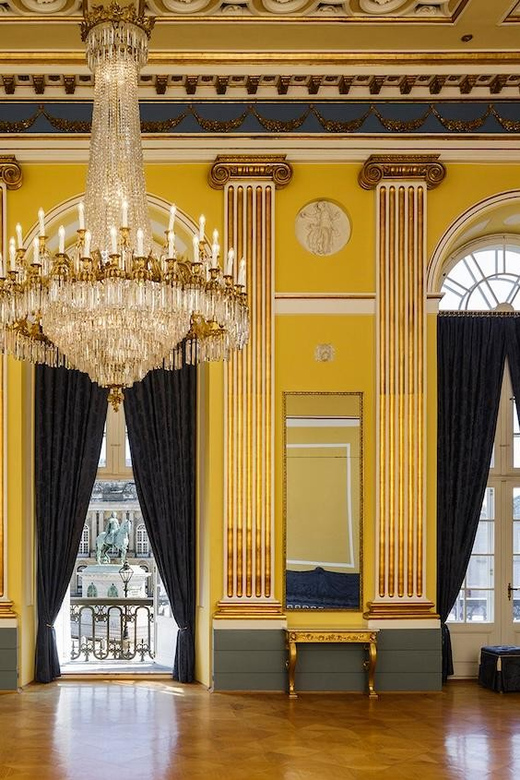
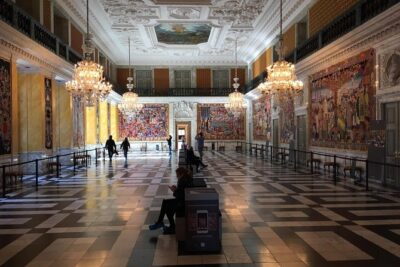
The Gala Hall is the big visual stop. The ceiling is about 8 meters high, with lavish gilding, and it has a view onto the palace square. This is where you see the monarchy in its ceremonial, public-facing mode.
The museum also gives the design story behind it. In 1794, the Royal Family commissioned artist Nicolai Abildgaard to design the interior. Sculptures were created by the renowned sculptor Bertel Thorvaldsen.
When you look up in this hall, you are not just admiring decoration. You are seeing how power, art, and national identity were built into architecture.
Special exhibition: Frederik X, King of Tomorrow
Your ticket also includes the current special exhibition, FREDERIK X: King of Tomorrow, scheduled from March 22 to September 8, 2024. This exhibition uses photographs, objects, video clips, paintings, and sound to mark the historical succession of the Danish throne, which took place on January 14.
What I like about this kind of exhibit is that it prevents the museum from becoming only a time machine. It connects past rooms to the monarchy’s present chapter.
If you have limited time, give the exhibition your attention after you see at least a couple of the preserved rooms. By then, you will understand what the objects and rooms mean, and you can better compare how royal life changes across generations.
Audio for kids: why this museum can work for the whole family
This is one of the rare palace museums where family visits feel built in, not forced. The museum includes audio guide tours for children in each section, and that can turn a short attention span into a real visit.
The sweet spot here is expectations. You are not trying to keep kids silent for hours. You are giving them guided prompts at the right moments, so they can connect the rooms to stories.
Even for adults, the audio support helps because it reduces the need to translate everything yourself. It is one of the practical ways the museum makes history usable.
The real-world time and energy you should plan
A common rhythm for this museum is about 45 minutes to an hour for the indoor route. That lines up well with how much content is packed into the preserved rooms and special exhibition.
If you like taking photos, reading every label, and pausing for a few rooms, you might stretch it closer to an hour plus. If you are really intent on just the highlights, you can still finish comfortably.
Outside the building, the palace square is part of the experience. One of the easier ways to make your day feel bigger is to allot time for a slow look around Amalienborg after your museum entry.
Also, it is easy to pair with other central sights. The area is about a 15-minute walk from the city center, which helps if you are doing Copenhagen on foot.
What you get for $19, and who should buy
The ticket price is $19 per person, and you should judge value based on what is included: entry to the Amalienborg Palace Museum plus access to all exhibitions. There is no guided tour included, so the value comes from the rooms and self-guided content.
Here is where the value is strongest:
- You want a palace museum experience that feels like real rooms, not just display cases
- You like monarchy context through specific people, not abstract royal dates
- You appreciate standout objects like the Fabergé pieces and ceremonial hall design
Here is the consideration:
- If you expect a huge museum with lots of separate wings, you might feel it is not enough for the price. The indoor portion moves fairly quickly.
For families, this tends to work well because of the child-focused audio setup and the fact that the visit can be completed without burning the whole day. For solo travelers, the preserved rooms make it easy to stay engaged even when you are going at your own pace.
If you are coming to Copenhagen for food and design and only have one or two museum slots, this is a good choice because it is central and time-efficient.
Rules and restrictions that affect your day
This visit has clear boundaries for what you can bring. You cannot bring oversize luggage, baby strollers, food and drinks, large bags, and you should expect that bags are restricted inside. Pets are not allowed, though assistance dogs are allowed.
If you are carrying a day bag, keep it modest. The museum is in the middle of the city, so you do not want to arrive with a backpack you will have trouble managing.
Should you book the Amalienborg Palace Museum ticket?
Book it if you want a compact, central museum that tells the Danish monarchy story through preserved rooms and meaningful objects like Fabergé jewelry. The Fabergé Chamber, the preserved Christian X rooms, and the Gala Hall ceiling and sculptures give you strong visual payoffs without asking for a half-day commitment.
Skip it or think twice if you are the type who needs lots of galleries and long museum wandering to feel satisfied. At about an hour indoors, it is not trying to compete with the biggest museum schedules.
My practical advice: pair it with a walk around Amalienborg Square and plan to treat it like a focused visit, not a marathon. If you do that, the ticket feels like a fair way to understand Danish royal life in a very real, very human way.
FAQ
Where is the Amalienborg Museum entrance?
The entrance is in the first building to your left if you enter Amalienborg Square from Frederiksgade or from the Marble Church area.
Do I need to scan my online ticket before going upstairs?
Yes. Before your visit, you need to go downstairs to the cashier to present and scan your online ticket.
How late can I arrive and still use my ticket?
If you arrive more than 20 minutes late, your ticket will no longer be valid.
How long is the experience?
The ticket is valid for 1 day, and visits commonly take about 45 minutes to an hour for the museum route and exhibitions.
Is a guided tour included with the ticket?
No. A guided tour is not included.
Is the museum wheelchair accessible?
Yes, the activity is wheelchair accessible.
All Our Denmark Reviews





The Palaces: Christiansborg And Amalienborg





Copenhagen, Reviewed
Other Danish days out we have written up



Christiansborg & Amalienborg Palace Tours, compared.
 ★ 4.6Copenhagen City & Christiansborg Palace Private Walking TourFrom $73123 reviews
 ★ 4.0walking tour – Copenhagen and Christiansborg 3 hoursFrom $877 reviews
 ★ 4.5The Murder by Christiansborg Palace: Interactive Mystery HuntFrom $284 reviews
 ★ 4.0Copenhagen Self-Guided Murder Mystery Tour by Amalienborg PalaceFrom $293 reviews
 ★ 5.0Copenhagen & Christiansborg Palace Private Walking TourFrom $4093 reviews
Browse the lists this tour appears in