
REVIEW · COPENHAGEN BIKE & E-BIKE TOURS
Copenhagen: Guided Bike Tour in French
Pedal through Copenhagen’s social values. This 4-hour French-led ride links the Danish social welfare model and urban change to what you see on the street, including Freetown Christiania with its alternative vibe. I like that the guide brings the story to street level, not just stop-and-go photos, and I love the way recent bicycle bridges get you moving with calmer views and better sightlines. The main catch is simple: you do not get a bike or helmet from the tour, so you need a plan for rentals and cycling confidence.
You start near Tivoli at Vesterbrogade 4B, with a small group capped at 10, so you get real conversation without feeling rushed. If you do not have your own bike, local shops rent daily starting around €12, and there is even a half-price deal for teenagers. One more consideration: some spots are pass by, so if you want lots of time inside a specific area, you will likely do that after the ride.
In This Review
- Key moments that make this tour worth your time
- Where the ride starts, and why it matters for timing
- Bring your own bike: the biggest practical decision
- The French guide’s storytelling: what you get beyond sightseeing
- Cycling the route: stops that shape the story
- Stop 1: Vesterbrogade 4B, your starting cue
- Stop 2: Copenhagen City Hall, where civic Denmark feels real
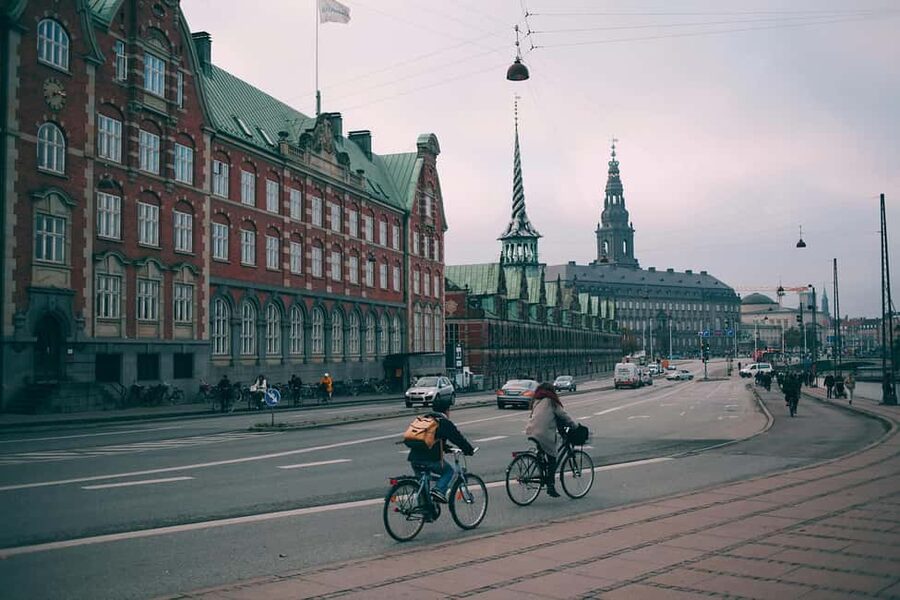
- Stop 3: Christiansborg Palace, a quick look into power
- Stop 4: Copenhagen Stock Exchange, finance meets city life
- Stop 5: Freetown Christiania, the alternative neighborhood moment
- Stop 6: Church of Our Saviour, a sight stop with story setup
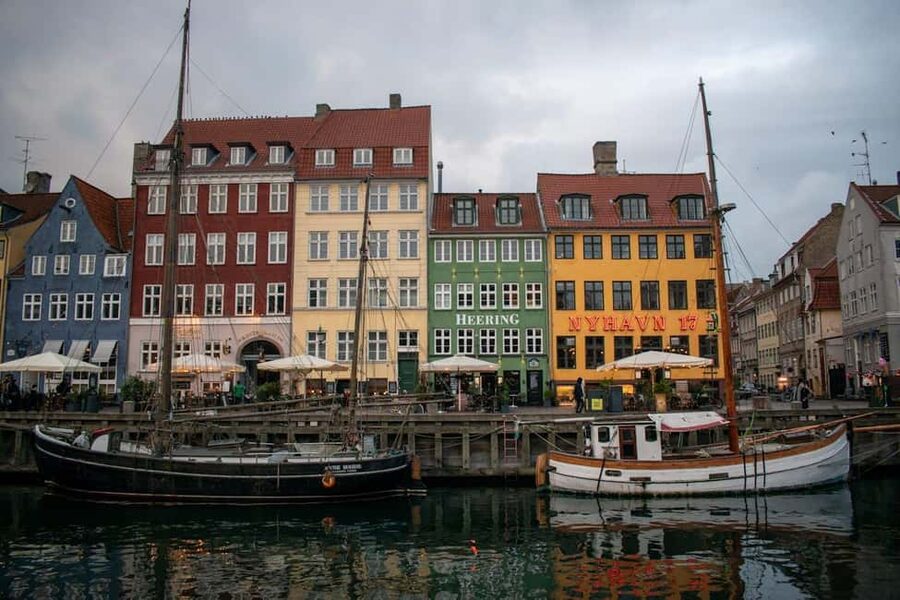
- Stop 7: Nyhavn, iconic waterfront, quick views
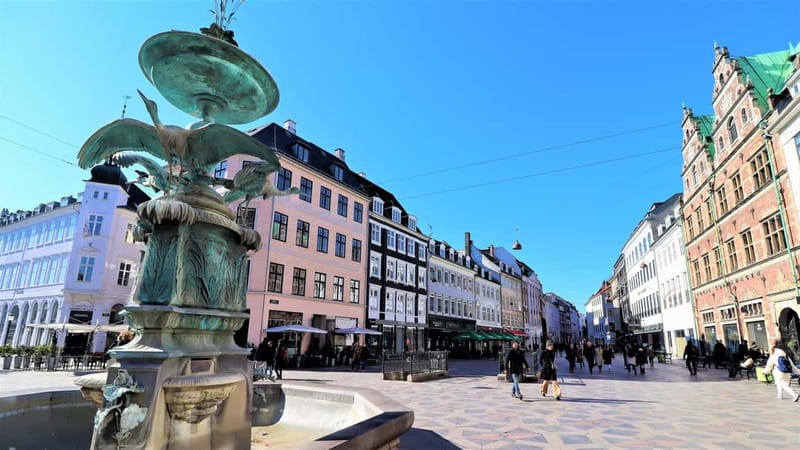
- Stop 8: King’s New Square, another fast slice of the center
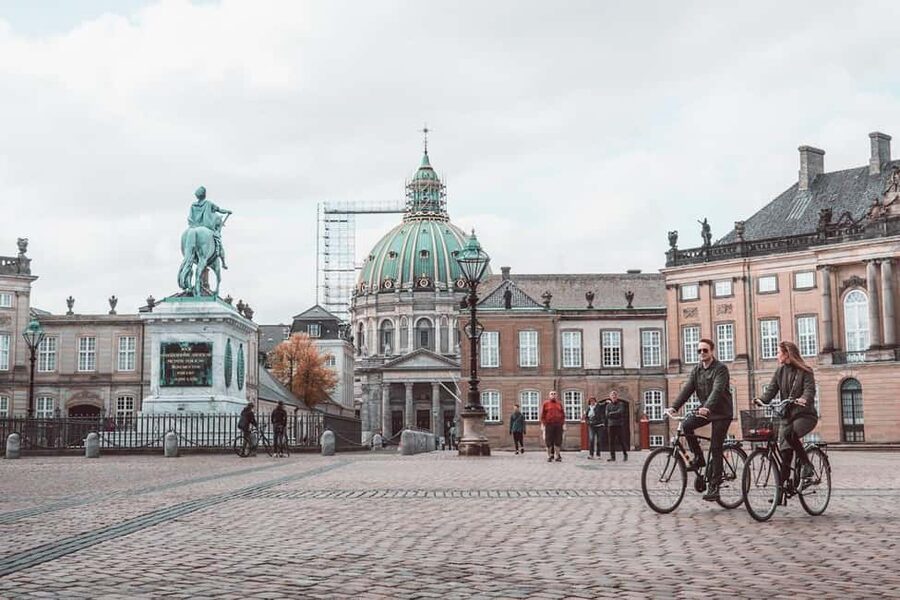
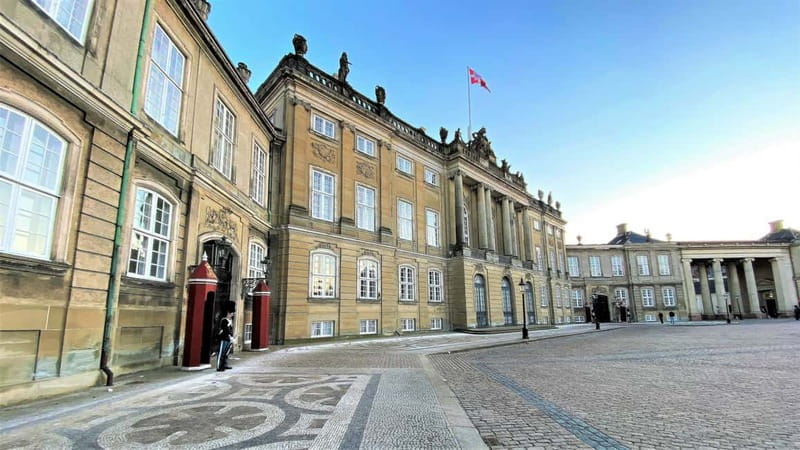
- Stop 9: Amalienborg Palace, royal Denmark from the road
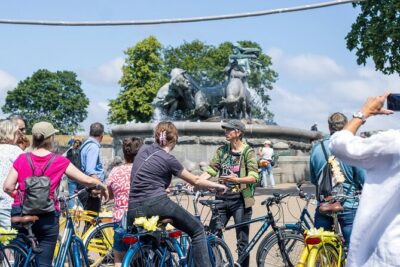
- Stop 10: Gefion Fountain, a classic landmark glimpse
- Stop 11: The Little Mermaid statue, Copenhagen’s photo magnet
- Stop 12: Rosenborg Castle, sightseeing stop for a slower look
- Stop 13: Finish near the Round Tower
- How much it costs, and what you should add to the budget
- Who this bike tour fits best
- Should you book this Copenhagen French bike tour?
- FAQ
- Is the tour guided in French?
- Does the price include a bicycle or a helmet?
- How long is the bike tour?
- How many people are in the group?
- Where is the meeting point?
- Do I need cycling experience?
- Can I cancel for a full refund?
Key moments that make this tour worth your time
- French live guide who connects Danish history, society, politics, geography, and the economy to the route
- Copenhagen bicycle bridges that help you experience the city’s design changes from the bike lane
- Christiania pass-by with context, so you understand what you are looking at instead of just seeing street art
- Landmark mix that stays practical: big icons plus quick-glance stops, all within 4 hours
- Small group size (max 10), which makes it easier to ask questions and keep a steady pace
Where the ride starts, and why it matters for timing
The meetup is at Vesterbrogade 4B, in front of the Copenhagen Visitor Service inside the Axelborg building, close to Tivoli’s main entrance and the SAS Skyscraper. You’ll spot the guide by the hat or cap. That location is handy because it keeps you near the city’s main rhythm right away, not out in the suburbs before you even start.
You are looking at a 4-hour experience, with starting times depending on availability. Practically, it means you should plan your day around the tour rather than treating it as a quick add-on. If Copenhagen is your first stop on a trip, this is a smart way to get your bearings fast.
The tour is small group, limited to 10 participants. For a bike tour, that matters. Smaller groups mean fewer bottlenecks and more time for the guide to explain what you are seeing. You also tend to get better spacing on narrow stretches and calmer group dynamics when you hit busier areas.
More of Copenhagen, reviewed one tour at a time
- Copenhagen: Canal Cruise with Guide
★ 4.6 · 9,115 reviews - Copenhagen: Hop-On Hop-Off Bus Tour with Boat Tour Option
★ 3.9 · 4,122 reviews - Private Walking Grand Tour of Copenhagen
★ 5.0 · 3,953 reviews - From Copenhagen: Lund and Malmö 2-Country Tour
★ 4.7 · 2,772 reviews
Bring your own bike: the biggest practical decision
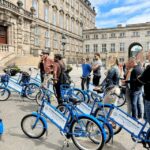
This is not a tour where someone hands you a bicycle and sends you out. Bikes and helmets are not provided, and you need your own vehicle. The good news is that Copenhagen is used to cyclists, so rentals are widely available. Local shops rent bikes daily starting at €12, with various sizes. You might also find rentals through apps or at hotels, if that’s easier for your travel style.
Why would a tour skip bikes and helmets? The operator’s reasoning is practical:
- choosing a bike that fits you is more comfortable than being assigned one
- it avoids losing time on adjustments before you even ride
- it can keep the route more flexible than a fleet schedule
Even if you rent, I recommend treating your bike choice as part of your comfort plan. If you are borrowing a bike that feels awkward, you will spend the whole ride thinking about your seat height instead of listening to the guide.
Also, cycling experience is required, and helmets are recommended. You do not need to be a touring cyclist, but you should be comfortable riding in a city setup with bike infrastructure.
The French guide’s storytelling: what you get beyond sightseeing
The heart of this experience is how the guide explains Denmark through the lens of the places you pass. The tour theme is not only famous buildings. It’s the Danish approach to social welfare, plus how the city has evolved over time, including modern architecture and new social and urban developments.
This is where the French-language format pays off. If you can follow French at a conversational level, you’ll get more out of the explanations when the guide ties a landmark to a bigger idea. The tour also leans into politics and economics, not just culture. You might expect a history lecture with scenery. Instead, it stays connected to streets, waterfront views, and the way people actually move through the city.
That also explains why it lasts 4 hours. You are not just getting a route. You are getting context, including at the pass-by stops where the time on the sidewalk is short.
Cycling the route: stops that shape the story
You’ll ride through the central core and hit a classic Copenhagen run of civic, royal, and harbor imagery. Some stops are sightseeing, some are pass by, and that difference affects what you can do with your photos.
More Copenhagen seen from a bike saddle
- Copenhagen: Highlights 3 Hour Bike Tour with a Local Guide★ 4.8 · 2,312 reviews
- Copenhagen: 3-Hour City Highlights Bike Tour with Guide★ 4.7 · 1,239 reviews
- Copenhagen Highlights 3 Hour Bike Tour with local Guide★ 5.0 · 1,125 reviews
- 3-hour Copenhagen City Highlights Bike Tour★ 5.0 · 757 reviews
- Copenhagen: 1.5-Hour City Highlights Bike Tour★ 4.6 · 477 reviews
Stop 1: Vesterbrogade 4B, your starting cue
Your first moment is practical: meet at the Visitor Service. Use this time to confirm your bike fit and get ready for steady riding. Since helmets are not included, this is also when you should be sure you have one if you plan to wear it.
Stop 2: Copenhagen City Hall, where civic Denmark feels real
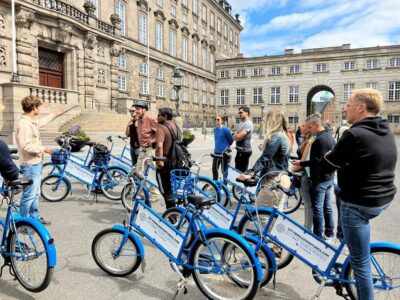
At Copenhagen City Hall, you get sightseeing time. This is a great start because the guide can anchor the tour’s theme quickly. Think of it as the city’s civic “why.” You are already in the middle of the system that shapes the social welfare model and urban planning ideas the guide will keep referencing.
What to watch for: the relationship between public space and movement. On a bike, you notice how the city guides you, which is exactly the kind of urban evolution the tour aims to explain.
Stop 3: Christiansborg Palace, a quick look into power
Christiansborg Palace is a pass-by stop. You will likely get a view from the saddle, plus narration from the guide. The upside is momentum. The drawback is obvious: you will not have time to linger. If a palace moment is your thing, you’ll want to leave time afterward to come back on foot.
Still, a pass-by can be useful here because the guide can connect power and governance to what you are seeing without pausing the whole group.
Stop 4: Copenhagen Stock Exchange, finance meets city life
You’ll do sightseeing at the Copenhagen Stock Exchange. This is another place where the guide can connect economic reality to the city’s design. Even if you are not into finance, the value is in how it frames Denmark’s approach to work, growth, and public planning, because those ideas tend to show up in physical space.
Again, expect a brief look. The tour is timed for a cycling loop, so treat sightseeing stops as “close enough for understanding,” not “enough for deep exploration.”
Stop 5: Freetown Christiania, the alternative neighborhood moment
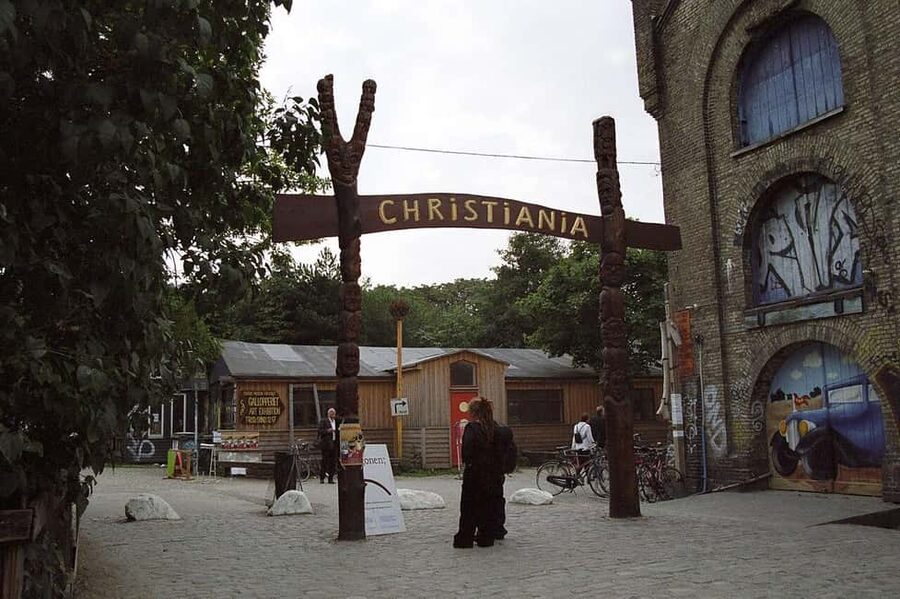
Freetown Christiania is pass by, but it is one of the most interesting stops on the route. The tour description is clear about what you are looking at: Copenhagen’s autonomous neighborhood with colorful street art and an alternative lifestyle.
This is where context matters. If you arrive with no background, you can miss the point, and you might not understand why people talk about it. On this ride, you get the guide’s explanation, so you can interpret what you see instead of just snapping pictures.
Since it is pass by, keep your expectations realistic. You’ll get views and narration, but you are not going to park your bike and explore for hours. If Christiania is a must, plan a separate return trip later.
Stop 6: Church of Our Saviour, a sight stop with story setup
Church of Our Saviour is another sightseeing stop. It gives you a pause in a route that otherwise moves quickly between major points. You’ll get the guide’s narration while you look on, and it’s a good chance to check in with your own pace.
One small tip: after you leave a pass-by like Christiania, a sightseeing stop is where you can breathe, reset, and make sure you are still comfortable on the bike for the rest of the afternoon.
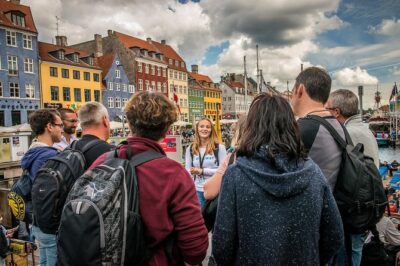
Stop 7: Nyhavn, iconic waterfront, quick views
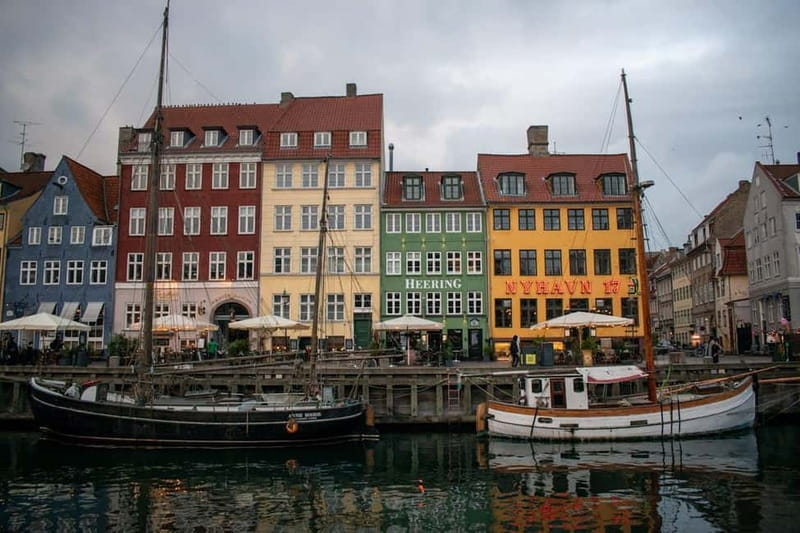
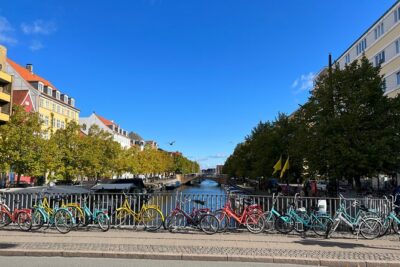
Nyhavn is pass by. It is famous for a reason. The tour gives you a moving glance, with the guide likely tying it back to the city’s urban evolution and modern use of historic waterfront spaces. The drawback is again time. If you want lingering photos, do it after the tour.
Still, for most people, seeing Nyhavn from a bike lane while the city feels alive around you is a great snapshot.
Stop 8: King’s New Square, another fast slice of the center
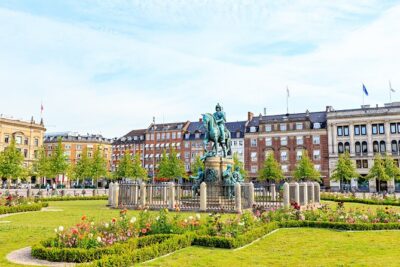
King’s New Square is pass by. This is one of those segments where you should treat it as a “you are here” moment rather than a deep visit. The value is the continuity of the story. Your guide can connect what you see now to Denmark’s broader social and urban themes without stopping the ride.
Stop 9: Amalienborg Palace, royal Denmark from the road
Amalienborg Palace is marked for sightseeing. This is a payoff stop because you get a bit more time to look and listen. The guide can connect the royal setting to the city’s identity, governance, and how public culture shapes everyday life.
Practical note: if you’re chasing photos, this is a better place to ask the guide where to stand briefly and how to manage your bike positioning.
Stop 10: Gefion Fountain, a classic landmark glimpse
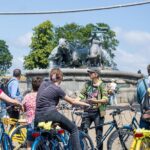
Gefion Fountain is pass by. You get the quick recognizable moment, with narration to help it sit inside the bigger Copenhagen story. This stop is best for people who want the landmark check without turning the tour into a slow crawl.
Stop 11: The Little Mermaid statue, Copenhagen’s photo magnet
The Little Mermaid is pass by. Expect the classic photo energy, but you should keep your expectations aligned with a pass-by stop. You will likely view it while moving, not from a long stop. If you want a full photo session, you can do that after.
Stop 12: Rosenborg Castle, sightseeing stop for a slower look
Rosenborg Castle is sightseeing. This is where you get one of the more structured looks in the latter half of the ride. It also helps the tour end on a note that feels more “city and culture” than pure city movement.
If you are starting to feel tired, this sightseeing stop is the moment to refocus. You’ve earned it.
Stop 13: Finish near the Round Tower
The tour finishes at The Round Tower, and the operator notes you end back at the meeting point area. That combination makes sense for a loop that keeps you close to central landmarks while returning you to a place where you can continue your day easily.
The Round Tower finish is a strong way to wrap up because it lands you in an area people often explore further on foot. After the ride, you can decide what you want to see longer, where you want to linger, and where you want to return by bicycle or walking.
How much it costs, and what you should add to the budget
The tour price is listed at $51 per person, for a 4-hour guided ride in French, with a small group and a live guide included. Bikes and helmets are not included. That means your real cost depends on your bike plan.
If you rent in town, several shops rent daily starting at about €12. So you should budget for that extra amount unless you already have a bike. Teenagers get a half-price discount, which can make the overall family math much nicer, as long as the kid can comfortably meet the cycling-experience requirement.
Is the $51 value fair without a bike included? For many people, yes, because you are paying for the guide, the route planning, and the context that turns landmarks into a coherent story. You are also getting the route design that uses Copenhagen’s cycling infrastructure, including recently constructed bicycle bridges. When you count the time savings compared to trying to stitch together an interpretation-heavy route on your own, it can pencil out well.
Who this bike tour fits best
This works best if you want:
- a structured Copenhagen intro with French-language commentary
- a guided story about Danish social welfare and urban evolution, not just sightseeing shots
- a manageable half-day that still covers many recognizable areas by bike
It might not be your match if:
- you do not feel comfortable cycling in a city
- you want long stops at each individual landmark, because some key points are pass by
- you need a helmet and do not plan to rent or bring one, since helmets are not provided
Should you book this Copenhagen French bike tour?
Yes, if you want your first Copenhagen bike experience to include context, not just movement. The biggest win is how the guide ties Danish history and social systems to what you see on the street, and the route includes major icons plus Christiania with the right kind of explanation. The second win is the small group size, which makes questions and pacing easier.
Book it with a clear plan for your bike. If you rent, do it early enough to get a size that feels right. And if you are sensitive to long rides, remember it is 4 hours and includes several pass-by sections, so you’ll want to build in extra time afterward for any stop you fall in love with.
If that sounds like your style, this is a strong way to see Copenhagen with both wheels and meaning.
FAQ
Is the tour guided in French?
Yes. The live tour guide speaks French.
Does the price include a bicycle or a helmet?
No. The tour includes the guide and the bike tour, but bicycles and helmets are not provided.
How long is the bike tour?
The duration is 4 hours.
How many people are in the group?
The group is small, limited to 10 participants.
Where is the meeting point?
Meet in front of the Copenhagen Visitor Service located in the Axelborg building, very near the main entrance of Tivoli Garden and the SAS Skyscraper. The guide will be wearing a hat or cap.
Do I need cycling experience?
Yes. The tour requires cycling experience, and you need your own bike. Helmets are recommended.
Can I cancel for a full refund?
Yes, you can cancel up to 24 hours in advance for a full refund.
All Our Denmark Reviews
Copenhagen On Two Wheels
Copenhagen, Reviewed
Other Danish days out we have written up

Copenhagen Bike & E-Bike Tours, compared.
 ★ 4.8Highlights 3 Hour Bike Tour with a Local GuideFrom $622,312 reviews
 ★ 4.73-Hour City Highlights Bike Tour with GuideFrom $551,239 reviews
 ★ 5.0Copenhagen Highlights 3 Hour Bike Tour with local GuideFrom $611,125 reviews
 ★ 5.03-hour Copenhagen City Highlights Bike TourFrom $54757 reviews
 ★ 4.61.5-Hour City Highlights Bike TourFrom $38477 reviews
 ★ 5.0Bike Tour Copenhagen. Private Guide, Concierge Service, Small GrpFrom $52416 reviews
 ★ 4.73-Hour Culinary Bike TourFrom $110301 reviews
 ★ 5.03-hour Culinary Bike Tour in EnglishFrom $107235 reviews
Browse the lists this tour appears in