
REVIEW · COPENHAGEN TOURS
Explore Copenhagen’s Art and Culture with a Local
Copenhagen has a way of showing its art first. This small-group walking tour pairs street art, major landmarks, and quick stories from a local guide, so you leave with better bearings and real context. You start at Stork Fountain in Amagertorv, then move through neighborhoods where the city’s creativity shows up on buildings and in public spaces.
I really like two things about this experience. First, the guide’s mix of art and city history stays practical, with short, memorable nuggets tied to what you are looking at right now. Second, the route includes big-photo stops, from the famous fortress of Kastellet to the colorful harbor end in Nyhavn, so it feels like a greatest-hits walk without being rushed.
One consideration: the pace is walking first, and commentary comes in chunks. If you want non-stop talk the entire time, you might notice a few quieter stretches where you could use extra context.
In This Review
- Key Highlights Worth Your Attention
- Getting Started at Stork Fountain, Amagertorv
- Stork Fountain to Street Art by Stine Hvid
- Andersen in the Gardens: Castle Serenity and Sculpture
- Kastellet, 1664, and the Gefion Legend
- The Rococo Dome, Kierkegaard in the Grounds, and a Royal Opera Peek
- Finishing in Nyhavn: Colorful 17th Century Harbor Facades
- Price and Value for a 90-Minute Local-Led Walk
- How to Get More Out of Your Local Guide (Especially If You Like Details)
- Who This Tour Suits Best (And Who Might Want a Different Plan)
- Final Call: Should You Book This Copenhagen Art and Culture Walk?
- FAQ
- How long is the Copenhagen art and culture tour?
- What language is the tour offered in?
- What is the price per person?
- Where do I meet and where does the tour end?
- How big is the group?
- What is included in the tour price?
- Is food or drinks included?
Key Highlights Worth Your Attention
- Start in Amagertorv at Stork Fountain with a classic old-town setting and details you might miss on your own
- Street art spotlight on Stine Hvid, plus pointers on other art you can spot later
- Hans Christian Andersen appears in the gardens, giving the Andersen connection a real place in your walk
- Kastellet’s 1664 star shape plus the Gefion legend tied to the fountain story
- A Rococo stop with the largest dome in Scandinavia, then a Kierkegaard statue moment in the grounds
- Nyhavn at the end, so you finish with the 17th-century harbor vibe and the iconic waterfront facades
Getting Started at Stork Fountain, Amagertorv
You’ll meet at Stork Fountain, Amagertorv 6, Copenhagen, a great spot for getting oriented fast. It is an elegant focal point in a historical square, with surrounding old-town buildings and a mosaic-floor setting that makes the start feel more like entering a living museum than lining up for a tour.
What I like most about starting here is that it teaches you how Copenhagen “thinks.” You are not just ticking off sights. You are learning how public art and city design work together. Even if you are only in town for a short visit, you will quickly understand why locals hang out in squares and edges, not just inside museums.
This is a guided walking tour in English for groups up to 8 people. That small size matters. In a large group, you tend to look at the guide more than the streets. Here, you can actually read the details while still keeping up with the route.
Practical tip: wear shoes you can walk in comfortably for 90 minutes. The route is a city-walk style tour, so you will be on foot most of the time, not sitting around.
More of Copenhagen, reviewed one tour at a time
- Copenhagen: Canal Cruise with Guide
★ 4.6 · 9,115 reviews - Copenhagen: Hop-On Hop-Off Bus Tour with Boat Tour Option
★ 3.9 · 4,122 reviews - Private Walking Grand Tour of Copenhagen
★ 5.0 · 3,953 reviews - From Copenhagen: Lund and Malmö 2-Country Tour
★ 4.7 · 2,772 reviews
Stork Fountain to Street Art by Stine Hvid
After you take in Stork Fountain, the tour shifts into the creative side of the city. One stop is dedicated to street art by Stine Hvid, and the guide connects it to the wider street-art scene across Copenhagen’s neighborhoods.
This is the part that helps you see Copenhagen differently. Street art can look random if you only glance at it. With a local guide pointing out themes, locations, and what to notice, you start to spot patterns: how artists choose walls, how styles shift by area, and how art becomes a kind of neighborhood language.
You also get practical value that lasts after the tour. The guide shares examples of street art you can look for elsewhere in the city. That means you can keep exploring with a sharper eye once you are on your own. It is not just viewing one artwork, it is learning how to “read” the city’s visual culture.
If you are the type who likes to take photos, bring your camera habit. This is one of those tours where you will want more than one shot, because the details you get pointed out are often the ones you would not notice at walking speed.
Andersen in the Gardens: Castle Serenity and Sculpture
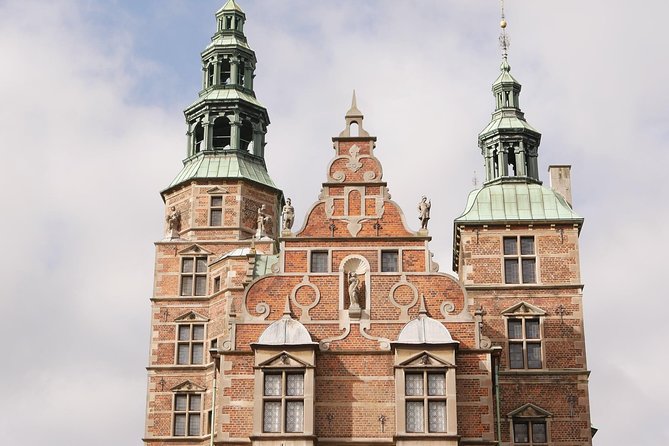
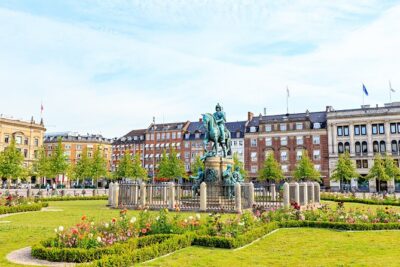
The tour then heads toward a historical castle and its gardens, where you can slow down visually. You will see the serene beauty of the grounds and a specific sculpture tied to Hans Christian Andersen.
Gardens can feel like a break from sightseeing, but here they do more than provide a pretty pause. They give Andersen a physical setting. Instead of treating him like a name from a school book, you see how Copenhagen places literature and storytelling in public space, tied to landscapes and sculpture.
This is also a good moment for anyone who wants a counterbalance to street art. Copenhagen has multiple creative streams: modern, urban expression on one side, then calmer cultural storytelling in the other. You get both in a single walk.
A small drawback to watch for: if you move from lively street art into quiet gardens, it can feel like the pace slows. That might be a good thing, or not, depending on your travel style. If you like calm stops and time to look, it is perfect. If you get antsy with slower moments, you might want to ask your guide to keep the story going while you walk between viewpoints.
Kastellet, 1664, and the Gefion Legend

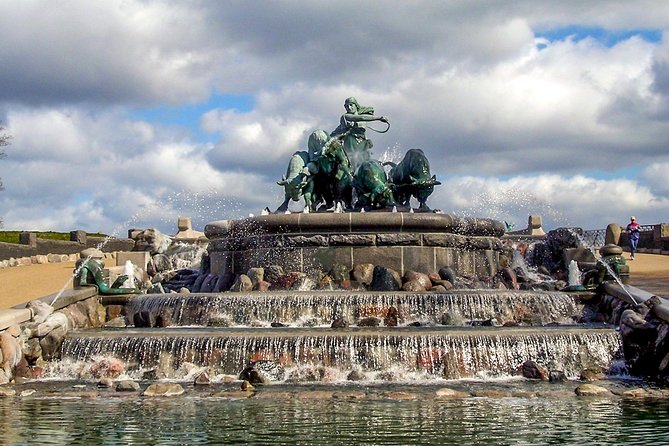
Next comes one of the most satisfying contrasts in the whole route: Kastellet, the star-shaped fortress built in 1664, and the legend of the Norse goddess Gefion depicted in the fountain story.
Fortresses are easy to treat like architecture trivia. But when your guide connects the geometry, the timeline, and the mythology, it clicks. Kastellet’s star shape is more than a visual oddity. It is a defensive design choice, and it shows how the city’s identity includes both power and planning. Then the Gefion legend adds a mythic layer that makes the fountain story feel less like decoration and more like local storytelling.
This stop is a great reminder of why guided tours can beat self-guided wandering. You can see a fortress gate and a fountain on your own, but you might not naturally connect the fortress date, the Norse tale, and the meaning that comes from explaining it out loud while you are standing there.
If you enjoy myths and Scandinavian culture, this is likely one of your favorite moments. It is also a good place to ask questions. If you are curious about Viking-era mythology or how Danish stories appear in city art, your guide will be well positioned to answer.
- Copenhagen Highlights Walking Tour★ 5.0 · 2,324 reviews
- Copenhagen: Highlights 3 Hour Bike Tour with a Local Guide★ 4.8 · 2,312 reviews
- Hamlet and Sweden Tour – Two Countries in one day !★ 5.0 · 2,223 reviews
- Grand Day Trip around Copenhagen★ 5.0 · 2,020 reviews
- Copenhagen Sightseeing Classic Canal Tour With Live Guide★ 4.5 · 1,906 reviews
The Rococo Dome, Kierkegaard in the Grounds, and a Royal Opera Peek
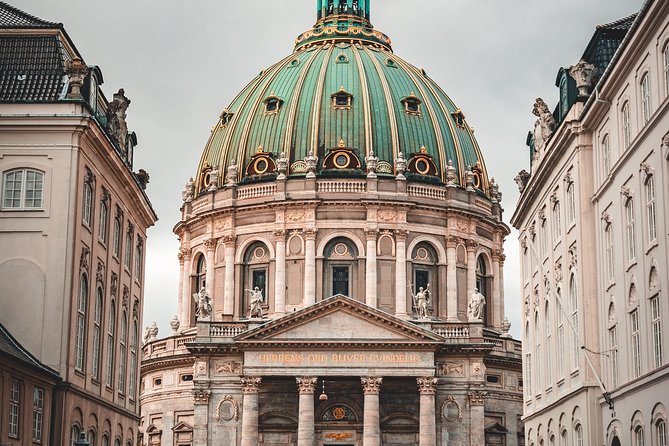
Then you hit a different kind of landmark: a Rococo structure with the largest dome in Scandinavia, plus a stop where you can spot a Kierkegaard statue in the grounds. This pairing works well because it links two major Danish cultural pillars: architecture and philosophy.
You might not expect Kierkegaard to show up on a walking route about art and culture, but it actually makes sense. Copenhagen’s public spaces often reflect big ideas, not just pretty views. When you see a philosopher represented alongside a major building, the city’s cultural priorities feel more grounded in real place.
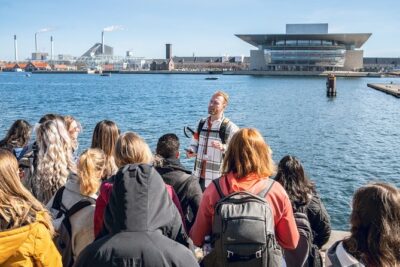
After that, you get a look across the water at the Danish Royal Opera house. You do not have to be an opera person to appreciate this moment. It is a clean city-photo target, and it signals that Copenhagen has high arts culture right in the urban mix.
One practical note: crossing viewpoints on a walking tour can mean short waits for the right angle. In a small group, that is easier. You can shift your stance, get your angle, and keep moving without feeling lost in a crowd.
Finishing in Nyhavn: Colorful 17th Century Harbor Facades

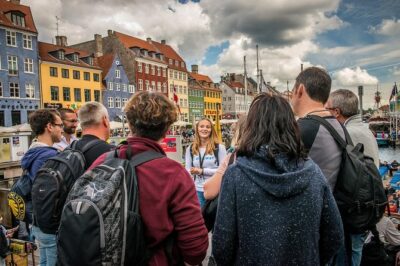
You finish with a stroll through Nyhavn, in the Indre By area, ending at the waterfront after a walk that has been pulling art and landmarks into one line.
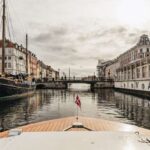
Nyhavn is famous for a reason. You get 17th century harbour character with iconic colorful waterfront facades that make the area look like a postcard even when you are simply standing there watching boats.
Ending here is smart. If you start with major squares and monuments, you might feel like you are walking through history. But ending in Nyhavn feels like you are stepping into the everyday version of that history, where buildings and canals stay useful. Even if you are not planning dinner here, you will likely want to linger for a few minutes just to soak in the atmosphere.
Practical tip: plan to keep your evening flexible. If Nyhavn is your last stop, you might want a snack or a drink after the tour. The tour itself does not include food or drinks, so it is on you. But the timing is convenient for turning the walk into a full afternoon or early evening.
Price and Value for a 90-Minute Local-Led Walk
The price is $128.94 per person for about 1 hour 30 minutes. That is not a budget-only price, but it can still be good value if you are comparing it to private touring time or self-guided guesswork.
Here is where the value comes from:
- Small group size up to 8: you are paying for a local’s attention, not a crowd’s pacing
- English guide: you get explanations on the spot, which beats trying to research every landmark mid-walk
- Art plus architecture plus legends: it is not one theme park-style route, it is a connected story
- Ending in a high-satisfaction location: Nyhavn is an easy win for photos and atmosphere after you learn the background
Also, the tour offers group discounts. If you are traveling with friends and can book together, it can help make the per-person cost feel more reasonable.
My honest take: for a short trip, 90 minutes is long enough to see a lot and short enough to still enjoy the rest of your day. If you prefer slower, museum-heavy travel, this might feel too quick. But if you want your first day in Copenhagen to start with meaning, this length is a strong fit.
How to Get More Out of Your Local Guide (Especially If You Like Details)
A walking tour succeeds or fails based on pacing and what the guide chooses to emphasize. This one is built around sightseeing with stories tied to art, culture, and city landmarks.
From what I see in the experience format, the guide mixes historical pointers with art commentary. That is exactly what makes the stops feel connected rather than like random photo ops. You also get practical points on what to notice in other neighborhoods, which is a big advantage if you plan to explore after.
One caution: a previous traveler noted there were stretches of silence that could have been used for more talking, and they wanted slightly more information at some points. That does not mean the tour is quiet the entire time. It does suggest you should bring curiosity, and you should speak up if you want more depth.
If you want to maximize the experience, do this:
- Ask one or two questions when you arrive at a new stop, especially about the art or legend tied to it
- If you care about specific places like an art museum or the King’s Theater area, mention it early. Your guide may not be able to change the route, but they can often give pointers on the best way to see those spots later
- Use the quieter stretches to look closely at details the guide pointed out, that is often where it “clicks”
Who This Tour Suits Best (And Who Might Want a Different Plan)
This tour is a good fit for:
- New arrivals who need to learn the city’s art and cultural patterns fast
- Returning travelers who have already seen the major sights but want sharper context for art, sculpture, and public storytelling
- People who like street art plus landmark architecture, not just one category
- Anyone who enjoys Scandinavian culture through real places, like Kastellet and figures such as Hans Christian Andersen and Kierkegaard
It might not be ideal if:
- You want long, seated museum time, this is walking and viewing focused
- You strongly prefer a nonstop narration style, you might notice moments of quieter walking
- You want a route that hits a very specific set of indoor attractions, this walk ends outdoors at Nyhavn
That said, you can use it as a first-day strategy. Do this walk early, then choose museums and indoor stops based on what grabbed your attention.
Final Call: Should You Book This Copenhagen Art and Culture Walk?
Yes, I think this is worth booking if you want a guided art and culture route that gives you real context without eating your whole day. The strongest reason to go is the combination of street art, sculpture, legends, and major landmarks in a route that ends in Nyhavn, so you get both learning and a satisfying payoff.
You should especially consider it if you like the idea of learning what to notice, not just what to photograph. If you prefer ultra-detailed explanations every minute, you can still book, but go with the mindset that this is a walking tour with stories in scenes, and bring questions.
FAQ
How long is the Copenhagen art and culture tour?
It runs for about 1 hour 30 minutes.
What language is the tour offered in?
The tour is offered in English.
What is the price per person?
The price is $128.94 per person.
Where do I meet and where does the tour end?
You start at Stork Fountain, Amagertorv 6, 1160 København, Denmark, and you end in Nyhavn, Indre By, Denmark.
How big is the group?
The tour has a maximum of 8 travelers.
What is included in the tour price?
It includes a local guide.
Is food or drinks included?
No. Food, drinks, or snacks are not included.
All Our Denmark Reviews


Copenhagen, Reviewed
Other Danish days out we have written up



Copenhagen Tours, compared.
 ★ 4.6Canal Cruise with GuideFrom $269,115 reviews
 ★ 3.9Hop-On Hop-Off Bus Tour with Boat Tour OptionFrom $354,122 reviews
 ★ 5.0Private Walking Grand Tour of CopenhagenFrom $3423,953 reviews
 ★ 4.7From Copenhagen: Lund and Malmö 2-Country TourFrom $1412,772 reviews
 ★ 5.0Copenhagen Highlights Walking TourFrom $402,324 reviews
 ★ 4.8Highlights 3 Hour Bike Tour with a Local GuideFrom $622,312 reviews
 ★ 5.0Grand Day Trip around CopenhagenFrom $2112,020 reviews
 ★ 4.5Copenhagen Sightseeing Classic Canal Tour With Live GuideFrom $331,906 reviews