
REVIEW · COPENHAGEN FOOD & PASTRY TOURS
The Art of Baking Danish Pastry
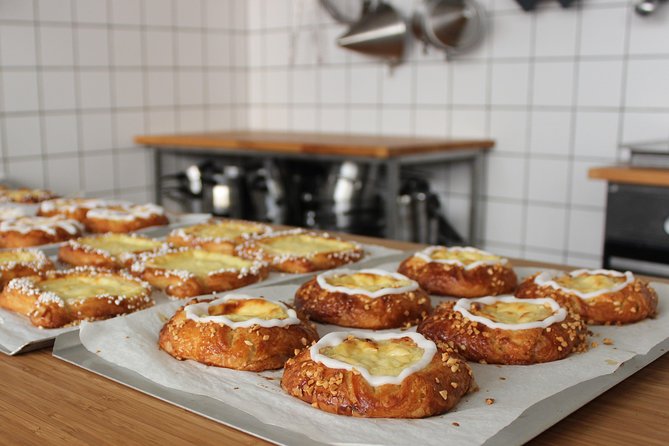
Danish pastry dough, made by you, in Copenhagen. This morning class in Frederiksberg walks you from kneading and folding to shaping classic treats like kanelsnegle and spandauer, with a professional pastry chef leading the way.
Two things I really like: you get hands-on instruction (not just watching), and you leave with actual pastries plus recipes emailed to you for practice later.
One possible drawback to plan for: you will likely make more treats than you can realistically eat right away, so bring a plan to share or pack them for later.
In This Review
- Key things to know before you go
- Where this Danish pastry class happens in Frederiksberg
- Price and what you actually get for $117.23
- The 3.5-hour rhythm: from dough handling to final shapes
- Chef Frederik Terrible and the small-group advantage
- The pastries you’ll bake, and why each one is a real Danish classic
- Tea and coffee tasting, then the part everyone talks about: take-home pastries
- Getting the recipes by email: the best part for repeat baking
- Logistics that make or break the experience
- Is it worth it? My value take for food lovers
- Who should book this Danish pastry class
- Should you book it or skip it?
- FAQ
- What is the class duration?
- Where does the class meet in Copenhagen?
- What time does the class start?
- What language is the class offered in?
- How big is the class group?
- What do I get to eat and drink during the class?
- What kinds of Danish pastries will I make?
- Are recipes included after the class?
- Is this experience refundable if I cancel?
Key things to know before you go
- Small group size (max 12) means you get more direct help when dough gets tricky.
- Chef Frederik Terrible’s pacing is fast enough that you should listen closely and ask questions early.
- You learn the core technique flow (kneading, rolling, folding) before you start shaping pastries.
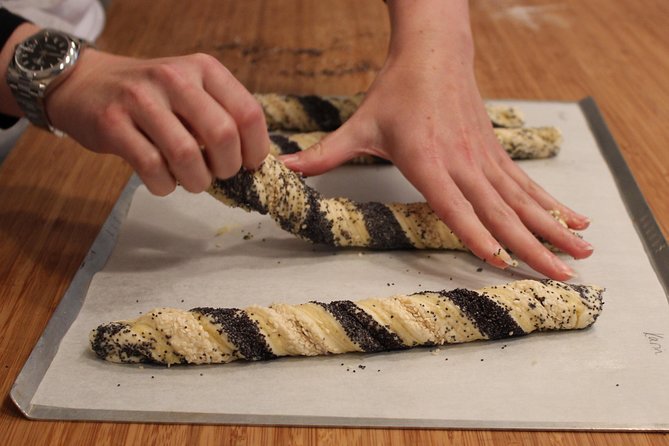
- You bake multiple Danish classics, including kanelsnegle, Spandauer, and poppy-sesame twists (Frøsnapper).
- Coffee and tea are part of the wrap-up, so the tasting feels like the payoff, not just a formality.
- Expect to take home a lot, often enough for multiple days, if you can store them.
Where this Danish pastry class happens in Frederiksberg
This class starts in the Frederiksberg neighborhood west of central Copenhagen, near public transportation. Your meeting point is Grundtvigsvej 10A, 1864 Frederiksberg, and you end back there after the class.
The location detail that matters most: the entrance can be easy to miss if you rely only on your map app. A practical move is to give yourself a few extra minutes. Frederiksberg is manageable on foot once you’re in the right area, but the wrong-side-of-the-street problem can add stress right before class.
Why the setting is a big deal for this kind of food experience: you are going into a working teaching kitchen, not a staged demo space. That is what makes the class feel like real baking instruction and not a sightseeing stop.
Still hungry? More Copenhagen eating, reviewed
- The Copenhagen Culinary Experience Food Tour
★ 5.0 · 959 reviews - Copenhagen Culinary Food Tour with 6+ Tastings of Danish Classics
★ 5.0 · 541 reviews - Copenhagen’s oldest and original food tour (Est. 2011).
★ 4.8 · 442 reviews - Copenhagen: Best of Danish Pastry Tasting Tour
★ 4.8 · 414 reviews
Price and what you actually get for $117.23
At $117.23 per person for about 3 hours 30 minutes, this is not a cheap activity. But it is built around one thing that often drives value in cooking classes: you’re not only learning, you’re producing.
Here is what you get that supports the price:
- You bake several Danish pastries during the session.
- You get coffee and tea at the end while you taste what you made.
- You leave with a serious quantity of pastries (many people mention filling boxes to take home).
- You receive the recipes by email afterward, so the class keeps paying you back.
Also, the early start time matters. A 9:00 am start means you still have most of the day open for Tivoli, the canals, or any museum hop. Cooking classes that run late can crowd your schedule. This one doesn’t.
The 3.5-hour rhythm: from dough handling to final shapes
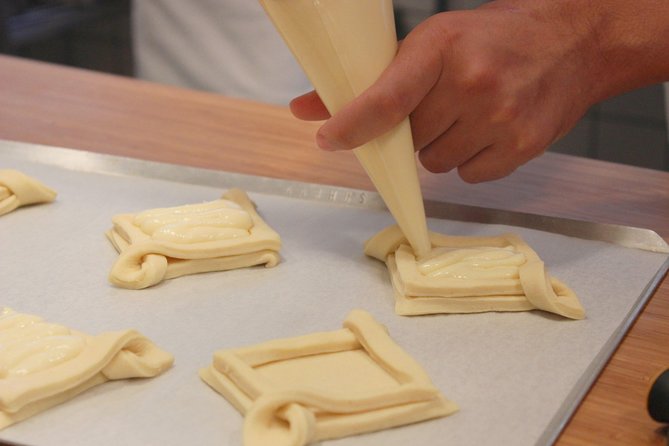
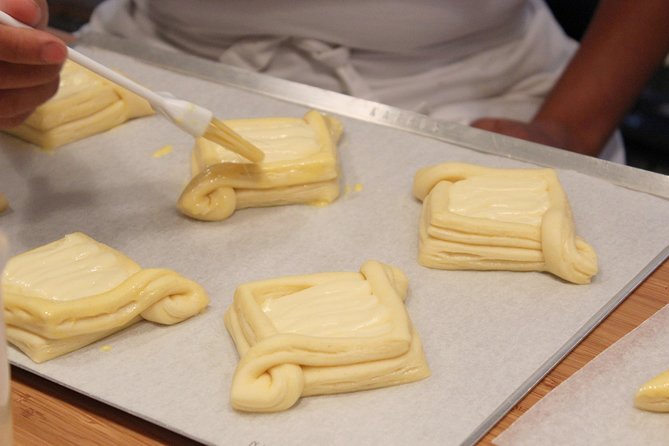
The class moves like a good bakery workflow. You start with the chef showing the techniques, then you shift into hands-on practice.
You’ll work through key dough steps such as:
- Kneading: this is where dough texture gets smoother and more elastic.
- Rolling: where you control thickness for consistent pastries.
- Folding: a major step that shapes how the pastry layers form.
What I like about this structure is that it teaches you the logic, not just the motions. If your dough feels too tight, too loose, or inconsistent, the chef can often correct it early because you are doing the steps yourself.
The pace is fast, and in a small group (up to 12), that speed is part of why people feel like time flies. It also means you should be present. When directions are given quickly, the best results come from listening closely, then jumping in right away.
Chef Frederik Terrible and the small-group advantage

Chef Frederik Terrible is the engine of this class. The most repeated strengths are not subtle: he is patient, organized, and very clear about what to do next. The vibe that comes through again and again is that he is serious about getting you good results, but he still keeps the experience fun.
In a group this size, you are not stuck waiting for one-on-one help for every step. Instead, the chef can check in with multiple people during the workflow. That matters most during steps where the dough can go sideways quickly, like getting even thickness or following the fold and shape sequence.
If you’re traveling with kids or you’re a true novice, this kind of coaching style is a lifesaver. People specifically call out that even first-timers leave feeling successful and produce a lot of pastries.
- Copenhagen Highlights Walking Tour★ 5.0 · 2,324 reviews
- Copenhagen: Highlights 3 Hour Bike Tour with a Local Guide★ 4.8 · 2,312 reviews
- Hamlet and Sweden Tour – Two Countries in one day !★ 5.0 · 2,223 reviews
- Grand Day Trip around Copenhagen★ 5.0 · 2,020 reviews
- Copenhagen Sightseeing Classic Canal Tour With Live Guide★ 4.5 · 1,906 reviews
The pastries you’ll bake, and why each one is a real Danish classic
You learn by making several different styles, not just one “version.” That variety is the cultural win here. You taste and compare, and you also understand how different dough handling and fillings create different results.
You’ll work with:
- Cinnamon rolls (kanelsnegle)
These are comfort pastries built around warm spice and a tender, layered bake. If you want something that feels instantly familiar but still feels distinctly Danish, start here.
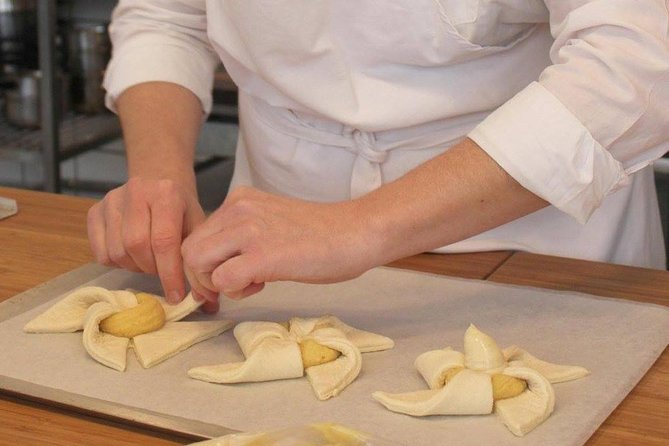
- Danish pastry (Spandauer)
This is a classic Danish format, and it often highlights balance: dough texture plus filling. It’s a great one to learn if you care about how Danish pastries land between breakfast treat and dessert.
- Poppy seed and sesame twists (Frøsnapper)
These bring a different flavor profile. People mention these as fan favorites, often because the seed filling feels bold without being overwhelming.
Because you’re making multiple kinds, you also learn a broader range of pastry skills. Even if you don’t nail every final result on the first try, you still take home a useful mental map for how Danish pastries are assembled.
Tea and coffee tasting, then the part everyone talks about: take-home pastries
After your pastries bake, the class ends with tea and coffee. This matters because it gives you a moment to step back and enjoy the work you just did.
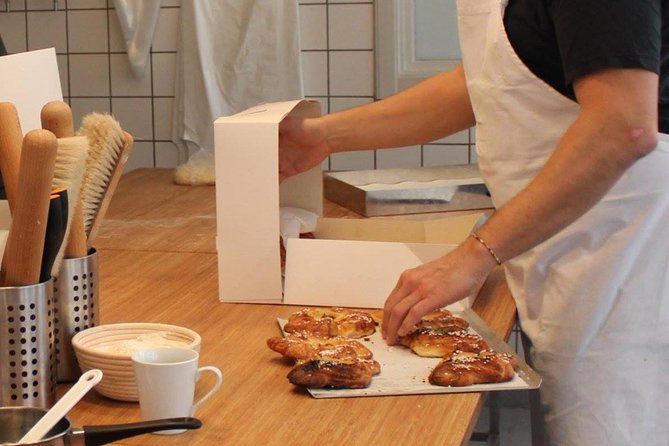
But the bigger moment is what happens right after: you take home your creations. Many people mention bringing two boxes full of pastries, and several mention amounts around a dozen pastries per person, which can mean enough pastries to last through the rest of your trip.
That leads to a simple piece of advice: treat this like you’re doing a mini food shop. Pack small containers or a plan for where these will live in your luggage. If you’re flying soon after, think ahead about storage and keeping them from getting smashed.
This is also where the one drawback mentioned at the top becomes practical. If you’re hungry and you have a crowd, great. If not, you’ll need a plan to share.
Getting the recipes by email: the best part for repeat baking
One of the strongest reasons to book this class is the follow-up. The recipes used in class are emailed to you afterward.
That means your learning doesn’t end when you walk out the door. You can recreate what you made, test adjustments, and make the technique you practiced feel repeatable.
I love this because it turns a one-time vacation activity into something you can carry home. If you bake at all, you’ll probably use the recipes. Even if you bake rarely, having the method and ingredient list makes it far easier to try again.
Logistics that make or break the experience
A few small practical points will help you enjoy the class more:
- Arrive early enough to find the entrance. The address is Grundtvigsvej 10A, but people note the actual entrance may be on the opposite side of the street from what mapping apps suggest.
- Bring yourself, not gear. The data you have here does not list special equipment, so focus on arriving ready to work with your hands.
- Listen fast, then ask fast. There’s a recurring theme that the chef can talk quickly. If something is unclear, ask while you still have a chance to correct your dough or shaping step.
If you like structured classes with real output, you’ll feel at home here.
Is it worth it? My value take for food lovers
I’ll be blunt: value depends on what you want from Copenhagen. If you only want a snack and a photo, this class may feel heavy. If you want a hands-on food skill, it’s one of the best use-of-time options.
Here’s the value equation in plain terms:
- You pay for instruction by a professional chef.
- You pay for ingredients and baking time.
- You pay for the coffee and tea moment.
- You pay for take-home pastries that can stretch into multiple days.
- You pay for the recipes you can use later.
At 3 hours 30 minutes, the class also fits neatly into a morning slot. And because it’s in a smaller group, you’re not watching passively. You are making.
Who should book this Danish pastry class
This is a great match if:
- You’re a food lover who wants to bring home more than a souvenir.
- You like learning by doing, not by watching.
- You want a morning activity that leaves your afternoon open.
It can also be a fun couple activity, since the class format suits shared teamwork at the workstations. Parents and families often like it too, because the chef’s hands-on coaching helps beginners keep up.
If you hate the idea of handling lots of baked goods to store or transport, plan around that first.
Should you book it or skip it?
Book it if you want a hands-on Danish pastry experience with real output, clear chef coaching, and an edible souvenir that also teaches you technique. The strongest reasons are small group size, Chef Frederik Terrible’s organized teaching style, and the fact that you leave with pastries plus recipes by email.
Consider another option if:
- You’re not interested in baking or you hate fast-paced instructions.
- You are traveling in a way that makes carrying home a lot of pastries difficult.
- You prefer lighter, low-commitment activities on your trip.
If you can handle the take-home quantity and you like learning through your hands, this class is a smart Copenhagen choice.
FAQ
What is the class duration?
It’s approximately 3 hours 30 minutes.
Where does the class meet in Copenhagen?
The meeting point is Grundtvigsvej 10A, 1864 Frederiksberg, Denmark. The activity ends back at the meeting point.
What time does the class start?
The start time is 9:00 am.
What language is the class offered in?
The class is offered in English.
How big is the class group?
The class has a maximum of 12 travelers.
What do I get to eat and drink during the class?
You’ll have tea and coffee served at the end, and you’ll taste the Danish pastries you bake.
What kinds of Danish pastries will I make?
The sample menu includes Cinnamon rolls (kanelsnegle), Danish pastry (Spandauer), and poppy seed and sesame seed twists (Frøsnapper).
Are recipes included after the class?
Yes. The recipes used are emailed to you after the class.
Is this experience refundable if I cancel?
No. It’s non-refundable and cannot be changed for any reason.
All Our Denmark Reviews




More Eating Your Way Through Copenhagen


Other Danish days out we have written up



Copenhagen Food & Pastry Tours, compared.
 ★ 5.0The Copenhagen Culinary Experience Food TourFrom $149959 reviews
 ★ 5.0Copenhagen Culinary Food Tour with 6+ Tastings of Danish ClassicsFrom $130541 reviews
 ★ 4.8Copenhagen’s oldest and original food tour (Est. 2011).From $141442 reviews
 ★ 4.8Best of Danish Pastry Tasting TourFrom $74414 reviews
 ★ 4.73-Hour Culinary Bike TourFrom $110301 reviews
 ★ 5.0Copenhagen Food & Drink Private Tour: Scandinavia Delight TastingFrom $197236 reviews
 ★ 5.03-hour Culinary Bike Tour in EnglishFrom $107235 reviews
 ★ 4.5Copenhagen Private Food Walking Tour with 6 or 10 TastingsFrom $202177 reviews
Browse the lists this tour appears in