
REVIEW · WALKING TOURS
The Philosopher’s Last Walk: An audio tour on the life of Søren Kierkegaard
Kierkegaard walks well in Copenhagen. That is the fun part of this self-guided VoiceMap tour: you follow the story along real places, from family roots to the grave, with offline audio that keeps going even when your signal fades. I like that it is well-written and witty, and it helps turn his big ideas into something you can picture on the streets.
I also like the pace freedom. The route is about 1 hour to 1 hour 15 minutes, and you can pause, look, and replay parts when you want. One thing to keep in mind, though, is that you need your own smartphone and headphones, since those are not included.
In This Review
- Key Things That Make This Tour Worth Your Time
- A Story Walk You Can Do at Your Own Speed
- Price and What You Actually Get for $9.99
- Your Route in Order, Stop by Stop
- Starting at Kierkegaard’s Family House: Where the Story Begins
- Passing the Church: Faith, Doubt, and a Copenhagen Setting
- Rundetårn: When Architecture Becomes Part of the Mindset
- Copenhagen University: Ideas Need a Home
- The Cathedral and a Bridge Crossing: From Thinking to Moving
- Lakes Along the Way: Slower Footsteps, Clearer Listening
- Assistens Cemetery: The Real Emotional Landing
- Ending at Søren Kierkegaard’s Burial Place: The Full Circle Moment
- How VoiceMap Makes It Work: Offline, GPS, and the Smartphone Reality
- Timing Your Walk in Real Life
- Who This Tour Fits Best
- Small Caveats I’d Plan Around
- Should You Book the Philosopher’s Last Walk?
- FAQ
- How long is the Philosopher’s Last Walk audio tour?
- How much does the tour cost?
- What language is the audio in?
- Is the tour self-guided or guided live?
- Where does the tour start and end?
- Is offline access included?
- Do I need a smartphone and headphones?
- Does the price include food or transportation?
- Is the tour private?
- What is the cancellation policy?
Key Things That Make This Tour Worth Your Time

- Offline audio, maps, and geodata, so you can keep listening without worrying about roaming data
- Lifetime access in English, so you can repeat it later when you revisit Copenhagen
- A GPS route that takes you from Nytorv 2 to the Søren Kierkegaard Gravesite
- A thoughtfully linked walk through landmarks tied to his city and era (Rundetårn, Copenhagen University, cathedral area)
- A finish where the story lands, at the burial place, with a cemetery stop along the way
A Story Walk You Can Do at Your Own Speed
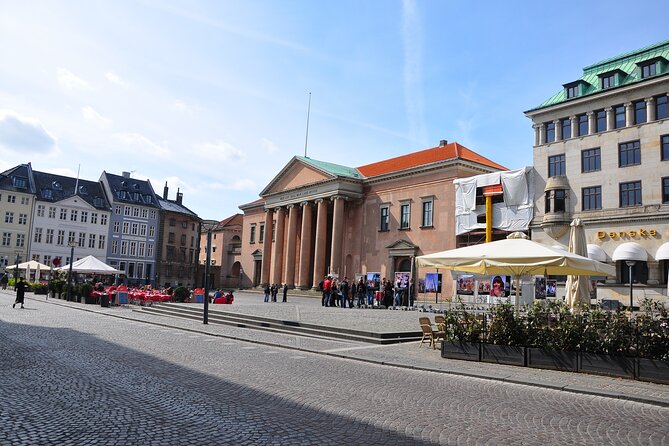
This is not a sit-and-listen museum tour. It is a walking audio guide that connects philosophy to geography. You start near central Copenhagen at Nytorv 2, then you work your way through a chain of places that fit together like chapters.
The best part is that you control the timing. You might want a quick pass to get the flow. Or you might stop longer when a scene hits, especially as the route shifts from city landmarks into quieter green space and cemetery ground.
Because it is self-guided, you are not trapped in a rigid group schedule. You can slow down for photos, step off for a drink, or spend extra time near the end without feeling like you are holding anyone back.
More Danish towns covered on foot
- Private Walking Grand Tour of Copenhagen
★ 5.0 · 3,953 reviews - Copenhagen Highlights Walking Tour
★ 5.0 · 2,324 reviews - Politically Incorrect Private Highlights Walking Tour
★ 5.0 · 1,244 reviews - Copenhagen: Group Walking Tour – City Highlights – 2 Hours
★ 4.7 · 1,088 reviews
Price and What You Actually Get for $9.99
At $9.99 per person, this is priced like a low-cost add-on that can still feel meaningful. You are not paying for a guide in a van. You are paying for a curated route, audio content, and navigation help through VoiceMap.
What makes it good value for the money is the package:
- lifetime access to the tour in English
- voice-guided GPS
- offline access for audio and maps
- directions so you can start when you are at the right spot
That last point matters more than people think. The tour is designed so when you are standing at the correct starting location, it will click into action. If you like tours you can start instantly instead of hunting around, you will appreciate that.
Your Route in Order, Stop by Stop
The tour is built as a linear walk that ends at the place you probably came to see, Kierkegaard’s burial site. Plan on about 1 to 1 hour 15 minutes, and expect it to feel a bit longer if you linger at the cemetery.
Here is how the route unfolds, in practical terms.
Starting at Kierkegaard’s Family House: Where the Story Begins
The tour begins at Søren Kierkegaard’s family house. This first stop is important because it grounds the whole experience. Instead of starting with big philosophical fame, you start with beginnings.
I like this structure. It helps you connect the later landmarks with a more human timeline. Even if you already know his name, this kind of start makes the rest of the walk easier to follow.
Practical tip: arrive with your phone charged. Early momentum counts, and once you settle into the audio rhythm it is easier to keep going.
Other Danish walks you run at your own pace
- Copenhagen: Hop-On Hop-Off Bus Tour with Audio Guide★ 4.2 · 100 reviews
- Copenhagen Little Mermaid Exploration Game and Self-Guided Tour★ 4.0 · 36 reviews
- Monstour: A Self-Guided Audio Tour of Danish Folk Legends★ 4.5 · 19 reviews
- Copenhagen Self-Guided Murder Mystery Tour by the Round Tower★ 4.0 · 11 reviews
- Copenhagen Christiania: Hidden Stories Self-Guided Adventure★ 5.0 · 8 reviews
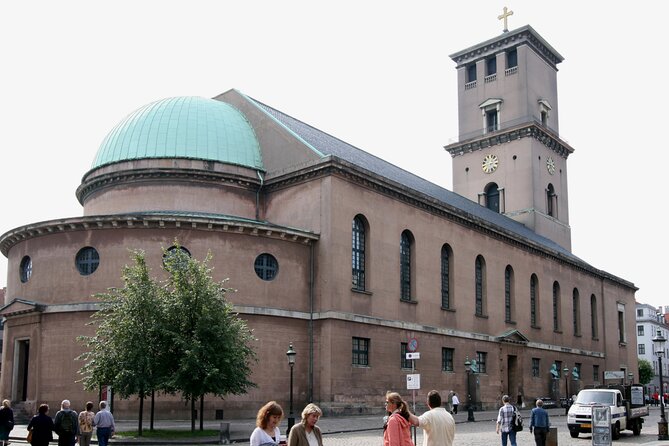
Passing the Church: Faith, Doubt, and a Copenhagen Setting
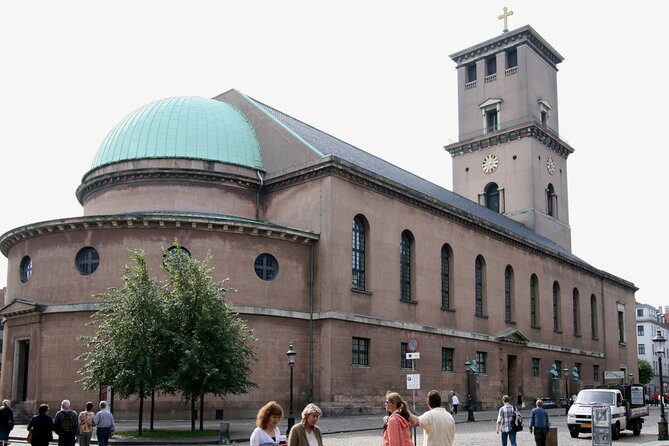
Next, the route passes by a church. Kierkegaard is often linked with religion in a way that can feel abstract. Seeing a church in the real city helps the conversation become more grounded.
This stop is also a reminder that Copenhagen is not just a museum of ideas. It is a living 19th century stage where worship, debate, and everyday life ran side by side.
Possible drawback: if you prefer your stops to be photo-heavy, this church pass may feel brief. But as part of an audio narrative, it works as a scene change rather than a destination.
Rundetårn: When Architecture Becomes Part of the Mindset
Then you pass by Rundetårn. This is one of the city’s instantly recognizable landmarks, and it adds a sense of place that feels appropriate for a thinker whose ideas shaped how people argued about truth and commitment.
Even if you do not go inside, just walking by helps you anchor the story to a Copenhagen you can see on a map. Think of it as the tour telling you, stay oriented, you are in the right city for this chapter.
Copenhagen University: Ideas Need a Home
The next major pass is Copenhagen University. That shift matters. The route is moving you from private beginnings and religious setting toward public education and intellectual life.
If you like philosophy that has friction, you will probably enjoy this part. It feels like the city’s formal learning spaces are part of why ideas spread, get challenged, and keep evolving.
Practical tip: this is a good time to look up from your phone for a minute. The audio will still be there when you refocus, and you will remember the skyline better.
The Cathedral and a Bridge Crossing: From Thinking to Moving
After the university stretch, the tour passes by the cathedral and then goes along the bridge. This section is a natural rhythm change. You are transitioning through major, central Copenhagen space, so the audio content rides along with the physical flow of the city.
Bridges are also good story devices for walking tours. They feel like transition points. If you notice that the narration shifts tone here, that is the tour doing its job: matching story beats to the walk.
Lakes Along the Way: Slower Footsteps, Clearer Listening
The route then takes you past the lakes. This is where the walk often starts feeling more spacious. Even if you stay in a relatively built-up part of town, lakeside air can make the audio experience feel calmer.
I like this part because it gives your brain a break. Philosophy can be dense, especially if you are learning a person’s ideas from scratch. The lakes add breathing room so the next stop at the cemetery does not feel abrupt.
Assistens Cemetery: The Real Emotional Landing
Next, the tour goes into Assistens Cemetery. This is the stop that turns the experience from educational to reflective.
Cemeteries do not have to be gloomy to be powerful. They often do the opposite: they make you slow down and pay attention to what people leave behind. For a life story tour that ends at a burial site, this is the perfect penultimate scene.
A consideration: this is still a walking audio experience. If the ground is uneven in places or you are not comfortable with long, steady walks, you may want to take breaks. The tour does not force you to hurry.
Ending at Søren Kierkegaard’s Burial Place: The Full Circle Moment
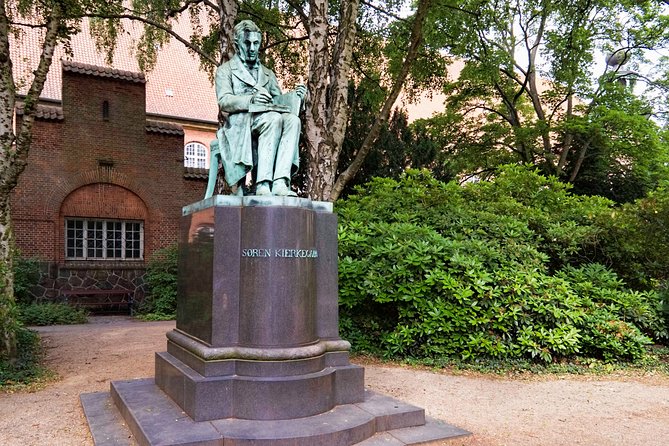
Finally, the tour ends at Søren Kierkegaard Gravesite, Kapelvej 2. This is where the title promise pays off. You arrive having followed his story through the city, then you land at the place that connects all of it.
If you want a satisfying finish, this kind of ending matters. It is easier to remember the route when the last stop feels like the meaning of the whole walk.
How VoiceMap Makes It Work: Offline, GPS, and the Smartphone Reality
The experience runs through the VoiceMap app on Android and iOS, with offline access to audio, maps, and geodata. That is a big deal in Copenhagen. Even if your data is fine, you will save battery and stress by relying on offline content.
Here is what you should plan for:
- bring a smartphone
- bring headphones (not included)
- keep your screen brightness sensible, since you will likely check the GPS prompt now and then
The tour is also listed as “private,” meaning only your group participates. Since it is self-guided, that usually translates to no crowd pressure, no waiting on strangers, and you can keep your own tempo.
Timing Your Walk in Real Life
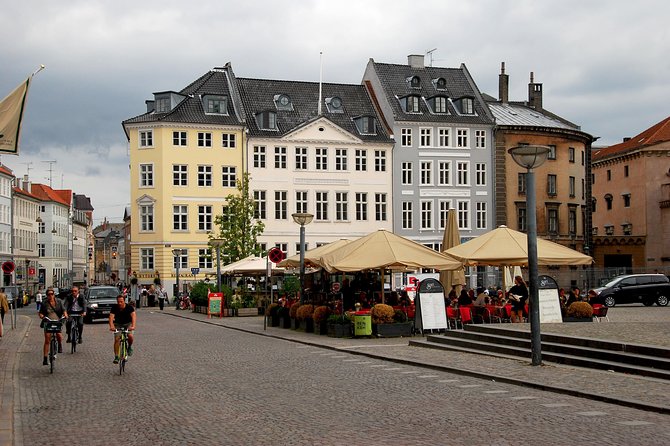
The tour has opening hours listed as 12:00 AM to 11:59 PM (Monday to Sunday), so you have lots of flexibility. That does not mean every moment is equally comfortable, though.
If you want better light for photos around the central landmarks, aim for daytime. If you prefer quiet thinking time in the cemetery and lakes area, consider a calmer late afternoon or early evening window.
Because it is about 1 to 1 hour 15 minutes, you can pair it with another nearby plan rather than turning your whole day into one long project.
Who This Tour Fits Best
This tour is a good match if you:
- want an easy, self-guided way to understand Søren Kierkegaard without booking a timed group tour
- like walking routes that connect story to real places
- enjoy audio narration that is described as well-written and witty
- want a straightforward introduction if you only know his name, not his work
It is also a solid “first philosophy stop in Copenhagen” type of activity. If you are curious but not sure where to start, the route’s sequence helps you build a basic picture quickly.
If you only want guided tours with a live person, you might prefer something else. But if you are comfortable reading your phone prompts and walking independently, this is a practical way to get a focused cultural experience.
Small Caveats I’d Plan Around
No tour is perfect for everyone. Here are the only real drawbacks I see based on what is included and what is not.
First, you must bring the tech: smartphone and headphones. If you forget one, you may have to improvise, and audio tours fall apart fast when you are stuck.
Second, the route includes major Copenhagen landmarks and a cemetery. That means some segments will be more “pass by” than “go inside.” If you love deep entry tickets and long indoor stops, you might find this feels like a walking narrative rather than a building-by-building tour.
Finally, because the tour is self-paced, it works best when you actually press play and follow. If you are the type who wanders without checking where you are in the route, you may lose the story thread.
Should You Book the Philosopher’s Last Walk?
If you want a short, meaningful walk that links Kierkegaard’s life to Copenhagen’s real streets, I think it is an easy yes at $9.99. The main reason is value per time: you get a curated route, audio guidance, and offline support for about an hour, with a satisfying finish at the gravesite.
Book it if you:
- like audio tours with GPS guidance
- want an English experience that is described as informative and witty
- would enjoy a thoughtful stop in Assistens Cemetery as part of the story
Skip it if:
- you hate self-guided apps and would rather have a live guide
- you are not willing to use headphones and your phone for navigation and audio
If you are balancing a busy sightseeing day, this is a clean, low-effort add-on that can make Copenhagen feel personal in a way big-name attractions sometimes do not.
FAQ
How long is the Philosopher’s Last Walk audio tour?
It lasts about 1 hour to 1 hour 15 minutes.
How much does the tour cost?
It costs $9.99 per person.
What language is the audio in?
The tour is offered in English.
Is the tour self-guided or guided live?
It is a self-guided GPS tour through the VoiceMap app.
Where does the tour start and end?
It starts at Nytorv 2, 1450 København, Denmark and ends at Søren Kierkegaard Gravesite, Kapelvej 2, 2200 København, Denmark.
Is offline access included?
Yes. You get offline access to audio, maps, and geodata.
Do I need a smartphone and headphones?
Yes. A smartphone and headphones are not included.
Does the price include food or transportation?
No. Food, drink, and transportation are not included.
Is the tour private?
Yes. It is listed as private, meaning only your group will participate.
What is the cancellation policy?
You can cancel for a full refund if you cancel at least 24 hours in advance of the start time. If you cancel within 24 hours, the amount paid is not refunded.
On Foot Around Denmark





More Tours Around Denmark



All Our Denmark Reviews

Other Danish days out we have written up





Walking Tours, compared.
 ★ 5.0Private Walking Grand Tour of CopenhagenFrom $3423,953 reviews
 ★ 5.0Copenhagen Highlights Walking TourFrom $402,324 reviews
 ★ 5.0Politically Incorrect Private Highlights Walking TourFrom $3741,244 reviews
 ★ 4.7Group Walking Tour – City Highlights – 2 HoursFrom $391,088 reviews
 ★ 5.03h walking tour, small group max 10 people CopenhagenFrom $50686 reviews
 ★ 5.0Walk & Canal Tour: Copenhagen Highlights + Changing of the GuardsFrom $77580 reviews
 ★ 4.9Hygge and Happiness Culture Walking TourFrom $80539 reviews
 ★ 5.0Politically Incorrect Beer WalkFrom $68516 reviews
Browse the lists this tour appears in