
REVIEW · NYHAVN & OLD TOWN WALKS
Sights & Gems: Medieval Copenhagen & Nyhavn with a local host
Two hours, and Copenhagen feels twice as big. This walk strings together Frederiks Kirke and royal Copenhagen sights, then finishes in Nyhavn with real neighborhood context, not just photo stops. I also liked the tight small-group feel and how guides keep the pace easy to follow in English.
My one caution: most stops are quick, and several major landmarks list admission as not included, so you should think of this as a highlight-and-streets tour, not a full museum day.
I like that it starts in an easy-to-find spot by the Marmorkirken Metro, next to a 7-Eleven, so you do not waste your morning hunting for your group. The tour caps at 12 travelers, which makes it practical if you want questions answered and less shuffle time. And if the weather turns wet or windy, the guide style is built for coping, not canceling.
In This Review
- Key points worth knowing before you go
- Entering at Marmorkirken, the easy start by 7-Eleven
- Frederiks Kirke, the Marble Church dome that took forever
- Nyboder’s naval story, plus the quieter rooms
- Rosenborg Castle and King’s Garden, royal calm in a fast day
- The Round Tower, Copenhagen’s spiral observatory view
- Gråbrødretorv and Amagertorv squares, where the city breathes
- Christiansborg Slot, royalty meeting today’s government
- Nikolaj Church and Kongens Nytorv, skyline landmarks and a grand square exit
- Nyhavn at the finish, a canal walk that turns into your break
- Price and value for a two-hour guided walk
- Who should book this, and who should consider a different plan
- Should you book it
- FAQ
- How long is the tour?
- What is the price per person?
- What language is the tour offered in?
- How big is the group?
- Where do I meet the guide?
- Where does the tour end?
- Is admission included for all stops?
- What should I do if the weather is bad?
- Is the tour near public transportation?
- What is the cancellation policy?
Key points worth knowing before you go
- Small group size (max 12) keeps the walk personal and questions quick.
- Landmark route with short stops helps you see a lot in about two hours.
- Clear English guides are a consistent theme in the on-the-ground experience.
- Quick neighborhood history breaks in places like Nyboder add texture beyond the main sights.
- Nyhavn finish point sets you up for a coffee or pastry right away.
Entering at Marmorkirken, the easy start by 7-Eleven
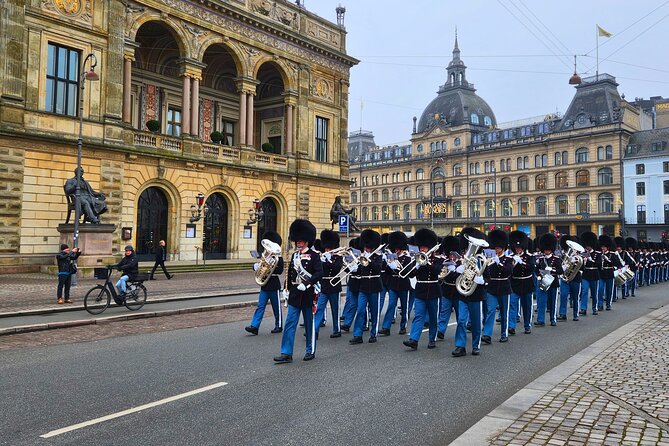
The meeting point is between the stairs leading down to the Marble Church Metro Station, right next to a 7-Eleven. That matters more than you think. In a city with many streets and transit entrances, an obvious landmark start keeps your day from getting messy.
This is also a good move if you are using public transport, because it keeps the tour simple to join even if your hotel is not nearby. You will want to have a bit of walking comfort, since this is a neighborhood-to-neighborhood stroll with a moderate fitness level.
More of Copenhagen, reviewed one tour at a time
- Copenhagen: Canal Cruise with Guide
★ 4.6 · 9,115 reviews - Copenhagen: Hop-On Hop-Off Bus Tour with Boat Tour Option
★ 3.9 · 4,122 reviews - Private Walking Grand Tour of Copenhagen
★ 5.0 · 3,953 reviews - From Copenhagen: Lund and Malmö 2-Country Tour
★ 4.7 · 2,772 reviews
Frederiks Kirke, the Marble Church dome that took forever
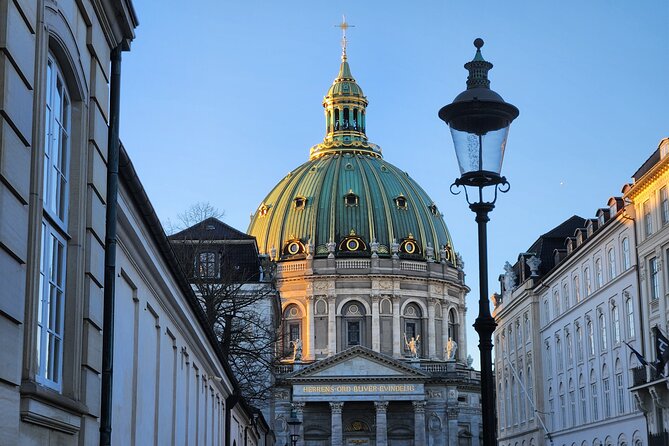
Frederiks Kirke, also called Marmorkirken or Frederik’s Church, is the first big wow. The dome is the headline, and it is known as the largest in Scandinavia, inspired by St. Peter’s Basilica in Rome. The church also took more than 150 years to complete, using Norwegian marble and careful craftsmanship that you can spot even if you only have a few minutes.
What I like here for your schedule is that you get the story fast. You are not just seeing a fancy building, you are learning why Copenhagen built it and why it became such a durable city symbol. It is also a free stop, so it is a low-stress start before the tour moves into the older residential quarters.
Nyboder’s naval story, plus the quieter rooms
Next comes Nyboder, one of Copenhagen’s most distinct neighborhoods. It was founded in 1631 by King Christian IV to house Denmark’s naval families, so the architecture and layout make more sense once you hear that origin.
The tour also includes a stop at the Nyboder Memorial Rooms, described as a preserved window into daily life for sailors and their families. You can peek through the windows and see scenes from centuries past, and inside you get a look at original artifacts, uniforms, and maritime relics. This is one of the places where the tour feels most authentic, because you are not just watching history from outside.
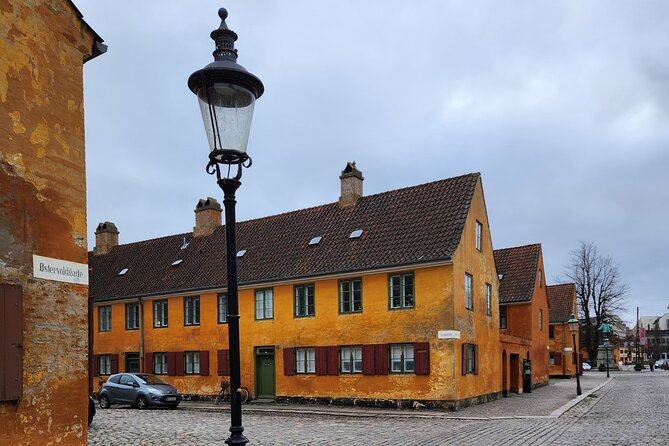
Then you get a relaxed wander through Krusemyntegade, a peaceful street in the same area. The point is to slow down for a minute and notice the colorful, historic houses that were built for naval families. If you like walking where ordinary people lived, this is a strong mid-tour reset.
One practical note: the Memorial Rooms admission is not included, so if you want to spend more time inside, you should expect to pay separately.
Rosenborg Castle and King’s Garden, royal calm in a fast day
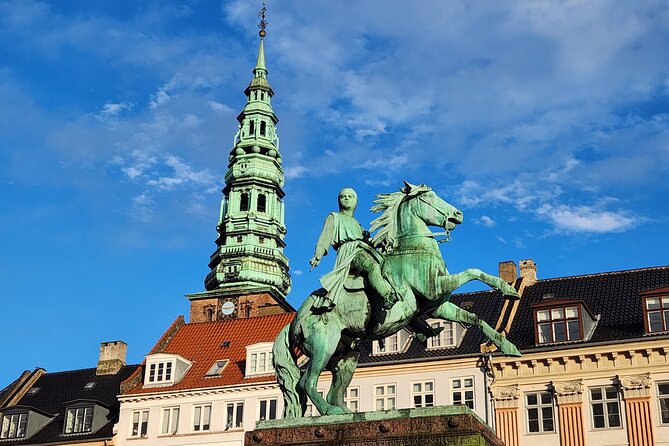
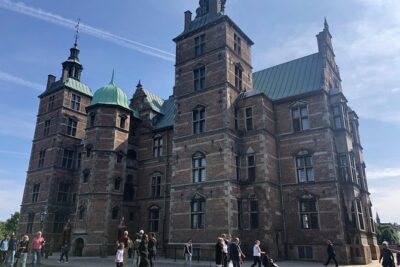
Rosenborg Castle shows up next, and it does not need long lines of context to impress. Built by King Christian IV in the early 1600s, it sits at the heart of King’s Garden (Kongens Have), Denmark’s oldest royal park.
Even if you never step inside, the gardens change the mood. You go from city streets to a calmer space where the castle looks like it belongs in a storybook. This is also a smart stop for photos, because the setting gives you more than one angle without you backtracking.
In this tour, Rosenborg and the gardens are treated like a brief pause rather than a deep visit. Admission is not included, so if you want interiors, you should plan on separate tickets on your own.
Other routes through the old streets and along Nyhavn
- Copenhagen: 2-hour Old Town Private Walking Tour★ 4.3 · 64 reviews
- Sights & Gems: Medieval Copenhagen & Nyhavn with a local host★ 5.0 · 54 reviews
- Walking tour – Copenhagen Old Town & Tivoli Park included★ 4.0 · 23 reviews
- Copenhagen Canal Boat Cruise and City, Nyhavn Walking Tour★ 4.0 · 14 reviews
- Copenhagen Old Town, Nyhavn, Canal Walking Tour & Christiana★ 5.0 · 5 reviews
The Round Tower, Copenhagen’s spiral observatory view
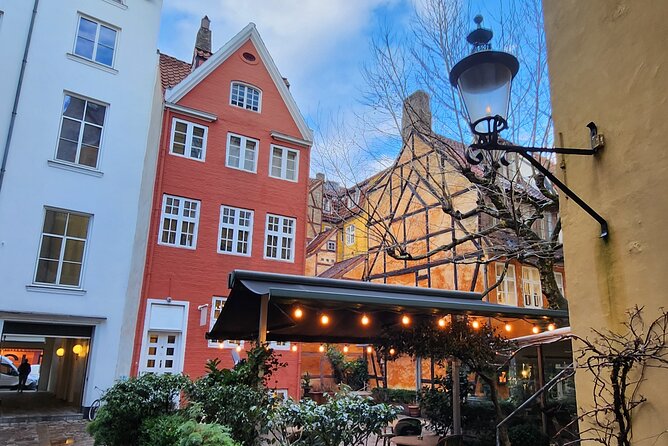
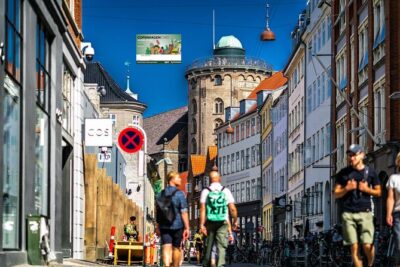
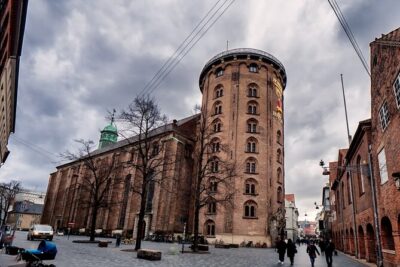
The Round Tower (Rundetårn) is one of those Copenhagen icons you can spot quickly once you know what to look for. It was built in 1642 by King Christian IV and is remembered as Europe’s oldest functioning observatory. The spiral design is the visual clue, and the copper-clad roof also helps it stand out over nearby rooftops.
This stop is short, but it gives you a useful lens: Copenhagen was not only building royal power, it was also building scientific curiosity. When a guide frames that connection, it turns a photo stop into a story you carry for the rest of your trip.
Admission is not included here, which again keeps the tour fast and doable. If you want to see more than the exterior and the tower presence in the skyline, you will need to add it on your own time.
Gråbrødretorv and Amagertorv squares, where the city breathes
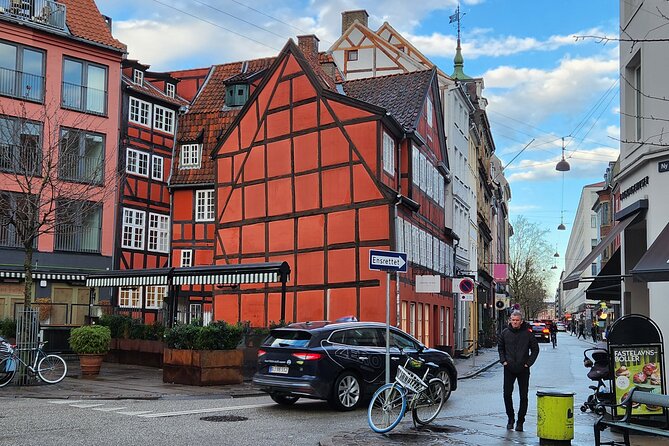
After the big institutions, the tour shifts to squares that feel like Copenhagen’s everyday stage.
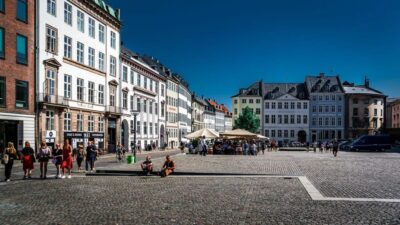
Gråbrødretorv is a picturesque square lined with colorful historic townhouses and shaded by large trees. It is also a good place for a slow moment, because cafés and restaurants ring the area and make it easy to keep going on your own after the guide moves on. Admission is free.
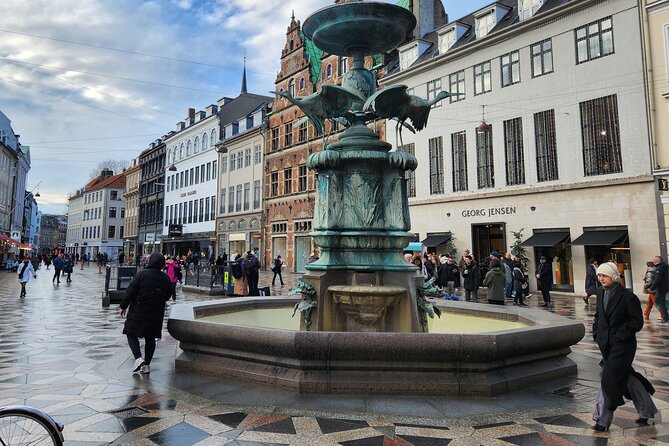
Then you move to Amagertorv, a busy square in the Strøget shopping area anchored by the Stork Fountain. The mosaic pavement and surrounding architecture are the focus, and it is one more reminder that Copenhagen blends older design with modern street life. Admission is free for this stop too.
These two stops are valuable because they help you avoid a common walking-tour problem. You do not end the day feeling like you only saw buildings. You also get a sense of the street rhythm.
Christiansborg Slot, royalty meeting today’s government
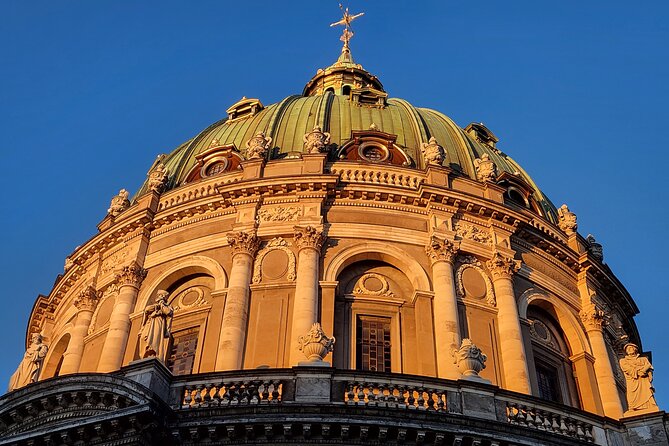
Christiansborg Palace is on Slotsholmen Island, right in the heart of things, and it hits a different theme than the earlier royal sights. This site is built on centuries of royal foundations, but today it houses Denmark’s Parliament, Supreme Court, and the Royal Reception Rooms. It is described as the only building in the world that brings all branches of government under one roof.
Outside views work well for a walking tour like this, because the palace façade and copper spire are obvious. The guide stories also connect the site to fires, political intrigue, and the long arc of Danish history, which helps you read the building as more than a pretty landmark.
Admission is not included, so keep it framed as a powerful exterior and story stop. The payoff is understanding why Copenhagen’s central governance sits in such a dramatic historic complex.
Nikolaj Church and Kongens Nytorv, skyline landmarks and a grand square exit
Next is Nikolaj Kunsthal, where you admire Nikolaj Church from the outside. The church originally dates to the 1200s, and the iconic spire makes it a clear skyline marker. Even when the stop is brief, the age and silhouette help you place this part of the city in time.
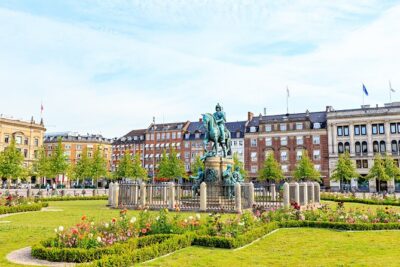
Then you reach Kongens Nytorv, or Copenhagen King’s New Square, described as the city’s grand central square. It is surrounded by major landmarks like the Royal Danish Theatre and Hotel d’Angleterre. You also have King Christian V’s equestrian statue as a clear focal point.
This stop is helpful because it functions as a mental handoff. You are not far now from the tour’s final canal walk, and the square layout makes it easy to orient yourself for what you will do next.
Admission for this stop is free.
Nyhavn at the finish, a canal walk that turns into your break
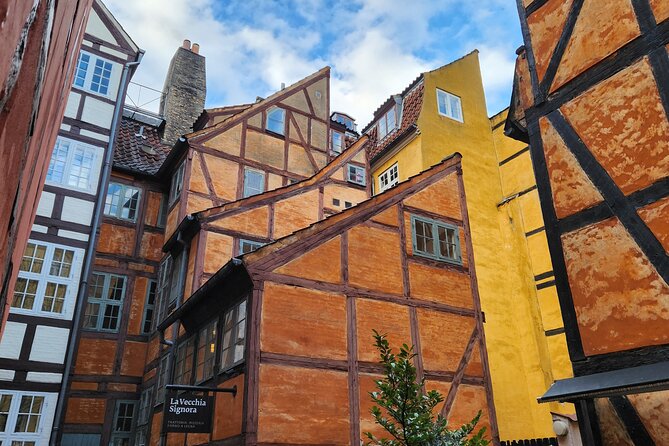
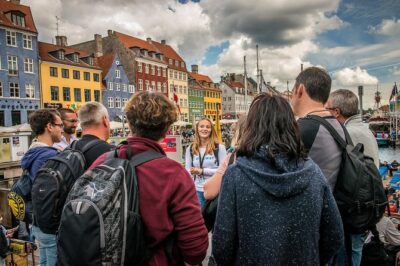
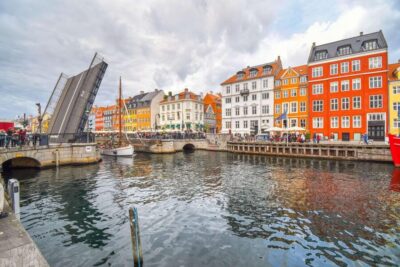
Nyhavn is the closing act, and it is exactly where you want to end a highlights-heavy walk. The canal district is known for colorful 17th-century townhouses and a café culture that draws both locals and visitors. Historically, it was a trading harbor with sailors and storytellers, and the tour explains how it transformed into one of Europe’s most photographed waterfront streets.
I like that the guide ties Nyhavn to the Andersen stories, since he once lived here. That kind of detail helps you look at what is in front of you with a sense of continuity, not just for scenery.
This ending point is also practical. The tour ends at Nyhavn 28, so you are already by places to sit down. You can grab a coffee or a pastry without hauling your bag across town first. And because the stop is free, you can linger as long as you want after the guided portion ends.
Price and value for a two-hour guided walk
At $28.43 per person for about two hours, the value comes from three things: a live local guide, a small group capped at 12, and a route that hits multiple major districts without making you navigate between far-flung stops.
You also get a mobile ticket, which is the kind of small convenience that pays off when you are moving quickly. If your schedule is tight, this tour structure makes sense: it uses short, meaningful stops so you see a lot and decide later what deserves your money for entry tickets.
That said, you should match your expectations. Several landmarks note that admission is not included, so you are paying for context and outdoor sightlines, not for a packed, ticket-heavy museum crawl.
Who should book this, and who should consider a different plan
This tour fits best if you want a first taste of Copenhagen’s medieval and royal side, but you still want time to enjoy the city on your own. It is also a good choice if you like architecture, because the route includes Frederiks Kirke, Rosenborg area views, the Round Tower, and Christiansborg’s palace complex.
It is less ideal if you want a deep dive into interiors at every major stop. With many items listed as not included and quick timing per location, you will likely finish still wanting to explore, but you will not have done everything in one day.
The moderate physical fitness note is also worth respecting. Two hours is manageable, but it is still a real walk across varied streets, and you will want comfortable shoes.
Should you book it
Yes, if you want a smart, time-efficient walk that stitches together royal sights, naval-era neighborhoods, and the canal postcard at the end. The strongest selling point is the guide-led storytelling, including clear English experiences like those connected with Maybritt, and the practical ability to adjust when weather turns, like when Maybee helped people find warmth in a coffee lounge.
Book it if you are the kind of traveler who likes street-level history and short, purposeful stops. If you only want museum interiors and long dwell times, you may be happier with a longer, ticket-heavy day plan instead.
FAQ
How long is the tour?
The tour is about 2 hours.
What is the price per person?
The price is $28.43 per person.
What language is the tour offered in?
The tour is offered in English.
How big is the group?
The group is capped at a maximum of 12 travelers.
Where do I meet the guide?
You meet between the stairs leading down to the Marmorkirken (Marble Church) Metro Station, next to a 7-Eleven.
Where does the tour end?
The tour ends in Nyhavn at Nyhavn 28, 1051 Indre By.
Is admission included for all stops?
Frederiks Kirke is listed as free. Several other stops note admission is not included, so you may need to pay separately if you want to go inside.
What should I do if the weather is bad?
The experience is designed for walking, but guides have been able to keep the tour enjoyable even with wet and windy weather by shifting to a warm nearby option.
Is the tour near public transportation?
Yes, the meeting area is near public transportation.
What is the cancellation policy?
Cancellation is free if you cancel up to 24 hours in advance for a full refund. If you cancel less than 24 hours before the start time, the amount paid is not refunded.
All Our Denmark Reviews



Around Nyhavn And The Old Streets



Copenhagen, Reviewed
Other Danish days out we have written up



Nyhavn & Old Town Walks, compared.
 ★ 4.32-hour Old Town Private Walking TourFrom $68364 reviews
 ★ 4.0Walking tour – Copenhagen Old Town & Tivoli Park includedFrom $7923 reviews
 ★ 4.0Copenhagen Canal Boat Cruise and City, Nyhavn Walking TourFrom $28114 reviews
 ★ 5.0Copenhagen Old Town, Nyhavn, Canal Walking Tour & ChristianaFrom $2195 reviews
 ★ 5.0Copenhagen Old Town Private Walking TourFrom $3525 reviews
 ★ 4.5Round Tower, Rosenborg Castle and Old Town Copenhagen TourFrom $2494 reviews
 ★ 4.5Canal Boat Cruise & Old Town/Nyhavn Walking TourFrom $2744 reviews
 ★ 4.7Old Town and Nyhavn Private Family TourFrom $2403 reviews
Browse the lists this tour appears in