
REVIEW · MUSEUMS
Copenhagen: MACA Art Museum Entry Ticket
Street art icons, under one roof. A MACA ticket is a simple way to hit Copenhagen’s modern art scene inside the historic Nyhavn waterfront.
I like two big things right away. First, you get a serious lineup of street and contemporary art artists, from Banksy to Warhol, Basquiat, Haring, Kusama, and more. Second, MACA is placed right where you already want to be, Nyhavn, so you can pair the museum with canals, food, and an easy stroll.
One consideration: the experience leans on audio guides downloaded to your smartphone, and headphones are not available to purchase. If you forget your headphones, you can still enter, but you may end up reading more and listening less.
In This Review
- Quick hits before you go
- Nyhavn doorstep: where MACA sits and why it matters
- The main exhibition: Banksy and Street Art, The Early Years
- The surrounding shows: from 1980s graffiti to 21st-century street artists
- Audio guide strategy: make your smartphone do the work
- Skip-the-line, self-paced entry: how to fit MACA into a day
- Nyhavn food, canals, and Copenhagen comfort breaks
- Nearby add-ons: Hans Christian Andersen and Amalienborg Royal Palace
- Price and value: is $24 a fair deal?
- What to bring and how to make the most of the visit
- Who should book this MACA entry ticket?
- Should you book this MACA Art Museum ticket?
- FAQ
- How much is the MACA Art Museum entry ticket?
- How long is the ticket valid?
- What does the ticket include?
- Are audio guides included, and how do they work?
- Do I need headphones for the audio guide?
- Can I store luggage at the museum?
- Will I be able to skip the ticket line?
- Where do I go to start this activity?
- What is the cancellation policy?
Quick hits before you go

- Banksy and Street Art: The Early Years shows rare drawings, stencils, photos, and paintings tied to his early working methods
- New York graffiti and beyond includes works tied to the 1980s and 1990s scene, plus street artists active in the 21st century
- Nyhavn location puts great walking options right outside your museum door
- Audio guides in many languages come via download to your phone, so you can explore at your own pace
- Coat and bag storage included keeps you comfortable, especially if you arrive with a day bag
- Courtyard cafe or winter candlelight hygge adds an extra Copenhagen-friendly break during your visit
Nyhavn doorstep: where MACA sits and why it matters

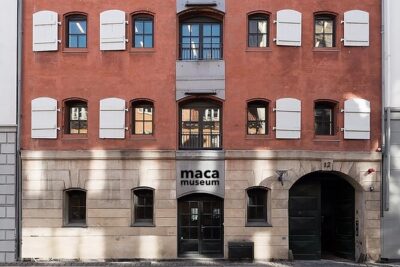
MACA Museum is in central Copenhagen at Nyhavn, the famous waterfront trading port area. That sounds like a small detail, but it changes the whole day. Instead of making modern art a separate mission, you can stack it with the classic Copenhagen stuff you were going to do anyway: canals, restaurants, and an evening walk.
When a museum is in a tourist-famous area, you sometimes worry it will feel generic inside. Here, you still get that easy walk-up access, plus the chance to slow down and read the art without racing between different neighborhoods. You can also treat the museum as your anchor point for a “one day, one area” plan.
Another practical plus is that MACA isn’t far from major nearby sights. You have Amalienborg Royal Palace just a few steps away, and Hans Christian Andersen’s home is also in the same orbit. In other words, you can build a day around MACA and not spend extra time figuring out transit, transfers, and time slots.
More of Copenhagen, reviewed one tour at a time
- Copenhagen: Canal Cruise with Guide
★ 4.6 · 9,115 reviews - Copenhagen: Hop-On Hop-Off Bus Tour with Boat Tour Option
★ 3.9 · 4,122 reviews - Private Walking Grand Tour of Copenhagen
★ 5.0 · 3,953 reviews - From Copenhagen: Lund and Malmö 2-Country Tour
★ 4.7 · 2,772 reviews
The main exhibition: Banksy and Street Art, The Early Years
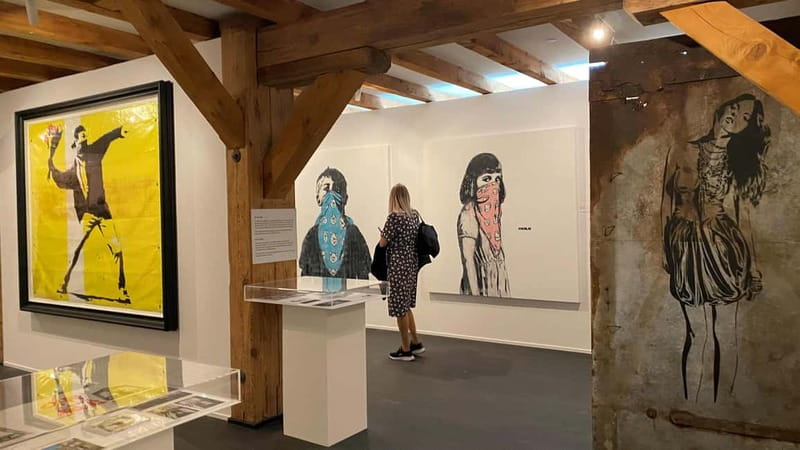
The headline show at MACA focuses on Banksy and Street Art: The Early Years. This is the kind of exhibition that can work even if your street art knowledge starts and stops at a few famous images. It’s built around early work materials and the behind-the-scenes side of the craft, not only the finished wall pieces.
You can expect a mix of rare and revealing items: drawings, stencils, photographs, and paintings. That combination helps you see a process, not just a result. Stencils and drawings, in particular, show how planning turns into street output. Photographs add context by linking the art back to how and where it appeared. If you like art that has method, constraints, and “how it was made” details, this part tends to hit.
If you want a quick way to approach it, I’d treat this exhibition like a museum version of a workshop. Don’t just scan for recognizable names. Look for repeated visual moves and how the composition changes from drawing or stencil stage to finished work. That’s where the learning energy lives.
Also, the show is designed to be time-effective. Even if you only spend part of your day inside, the exhibition gives you a clean story arc you can follow from early working methods to recognizable style.
The surrounding shows: from 1980s graffiti to 21st-century street artists
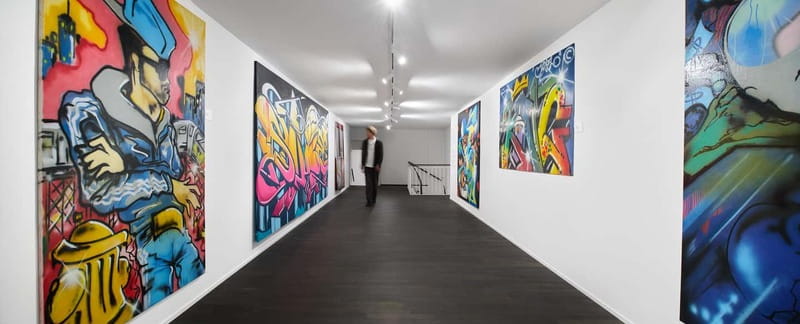
MACA doesn’t stop at Banksy. You’ll also see major street and contemporary names connected to the 1980s and 1990s New York graffiti art scene. The museum pairs that with street artists active across the 21st century, giving you a wider view of how public art language spreads, changes, and cross-pollinates.
Some artists tied to the exhibits include Futura 2000, Dondi, Lady Pink, Shepard Fairey, STIK, VHILS, XOOOOX, Bambi, and Retna. If you’re a fan of graffiti history and evolution, this lineup makes sense. It moves from early spray-and-style identity toward a broader global street art culture where graphic art, portraiture, and concept-driven work all show up.
This is also where MACA feels like more than a novelty stop. You’re not just seeing “cool names.” You’re seeing the connective tissue between decades: how a scene gets shaped by place, then grows into something that travels.
One good way to use your time: split your visit into two mental halves. Half the day for Banksy and early methods, half the day for the wider street art map. That stops you from getting art-burnout and makes the museum easier to remember later.
Audio guide strategy: make your smartphone do the work
MACA includes downloadable exhibition audio guides. They require you to download to your smartphone, so plan for one small but important thing: battery. If your phone is already at 20 percent when you arrive, it will feel like you are fighting the museum instead of enjoying it.
The audio guide is available in many languages, including English, Danish, German, Spanish, French? (French is not listed in the provided options), plus languages such as Japanese, Korean, Turkish, Thai, Indonesian, Czech, Polish, Serbian, and more. If your language is on the list, you can tailor the visit quickly and keep moving.
Headphones are the one snag. They are not available for purchase, so you’ll want to bring your own. If you forget, you might still read labels and rely on the visuals, but you lose a big chunk of why an audio guide is worth the time.
The other small benefit is pacing. Instead of being stuck behind a large group, you can pause, replay a segment, and go at your own speed. Street art can be emotional and symbolic. Audio helps slow it down so you don’t just admire and move on.
Other Danish entry tickets we have checked
- Copenhagen: Home of Carlsberg Experience Entry Ticket★ 4.7 · 1,009 reviews
- Copenhagen: National Museum of Denmark Entry Ticket★ 4.5 · 960 reviews
- Copenhagen: Copenhagen Zoo Entry Ticket★ 4.6 · 708 reviews
- Copenhagen Bus and Boat ticket, Valid 48 Hours★ 4.0 · 565 reviews
- Copenhagen: Rosenborg Castle Entry Ticket★ 4.6 · 381 reviews
Skip-the-line, self-paced entry: how to fit MACA into a day
This ticket gets you entry to MACA museum and access to all exhibitions. You can also skip the ticket line, which matters in Copenhagen during peak hours when you’d rather be walking.
The ticket is valid for one day, and you’ll see starting times based on availability. That means you’re not locked into some long fixed schedule, but you do want to pick a start time that matches your energy level. If you go too late, you can end up doing the museum fast and missing the audio guide value. If you go too early, you might still get in, but the nearby food and sights may not feel as open.
A smart approach: use your museum entry as the “anchor moment,” then build the rest of the day around it. Nyhavn is close enough that you can step out for a drink or snack and come back later if you still have steam. You can also use the palace and Andersen home as your outdoor bookends.
The visit ends back at the meeting point, which is the museum entrance. Since this is essentially your own timeline, that setup is practical. You don’t have to hunt down a tour group at the end of a day.
Nyhavn food, canals, and Copenhagen comfort breaks

One reason I like museums placed in Nyhavn is that the surrounding neighborhood gives you natural breaks. MACA sits in the historic waterfront trading port of Nyhavn, so after you’ve been indoors with art, you can step outside into the canal air.
MACA itself also supports a coffee and rest moment. During cool spring and summer months, you can enjoy a private outdoor courtyard cafe. In winter months, the museum offers a cozy candlelight setting inside, described as genuine Danish hygge. Even if you’re not chasing ambiance, that change of setting helps you reset your brain while the day continues.
This matters because street art exhibitions can get intense. The deeper you go into styles and messages, the easier it is to feel mentally “full.” A small break by the water or a quiet indoor cafe stop is how you keep the museum day from turning into a marathon.
And since you’re already in the area, you can pair your snack stop with a quick look at the waterfront. Nyhavn’s canals are one of those places that work best when you walk slowly instead of rushing for photos.
Nearby add-ons: Hans Christian Andersen and Amalienborg Royal Palace

MACA’s location makes it easy to stack major sights. Just a few steps away is Amalienborg Royal Palace, the official residence of King Frederik X, Queen Mary, and Queen Margrethe II. That palace is a major Copenhagen target, and the fact it sits so close to MACA can save you time and decision-making.
You can also visit the home of fairy tale author Hans Christian Andersen. That’s another “why this location works” piece. You’re getting art, then you can keep your brain in storytelling mode with Andersen, and still finish the day with royal Copenhagen at Amalienborg.
If you plan it well, your day becomes smoother. Go to MACA first while you still have museum focus. Then shift from studio-process energy to architecture and cultural history outside. That mix tends to land well because it avoids repeating the same type of museum experience over and over.
Also, when you’re near multiple anchors, you can choose based on weather. If it rains, you can spend more time at MACA and cut back on outdoor walking. If the sun shows up, you can use the nearby sights to stretch your legs.
Price and value: is $24 a fair deal?

The ticket price is listed as $24 per person. That’s not cheap, but it can be fair value because you get more than a single-artist viewing.
You’re paying for access to all exhibitions at MACA, including the Banksy-focused early methods show and additional exhibitions tied to multiple major street artists across decades. You also get downloadable audio guides, plus coat and bag storage. Those add-ons sound minor until you’re actually carrying a day bag or you realize you want the audio context.
If you love art names and also care about the “how it’s made” angle, MACA offers a strong blend. If you only want a quick peek at street art for 20 minutes, you might not feel the cost is justified. But if you’re the type who likes reading details, comparing materials like drawings and stencils, and following a visual timeline, it’s easier to feel like the price matches the experience.
Think of it as a one-day museum plus a central-city base. In Copenhagen, that location convenience can matter just as much as what’s on the walls.
What to bring and how to make the most of the visit

Keep it simple. You’re going to want a smartphone with the audio guide ready, and you’ll want to bring your own headphones since none are available to purchase.
If you plan to walk Nyhavn before or after, bring water. Copenhagen weather can change fast, and you don’t want to lose momentum mid-day. MACA also offers coat and bag storage, so you can travel lighter if you arrive with a jacket or bulky items.
The museum gift shop is another small perk. If you like art-themed souvenirs, you’ll have a large and varied selection of mementos to take home. Even if you don’t buy anything, browsing at the end is a nice way to collect your thoughts about what you just saw.
Who should book this MACA entry ticket?
This ticket fits best if you want one stop that covers both classic contemporary icons and the street art world that shaped them. If you’re into Banksy but also curious about how the 1980s and 1990s New York graffiti scene connects to later 21st-century street artists, MACA is a good match.
It’s also a strong choice if you like efficient days. With Nyhavn right outside and Amalienborg and Hans Christian Andersen nearby, you can build a satisfying Copenhagen loop without lots of extra planning.
If your idea of “museum time” means quiet, formal oil paintings only, street art-focused exhibitions may feel different than you expect. But if you enjoy bold images, graphic design energy, and artist methods as much as finished art, you’ll likely appreciate what MACA is doing.
Should you book this MACA Art Museum ticket?
If you want street art and major contemporary names in a central Copenhagen setting, I’d book it. The Banksy early years concept is a smart hook, and the rest of the exhibitions keep the momentum by showing how the scene broadened over time. Add in the audio guides, included coat and bag storage, and a location that makes Nyhavn, Andersen, and Amalienborg easy to pair, and it becomes a practical value play.
I’d only hesitate if you hate audio guides or you tend to forget headphones. Fix that with a quick prep step, and this turns into a smooth, memorable one-day art stop.
FAQ
How much is the MACA Art Museum entry ticket?
The price is listed as $24 per person.
How long is the ticket valid?
It is valid for 1 day. You should check availability to see starting times.
What does the ticket include?
It includes entry to MACA museum, access to all exhibitions, downloadable exhibition audio guides, and coat and bag storage.
Are audio guides included, and how do they work?
Yes. Audio guides are included and must be downloaded to your smartphone.
Do I need headphones for the audio guide?
Headphones are not available for purchase. The audio guide requires your own headphones to listen.
Can I store luggage at the museum?
Coat and bag storage is included. Secure storage is available for rental.
Will I be able to skip the ticket line?
Yes, the ticket is described as allowing you to skip the ticket line.
Where do I go to start this activity?
Go to the MACA Museum entrance.
What is the cancellation policy?
Free cancellation is offered up to 24 hours in advance for a full refund.
Tickets And Entry In Denmark





All Our Denmark Reviews



Copenhagen, Reviewed
Other Danish days out we have written up



Museums, compared.
 ★ 4.5National Museum of Denmark Entry TicketFrom $21960 reviews
 ★ 4.3Amalienborg Palace Museum Entry TicketFrom $19291 reviews
 ★ 4.5Exhibition – Home of CarlsbergFrom $36281 reviews
 ★ 4.7Danish War Museum Entry TicketFrom $20106 reviews
 ★ 4.5MACA Museum ‘Banksy & Street Art: The Early Years’ Art ExhibitionFrom $2532 reviews
 ★ 4.0Jewish Walking Tour of Copenhagen and Danish Jewish MuseumFrom $2473 reviews
Browse the lists this tour appears in