

REVIEW · AARHUS TOURS
Aarhus: Surprise City Walking Tour with Local Guide
Aarhus shines when you slow down. I love the route’s pull into Latinerkvarteret and how it makes you stop at Skovgaardsgade bus station for art that feels unlikely and fun. One thing to consider though: if you want deep, tightly structured history and lots of answer-ready context at every corner, you may feel slightly shortchanged on guidance, depending on your guide.
In 90 minutes, you cover five very different Aarhus stops, all walkable, without turning your day into a checklist. This is a smart choice if you like streets you can read with your feet, and you want a local’s eye on how the city hangs together. It is not a good match if you have mobility limits, since it is a walking tour with cobblestones and outdoor segments.
In This Review
- Quick takeaways on this 90-minute Aarhus walk
- Why this Aarhus walking route feels smart in 90 minutes
- Latinerkvarteret: start where Aarhus looks oldest
- Skovgaardsgade bus station art: the stop that turns heads
- Møllestien cobblestones: the “walk it, don’t rush it” stretch
- Aarhus Cathedral: Denmark’s tallest church in real scale
- Dokk1 library: books and city culture, not just a building
- Price and what $128 per person gets you
- What the guide experience should feel like, and how to get it
- Footwear, timing, and practical steps that make the walk easier
- Who should book this Aarhus walking tour
- Should you book this Aarhus walking tour?
- FAQ
- How long is the Aarhus walking tour?
- How much does the tour cost?
- What languages are available for the live guide?
- What is included in the price?
- What should I bring with me?
- Is this tour private or in a group?
- Is the tour suitable for people with mobility impairments?
- Is free cancellation available?
Quick takeaways on this 90-minute Aarhus walk

- Oldest-quarter mood in Latinerkvarteret with narrow lanes and classic Danish street charm
- Bus station art at Skovgaardsgade that reframes something you usually pass without thinking
- Møllestien cobblestones for those slow, camera-friendly stroll moments
- Aarhus Cathedral views and scale with a front-row feel for Denmark’s tallest church
- Dokk1 library time where books and public space meet modern city life
Why this Aarhus walking route feels smart in 90 minutes

Aarhus can feel like a “walk and see” kind of city, but most people waste time guessing where to go first. This tour solves that with a sequence that moves from older lanes, to public art, to a big architectural anchor, and then ends in a place that is about everyday culture. You get variety fast, without hopping between neighborhoods with transport plans.
At $128 per person for a 90-minute guided walk, you are paying mostly for two things: local storytelling plus a curated route that hits high-impact stops. If you enjoy asking questions and you want someone to frame what you are looking at, that price starts to make sense quickly. If you just want to look around on your own, it will feel expensive, because you are not only paying for access to sights, you are paying for interpretation.
More of Aarhus, reviewed
- Aarhus Walking Tour: From Viking Village to Metropolis
★ 4.8 · 122 reviews - Street Art and Rooftops of Aarhus, Denmark
★ 5.0 · 62 reviews - Aarhus Walking Tour: Explore Top Sights & Hidden Gems
★ 4.0 · 34 reviews - Aarhus Craft BeerWalk
★ 4.7 · 19 reviews
Latinerkvarteret: start where Aarhus looks oldest
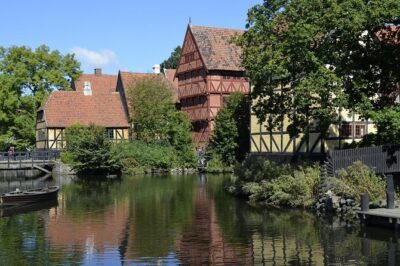
The walk begins in Latinerkvarteret, the city’s oldest area. This is where the city’s texture changes. You trade wide streets and modern signage for a maze-like feeling: tighter lanes, classic urban proportions, and that sense that the past still shapes how you move.
What I like about starting here is that you immediately learn how to read Aarhus. Before you see the cathedral or the modern library, you understand the city’s “bones.” Your guide’s job is to help you connect what you see, cobblestone edges, street patterns, and building shapes, to stories about how Aarhus grew. If your guide is on top of simple explanations, you will pick up a framework that makes every later stop easier to appreciate.
Possible drawback: if you prefer very structured history, you might want to ask direct questions early, like what this quarter was known for or what changed as the city expanded. Some guides have been praised for strong city knowledge, while others were reported as less prepared to answer even basic questions, so it pays to bring curiosity and speak up when you want specifics.
Skovgaardsgade bus station art: the stop that turns heads

Then the tour shifts gears to Skovgaardsgade bus station, which is not the typical place people put on a “must-see” list. That is exactly why it works. You get a quick lesson in Danish creativity, the kind that shows up in everyday infrastructure rather than only in museums.
Expect an art-focused pause. Your guide helps you look instead of just pass by. You will likely notice how the station’s visuals change your perception of the space. It is one of those moments where the tour quietly teaches you a method: slow down at places you would normally ignore, and you start to see the city’s personality.
From the feedback I’ve seen, this is also the kind of stop where a strong guide makes the difference. If your guide can point out what you are looking at and why it matters locally, the 10 minutes here can feel longer in a good way.
Møllestien cobblestones: the “walk it, don’t rush it” stretch
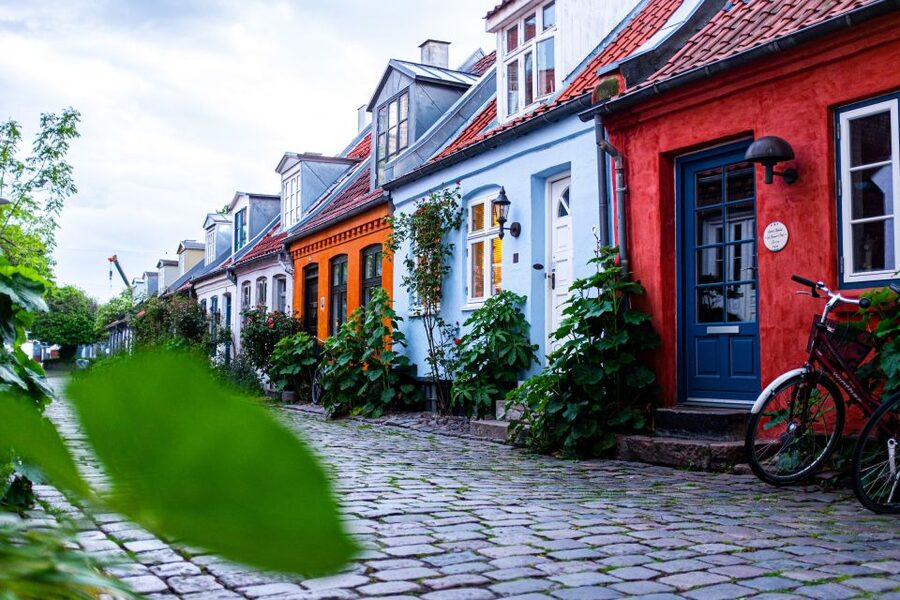
Next comes Møllestien, a street defined by cobblestones and that cozy, old-world feel that makes Aarhus look photogenic without trying too hard. This segment is less about a single landmark and more about pacing. You move slowly, and the street does the work of setting mood.
Why this part matters: cobblestones are not just scenic here. They change your walking rhythm. You naturally look down a bit more, notice building edges, and feel the texture of the neighborhood. If you arrive with comfortable shoes, this becomes one of the more enjoyable parts of the whole tour, because it is low-pressure sightseeing that still feels intentional.
If it is raining or windy, cobblestones can feel slick. You will want traction-minded shoes and a phone ready for quick photos, but keep your footing first.
More Danish towns covered on foot
- Aarhus Private Walking Tour with a Local★ 4.0 · 12 reviews
- Aarhus: Surprise City Walking Tour with Local Guide★ 4.2 · 9 reviews
- Surprise Walk of Aarhus with a Local★ 4.5 · 4 reviews
- Aarhus: Express Walk with a Local in 60 minutes★ 4.8 · 3 reviews
Aarhus Cathedral: Denmark’s tallest church in real scale
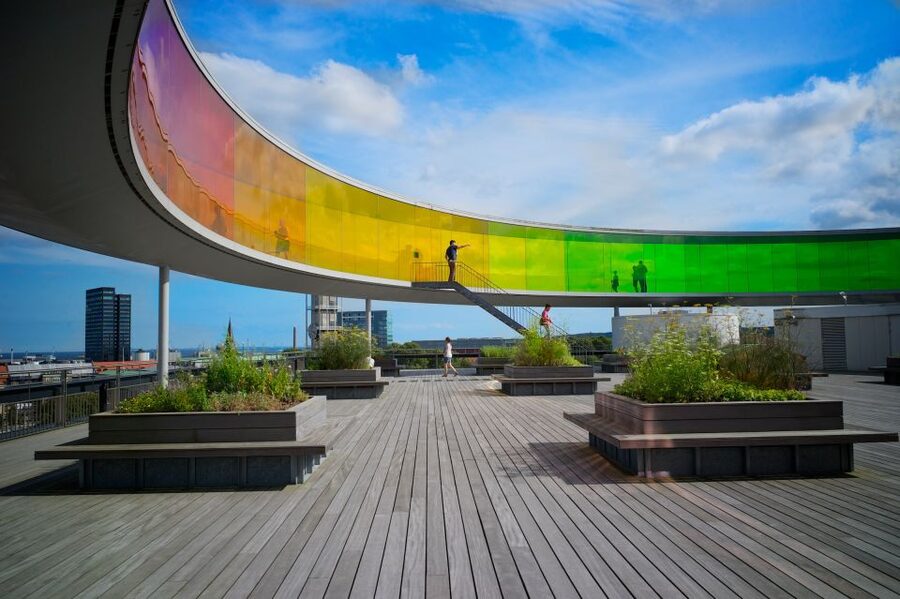
After Møllestien, you look up. Aarhus Cathedral is the tallest church in Denmark, and you feel that scale when you approach it on foot. This is the stop where the route gives you a “destination moment” instead of only wandering.
A cathedral like this does two things for your trip. First, it gives you a visual anchor so you can orient yourself in the city. Second, it gives your guide a chance to talk about architecture and significance in a more dramatic way than a street or station can.
One practical tip: stand where you can see both the vertical lines and the surrounding skyline. If you only take photos straight-on from too close, you miss the real sense of height. Ask your guide where to position yourself for a better view if the group is moving quickly.
Dokk1 library: books and city culture, not just a building
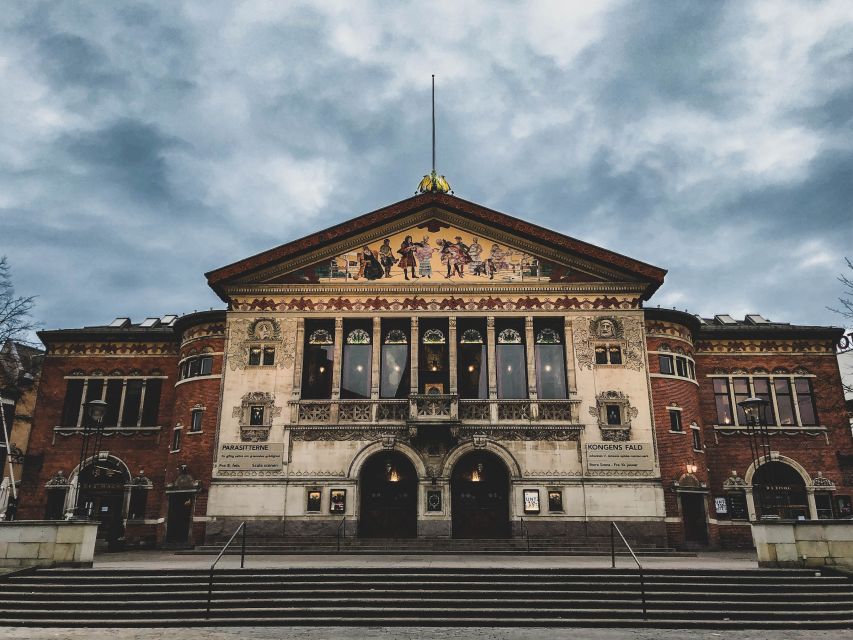
The tour finishes at Dokk1, Aarhus’s public library. This is a great ending point because it shifts the tone from “landmark viewing” to “how locals live.” A public library is not just about books. It is a meeting place, a study zone, and a sign of what a city values day to day.
The best way to use this last stop is simple: take a minute to look around like you are planning to return. Even if you do not go deep into exhibits, you can watch how the space works for people. If your guide has energy here, you might get extra context about Danish culture around public resources and learning, which some guides have been specifically praised for covering.
If you are a reader, Dokk1 can also be the most personal stop of the day. It gives you something to take home beyond photos, a reason to come back to Aarhus later.
Price and what $128 per person gets you
Let’s be honest about value. $128 for 90 minutes is not “cheap,” especially if you compare it to a self-guided walk you could do in an hour. So what makes it worth it?
Pay attention to what the tour includes:
- a walking tour
- a live guide (English or Danish)
That is it. No tickets are listed as included, and you are on your own for food and drinks. So you are paying for route design plus interpretation. When a guide is strong, especially at answering questions and connecting what you see to meaning, the cost feels fair.
When a guide is weaker, the same route can start to feel like a stroll where you carry the curiosity alone. That is the main risk reflected in the feedback. If you tend to ask lots of questions, you will likely get more value. If you do not, you may feel like you could have done most of it yourself.
What the guide experience should feel like, and how to get it
A good guide turns sightseeing into understanding. Some guides connected with this walk have been singled out for strong city knowledge and even broader cultural and political context. Others were described as limited in answering basic questions, with more of a surface-level path through town.
You can tilt the experience toward the first outcome with one smart move. Start early with a question that is easy to answer and sets a tone. For example:
- What should I notice first in Latinerkvarteret, the street pattern or the buildings?
- How does a place like Skovgaardsgade show up in Danish public art?
Then follow up with one detail you genuinely care about. If your guide engages, you will feel it immediately in the flow.
Also, if you get a guide with a more relaxed style, you still can steer it. Ask them to recommend one local habit you can spot as you walk. A small shift like that can change the whole vibe from “we passed things” to “we learned how to look.”
Footwear, timing, and practical steps that make the walk easier
This is a short tour, but it is not a no-effort stroll. You should plan for:
- comfortable shoes (cobblestones are part of the plan)
- a charged smartphone (photos, maps, and quick reference)
Use that smartphone for practical orientation. When you see a building or street and you want context, open a note app and jot one question down. You will remember your curiosity better, and you can ask at the next natural pause.
Timing matters because the walk is only 90 minutes. That means stops likely have momentum. If you want deeper time at Dokk1, consider how much you can absorb in a short visit and keep expectations realistic.
Who should book this Aarhus walking tour
Book it if:
- you enjoy short guided walks with a clear route and big variety
- you like architecture, street texture, and public spaces
- you want a local perspective without committing to a half-day plan
- you like arts and culture surprises, like finding art in a bus station
Skip it if:
- you need a tour that is fully accessible for mobility impairments
- you only want visual sightseeing and you do not care much about interpretation
- you expect constant deep history at every stop with detailed Q and A
Should you book this Aarhus walking tour?
If you want a focused, 90-minute introduction to Aarhus that mixes old streets, surprising art, a towering cathedral, and a modern library, I think this is a strong fit. The biggest upside is the route’s mix of unexpected places, especially how Skovgaardsgade bus station and Dokk1 broaden what “sightseeing” means.
I would book it when you like guides who explain what you are seeing and you are comfortable asking questions if you want more depth. If you fear you will get a more casual, low-detail narration, plan to be proactive with your curiosity.
FAQ
How long is the Aarhus walking tour?
The tour lasts 90 minutes.
How much does the tour cost?
The price is $128 per person.
What languages are available for the live guide?
The live tour guide is available in English and Danish.
What is included in the price?
The experience includes a walking tour and a guide.
What should I bring with me?
Bring a charged smartphone and wear comfortable shoes.
Is this tour private or in a group?
Private or small groups are available.
Is the tour suitable for people with mobility impairments?
No, it is not suitable for people with mobility impairments.
Is free cancellation available?
Yes, you can cancel up to 24 hours in advance for a full refund.
More Tours Around Denmark




All Our Denmark Reviews


Aarhus, A Few More Ways In
Other Danish days out we have written up




Aarhus Tours, compared.
 ★ 4.8Aarhus Walking Tour: From Viking Village to MetropolisFrom $31122 reviews
 ★ 5.0Street Art and Rooftops of Aarhus, DenmarkFrom $6362 reviews
 ★ 4.0The Ancient Viking Stronghold of Aros: A Self-Guided Audio Tour in AarhusFrom $1136 reviews
 ★ 4.0Aarhus Walking Tour: Explore Top Sights & Hidden GemsFrom $3934 reviews
 ★ 4.7Aarhus Craft BeerWalkFrom $5919 reviews
 ★ 4.5Time travel in AarhusFrom $16018 reviews
 ★ 4.0Explore Aarhus in 60 minutes with a LocalFrom $9414 reviews
 ★ 4.0Aarhus Private Walking Tour with a LocalFrom $6612 reviews
Browse the lists this tour appears in