
REVIEW · AARHUS TOURS
Aarhus Walking Tour: Explore Top Sights & Hidden Gems
Aarhus hits your radar fast on foot. This 2-hour, English guided walk is built around classic landmarks like Aarhus Cathedral and street-level stops such as Møllestien, so you get a smart overview without a long day of transit. I like that the route moves at a comfortable pace for most people.
You also get a nice mix of big sights and small streets. The Latin Quarter feel matters here, with narrow cobblestones and the kind of central Aarhus wandering that helps you understand what the city feels like beyond the postcard stops.
One possible drawback to keep in mind: you should expect mostly exterior viewing. Some people were disappointed that the tour did not include going inside the cathedral or the theatre, so if interior access is a must for you, confirm that up front.
In This Review
- Key Tour Highlights You’ll Actually Feel
- Price and Value: What You Get for $39 in Two Hours
- Meeting Point and Pacing: A Tour That Stays Central and Simple
- Stop 1: Aarhus Theatre, Not Just a Pretty Building
- Stop 2: Aarhus Cathedral, A 12th-Century Anchor
- Stop 3: Latin Quarter Streets, Where the City Feels Lived-In
- Stop 4: Church of Our Lady, Another 12th-Century Story
- Stop 5: Møllestien, Cobblestones and 18th-Century Charm
- Stop 6: Aarhus City Hall and the Surprise Stretch
- The Guide Experience: English Storytelling, Clear Pace, and How to Get More
- Practical Tips for a Smooth Aarhus Walk
- Who This Tour Suits Best
- Should You Book This Aarhus Walking Tour?
- FAQ
- What time does the Aarhus Walking Tour start?
- Where do you meet and where does the tour end?
- How long is the tour?
- Is the tour offered in English?
- Is admission included for the sights?
- Can I cancel for a full refund?
Key Tour Highlights You’ll Actually Feel
- 20-minute stop pacing keeps the group moving and prevents the tour from dragging.
- English guides are a big part of the experience, with standout feedback tied to names like Giulia and Kim.
- Exterior-first sightseeing focuses on the sights you can see fast, not long museum-style visits.
- Central Aarhus route covers theatre, cathedral, churches, and signature streets in one loop.
- Small-group size (max 30) helps compared with larger city bus groups, though sound can still be a factor.
Price and Value: What You Get for $39 in Two Hours
At $39 per person for about 2 hours, this tour is priced like a practical city primer. You are paying for someone local to stitch the stops together with context, plus the convenience of a planned route you can repeat later on your own.
What makes the value feel real is the balance of stops. You are not spending the entire time at one monument. Instead, you get multiple central anchors (theatre, cathedral, major church, civic building) and then street scenes that show how Aarhus actually looks at human scale.
Also, the tour is offered in English and uses a mobile ticket, which makes it easier to travel light and get started without fumbling paperwork. Confirmation arrives at booking, and the group is capped at 30 travelers, which keeps the experience from turning into a shoulder-to-shoulder sprint.
More of Aarhus, reviewed
- Aarhus Walking Tour: From Viking Village to Metropolis
★ 4.8 · 122 reviews - Street Art and Rooftops of Aarhus, Denmark
★ 5.0 · 62 reviews - Aarhus Walking Tour: Explore Top Sights & Hidden Gems
★ 4.0 · 34 reviews - Aarhus Craft BeerWalk
★ 4.7 · 19 reviews
Meeting Point and Pacing: A Tour That Stays Central and Simple
The tour starts at 10:00 am at Aarhus Theatre, Teatergaden 1, 8000 Aarhus, and it loops back to the same area. That matters if you want to stay flexible after your walk, whether that means lunch, shopping, or a second self-guided loop.
Each main stop is timed at about 20 minutes, so you get enough time for photos and a guided story, but not so much that you feel trapped inside one spot. Reviews also note it is an easy walk with minimal hills, which is a big deal in a city where you might otherwise waste time debating cobblestone shoes.
Practical note: with a group this size, your listening position matters. If you are near the front, you will likely catch more of the guide’s narration without craning.
Stop 1: Aarhus Theatre, Not Just a Pretty Building
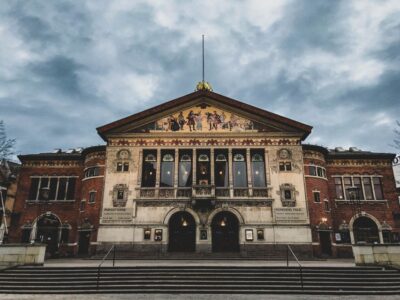
The walk begins at Aarhus Theatre, a cultural hub in the middle of town with roots reaching back to the late 1800s. Even if you are not seeing a show, it is a strong first choice because it signals the city’s arts identity right away.
In a short 20-minute stop, this is less about memorizing dates and more about learning what the building represents. You get pointed at what to notice in the architecture and why a theatre like this becomes a civic landmark, not just an entertainment venue.
If you are the type who likes to look at buildings and read the “why” behind them, this early stop sets the tone for the rest of the tour.
Stop 2: Aarhus Cathedral, A 12th-Century Anchor
Next is Aarhus Cathedral, with origins in the 12th century. This stop is valuable because it gives you a historical anchor early in the walk, then helps you interpret the later religious buildings and older city streets you will see afterward.
The cathedral is described as one of the city’s oldest and most significant buildings, and it functions as both a place of worship and a community meeting point. In practice, that means the guide’s talking points often connect architecture to everyday city life, not just big-picture history.
A quick heads-up based on feedback: you should expect this stop to be more about exterior viewing and short time on-site. Some people were specifically disappointed that the tour did not include going inside the cathedral. If interior access is important to you, check before booking so you do not end up with a mismatch.
More Danish towns covered on foot
- Aarhus Private Walking Tour with a Local★ 4.0 · 12 reviews
- Aarhus: Surprise City Walking Tour with Local Guide★ 4.2 · 9 reviews
- Surprise Walk of Aarhus with a Local★ 4.5 · 4 reviews
- Aarhus: Express Walk with a Local in 60 minutes★ 4.8 · 3 reviews
Stop 3: Latin Quarter Streets, Where the City Feels Lived-In
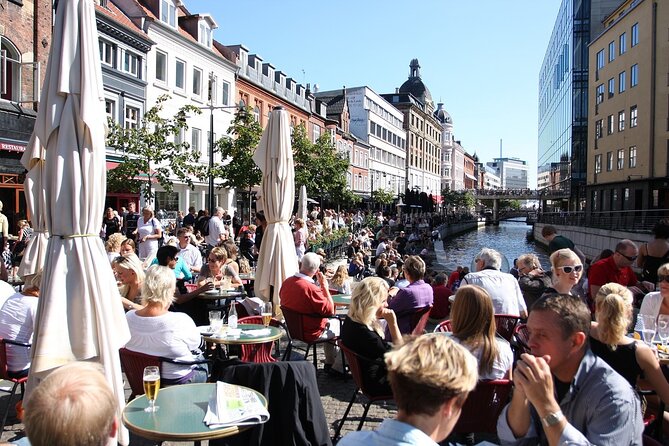
Then you shift gears to the Latin Quarter, known for narrow cobblestone streets and a long timeline reaching back to the Middle Ages. This is where the tour starts to feel like Aarhus, not just a checklist.
You get a feel for how the old street layout shapes modern life. Expect the kind of scene where cafes, shops, and galleries sit close enough that you can bounce your eyes from storefronts to alleyways without needing to plan anything.
This is also a smart stop for orientation. When you later walk the same streets on your own, you will recognize the lanes and intersections faster, because the guide helps you map what you are seeing.
Stop 4: Church of Our Lady, Another 12th-Century Story
The tour moves to Church of Our Lady, also dating to the 12th century. If Aarhus Cathedral is the big anchor, this church adds texture by showing a different side of the city’s long religious tradition.
What I like about this stop is that you are not just doing “another church.” The time is meant to highlight why this building still matters to local community life, and how the architecture carries meaning across centuries.
Again, based on feedback, it is safer to assume you will spend time observing rather than relying on interior access. If you want to photograph details up close from inside, confirm that is part of the plan.
Stop 5: Møllestien, Cobblestones and 18th-Century Charm
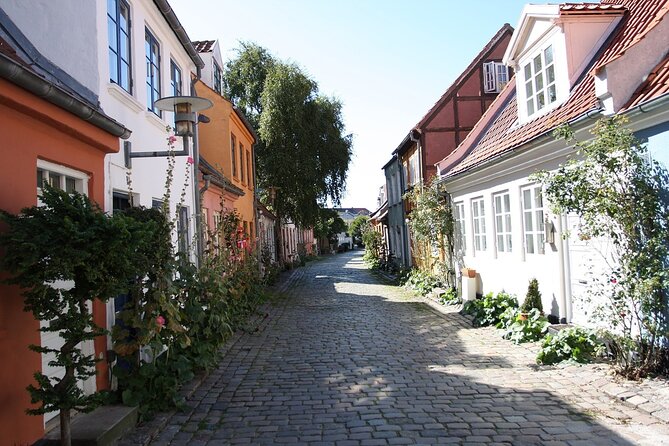
Now you get the kind of street that makes you slow down on purpose: Møllestien. This narrow lane is described as a picturesque, historic street with cobblestones and buildings dating back to the 18th century.
This stop is especially useful if you want something beyond the major monuments. You get the look, scale, and material of older Aarhus without the crowds you might find at more famous attractions.
The guide’s role here is to help you see patterns: how the street shape channels foot traffic, how the facades read at walking speed, and what details to notice that you would otherwise miss.
Stop 6: Aarhus City Hall and the Surprise Stretch
The final scheduled anchor is Aarhus City Hall, followed by a few additional stops kept as surprises. That approach works well on a walking tour, because it keeps you alert while still covering major sites.
City Hall tends to be the “civic story” piece of the puzzle, connecting earlier religious and cultural stops to the way Aarhus functions as a modern city. It also lands you in the central area, which is convenient for whatever comes next.
One practical plus from feedback: some people said the tour ended with a city overlook around the Salling Department Store area, including a view from an outdoor cafe-like spot. If that fits into the timing for your day, it is a great way to finish, since it gives your eyes a wider frame after all the close-up street details.
The Guide Experience: English Storytelling, Clear Pace, and How to Get More
This is where the tour often wins or loses. The best feedback highlights guides who are friendly and adapt to the group. Names like Giulia and Kim show up in strong ratings, and people credit their engagement and their ability to connect Danish history to what you are seeing on the street.
But there is also a fair warning from feedback: in some cases, the guide’s cultural info felt thin unless questions came up. Another note suggested that sound could be hard in a larger group and that headphones would have helped.
So here is how to make this work for you:
- Stand where you can hear without craning, and position yourself close if you care about every detail.
- Bring curiosity. If something clicks for you, ask a question. You will often get the most useful answers when you prompt the guide rather than waiting for a perfectly timed fact drop.
- If you are noise-sensitive, consider bringing hearing-friendly earbuds just for comfort. The tour description does not mention provided audio, so plan to rely on your own ability to hear.
Practical Tips for a Smooth Aarhus Walk
This tour is built for easy city walking, but smart preparation still helps.
Wear comfy shoes. You will hit cobblestones, and you will want to keep your pace steady across the full loop.
Dress for weather. Denmark weather changes fast. Even if the morning looks fine, you might need a light layer.
Bring a phone battery. The tour uses a mobile ticket, and you will likely take lots of photos on the street stops like Møllestien.
Use your time well at each 20-minute stop. If you want interior photos, you need to check whether it is actually part of the plan. If not, focus on exterior details like facades, spires, and street layout, since that is what the tour is set up to deliver.
Who This Tour Suits Best
This is a strong pick for:
- First-timers in Aarhus who want a quick orientation loop.
- Travelers who prefer walking over jumping between far-apart sights.
- People who like a mix of landmarks plus street scenes, so the city feels real, not staged.
- Anyone traveling with limited time, since two hours covers several key stops without exhausting you.
If you want deep museum-style time inside major buildings, this may not match your expectations, because feedback points to limited or no interior visits for some stops.
Should You Book This Aarhus Walking Tour?
I think it is worth booking if you want a quick, efficient Aarhus overview with friendly English narration and a route that stays in the center. The price is reasonable for what you get: a guided walk across major anchors plus the street-level Aarhus that helps you understand the city at walking speed.
But do not book it expecting lots of time inside the theatre or cathedral. If interior access is high on your priority list, confirm that detail before you go, so you do not end up spending your limited time outside wishing you were inside.
If you want an easy, high-value way to start your Aarhus day, this tour is a solid match.
FAQ
What time does the Aarhus Walking Tour start?
It starts at 10:00 am. The meeting point is Aarhus Theatre, Teatergaden 1, 8000 Aarhus, Denmark.
Where do you meet and where does the tour end?
You meet at Aarhus Theatre on Teatergaden 1. The tour ends back at the same meeting point.
How long is the tour?
The tour lasts about 2 hours.
Is the tour offered in English?
Yes, it is offered in English, and the ticket is mobile.
Is admission included for the sights?
The activity information shows free admission for the listed stops during the tour time blocks.
Can I cancel for a full refund?
Yes. You can cancel up to 24 hours before the experience starts for a full refund. If you cancel less than 24 hours before, you will not get the money back.
More Tours Around Denmark




All Our Denmark Reviews



Aarhus, A Few More Ways In
Other Danish days out we have written up



Aarhus Tours, compared.
 ★ 4.8Aarhus Walking Tour: From Viking Village to MetropolisFrom $31122 reviews
 ★ 5.0Street Art and Rooftops of Aarhus, DenmarkFrom $6362 reviews
 ★ 4.0The Ancient Viking Stronghold of Aros: A Self-Guided Audio Tour in AarhusFrom $1136 reviews
 ★ 4.7Aarhus Craft BeerWalkFrom $5919 reviews
 ★ 4.5Time travel in AarhusFrom $16018 reviews
 ★ 4.0Explore Aarhus in 60 minutes with a LocalFrom $9414 reviews
 ★ 4.0Aarhus Private Walking Tour with a LocalFrom $6612 reviews
 ★ 4.2Aarhus: Surprise City Walking Tour with Local GuideFrom $1289 reviews
Browse the lists this tour appears in