
REVIEW · AARHUS TOURS
Street Art and Rooftops of Aarhus, Denmark
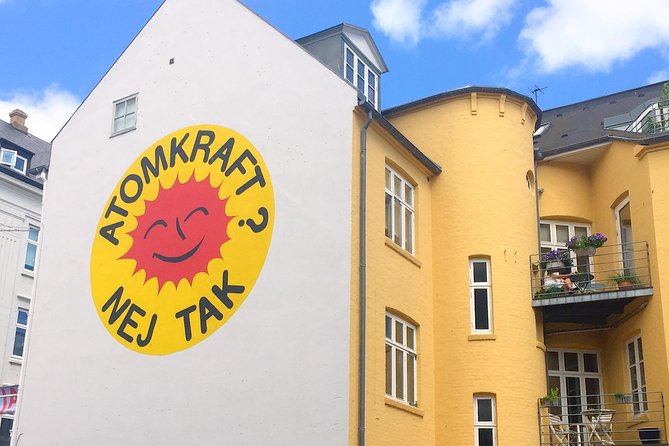
Aarhus street art has a way of sticking. This tour strings together murals, graffiti, and sculptures with rooftop viewpoints and city history, guided at a pace that lets you ask questions. I especially like how the route moves from harbour-side streets to older neighbourhoods, then into art spaces, so you see the whole city through artists’ eyes. One thing to consider: it is not fully outdoors, but you should still expect a good amount of walking.
You start near Dokk 1 and finish back at the same meeting point, keeping the logistics painless. The group stays small, max 10, and the tour runs in English, with the guide often covering the stories behind styles and the messages public art carries. If you dislike walking through mixed areas and want zero outdoor time, you may find the streets and viewpoints a little too much.
In This Review
- Key Highlights Worth Booking
- Starting at Dokk 1, the Harbour Makes the Best First Lesson
- From Sea Side Streets to the Latin Quarter’s Charming Old Houses
- A Rooftop Coffee Stop That Feels Like the City’s Inner Circle
- Inside Aarhus Industrial History, Turned Into Modern Art Space
- City Centre Monuments, City Hall, and Why Details Matter
- The 2017 Viewpoint Return, Harbour Views Are the Final Clue
- What Art You Will Actually See, and How the Guide Helps You Read It
- Price and Time Value for a 2-Hour Aarhus Walk
- Who Should Book This Tour, and Who Might Skip It
- Should You Book This Street Art and Rooftops Tour?
Key Highlights Worth Booking
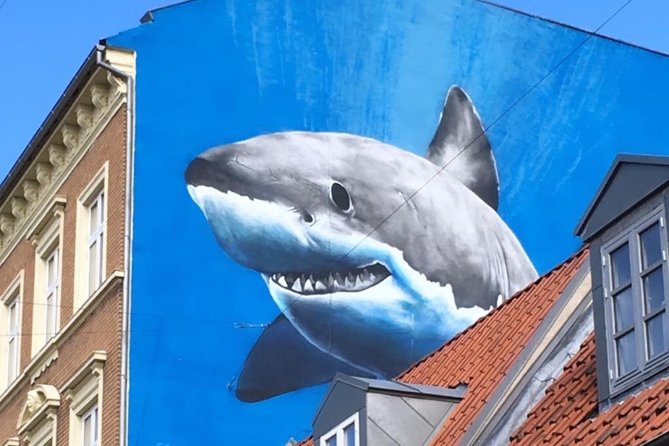
Street art route with context so you understand what you are looking at, not just what it is
Rooftop moments including a coffee stop and a major viewpoint opened in 2017
Old and new Aarhus in one loop, from harbour-side streets to an industrial art conversion
Small group format (max 10) with time for your questions
A guide-led pace that slows down for details like building facades, installations, and mural styles
Starting at Dokk 1, the Harbour Makes the Best First Lesson
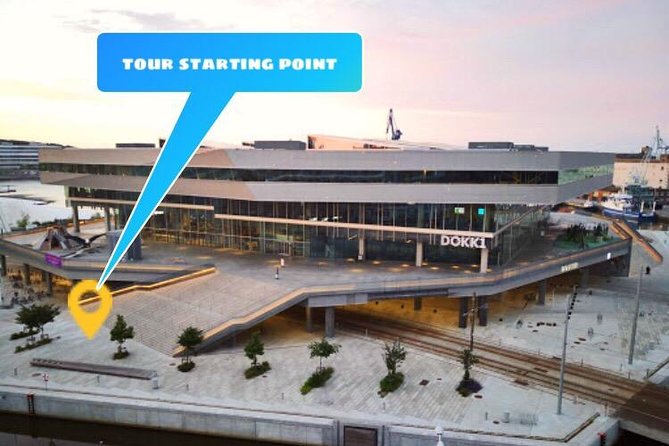
The best thing about this tour is that it begins at the water and lets the city’s shape set the tone right away. You meet near Europaplads 3, by the Dokk 1 area (the city’s multimedia hub), which is a smart starting point because it is easy to find and it feels very Aarhus. From there, the walk gradually shifts away from the immediate harbour feel and toward older districts and art-heavy corners.
The tour is planned for about two hours, but I would treat that as a baseline, not a hard stop. The format is designed for conversation, so if you keep asking why a mural looks a certain way or how a public installation got started, the guide will happily slow down. You are also told up front that it is not all outdoors, which matters in Denmark when the weather changes its mind.
Practical tip: wear shoes you can walk in comfortably. You are on foot the whole time, and the tour is listed for moderate physical fitness. There are indoor parts too, but you should still plan as if you are doing a solid city walk.
More of Aarhus, reviewed
- Aarhus Walking Tour: From Viking Village to Metropolis
★ 4.8 · 122 reviews - Street Art and Rooftops of Aarhus, Denmark
★ 5.0 · 62 reviews - Aarhus Walking Tour: Explore Top Sights & Hidden Gems
★ 4.0 · 34 reviews - Aarhus Craft BeerWalk
★ 4.7 · 19 reviews
From Sea Side Streets to the Latin Quarter’s Charming Old Houses
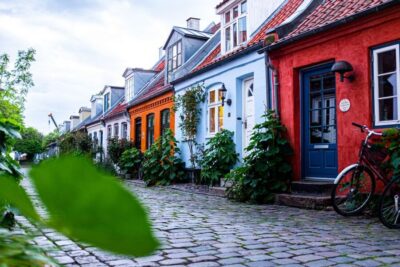
Once you leave the harbour area, the tour starts showing you how Aarhus layers time. You move toward the Latin Quarter, and that transition is not just scenic, it is the point. Older, charming houses change the scale of what you see, so street art and sculptures feel more tied to place instead of looking like they dropped in from somewhere else.
This is also where the guide’s storytelling really earns its keep. You are not just given facts like dates and addresses. You get commentary that links the artwork to the street level reality around it, like the way a mural sits on a facade, the way graffiti marks a corner people pass every day, or the way a sculpture changes how you imagine the block.
What I like for you here is that the pace supports attention. It is easy to rush past street art on your own. On this walk, you get to pause long enough to notice the craft, and the guide helps you read the visual language. By the time you reach the creative side of town, you are already thinking like an art-watcher.
A Rooftop Coffee Stop That Feels Like the City’s Inner Circle
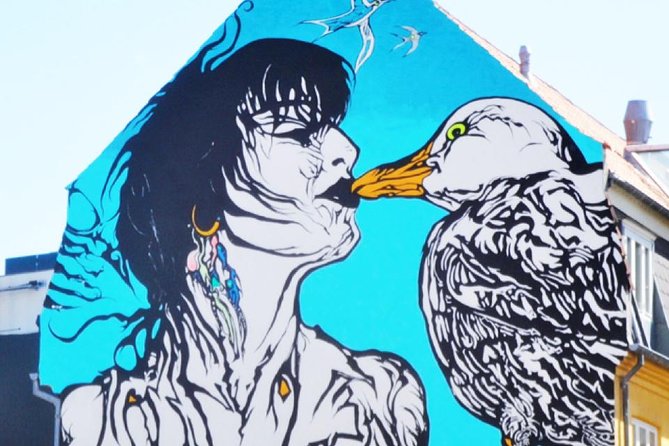
At some point, you get to one of the hipster hangout spots filled with freelancers and other creatives, and you do it the right way: with a roof-top coffee cap. This stop is not just a break. It is a reminder that Aarhus street art does not live in a bubble. The creative culture that produces public work also shows up in how people spend their day, where they meet, and what they talk about.
You may not know what to look for when you first arrive, but this is where the mood shifts. Rooftops change your view of the city, and that changes how you interpret the art you will see next. From up high, the streets and buildings feel like a designed space, not a random mix.
Since food and drinks are not included, you will want to budget for whatever you choose to order at the café. If you are sensitive to crowds, this is still a good moment because the tour is small, and you are not stuck in a long line with a large group.
Practical tip: bring a light layer. Even short rooftop time can feel cooler than street level, especially if you get a breeze off the harbour.
Inside Aarhus Industrial History, Turned Into Modern Art Space
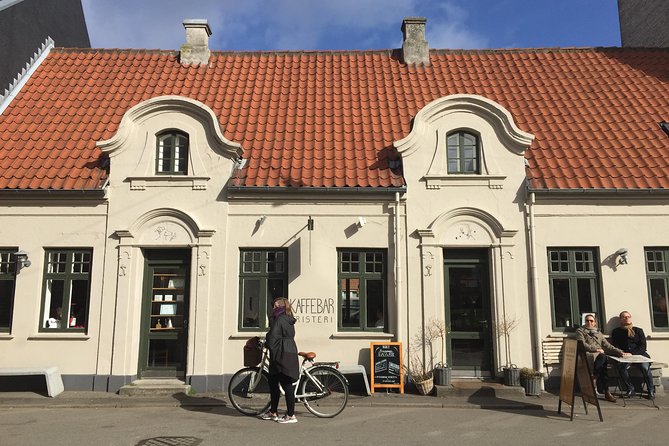
Then comes one of the tour’s most satisfying turns: the walk to an old industrial site that has been beautifully transformed into a modern art space. You are stepping into a place where the city took past uses of space and gave them a new job. That matters for street art because public works usually have to negotiate with buildings, history, and the character of the neighbourhood they land in.
In this section, you are likely to see how art works in more than one form. The tour is built around different types of public expression, including sculptures, graffiti, murals, and installations. Even when the art is visual only, the guide connects it back to real themes people care about, like community voice, identity, and how artists respond to the city around them.
This is also where the small group format really helps. It is much easier to hear explanations and ask follow-up questions when there are fewer people. If you want to understand why a mural might feel political or personal, why a style looks the way it does, or how an installation interacts with the site, this part is your payoff.
- Aarhus Craft BeerWalk★ 4.7 · 19 reviews
- Explore Aarhus in 60 minutes with a Local★ 4.0 · 14 reviews
- Aarhus Private Walking Tour with a Local★ 4.0 · 12 reviews
- Aarhus: Surprise City Walking Tour with Local Guide★ 4.2 · 9 reviews
- Aarhus: 1 or 1,5 Hour Boat Rental – No License Required★ 4.3 · 8 reviews
City Centre Monuments, City Hall, and Why Details Matter
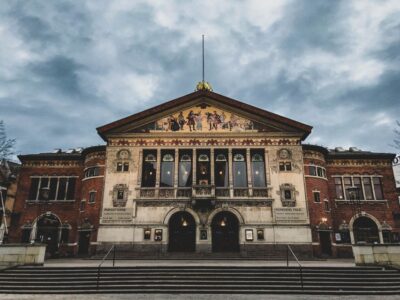
After the art-heavy stops, you head toward the official city centre area and hear about monuments around City Hall. This change of rhythm is smart. It prevents the tour from becoming only street-level art spotting. You get to zoom out and place the artwork into a wider civic story.
You also get a different kind of learning: how to read a city’s public symbols. On a street art tour, it is easy to treat everything as decoration. Here, the guide helps you connect monuments and public space design to the themes you saw earlier. It is all part of the same Aarhus conversation, just on different scales.
This is a good moment to slow down too. If you want photos, watch for angles that keep both the monument and surrounding street art in frame. If you want to learn, ask how public art fits into local life and how the city supports creative expression. The guide’s job is not to recite a script, it is to turn what you are seeing into something you understand.
The 2017 Viewpoint Return, Harbour Views Are the Final Clue
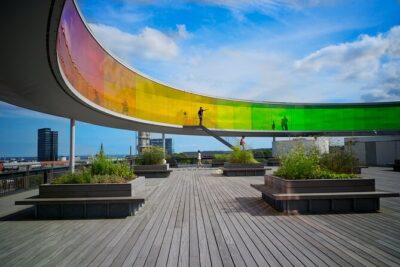
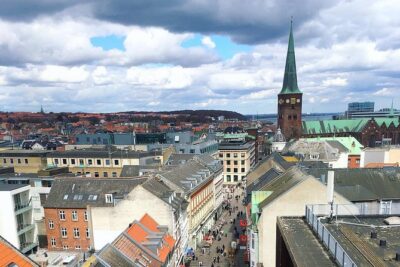
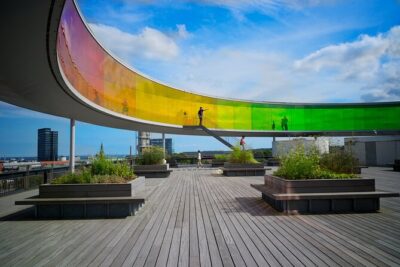
The walk continues back toward the harbour, and along the way you reach a viewpoint that opened in 2017. It is described as already drawing millions of visitors, and honestly, a new viewpoint like that tends to earn its popularity. When a city builds a proper place to look out over the whole area, it is saying something: this is the view, this is what we want you to remember.
This stop is your visual reward, but it is also the last step in the tour’s theme. Earlier you are learning to look at art like a language. Now you look at Aarhus like a composition. From above, you can see how neighbourhoods connect, how the harbour shapes the city, and how the route you just walked fits into the bigger whole.
I recommend bringing your camera and also putting it down for a few minutes. The point is to actually absorb what you are seeing, then compare it to what the guide told you earlier about the streets and buildings.
What Art You Will Actually See, and How the Guide Helps You Read It
This tour is designed for art-lovers, but you do not need to be an expert to enjoy it. The guide helps you notice details and understand the message behind the work. Based on what people consistently highlight, the best sessions are the ones where the guide points out craft and style, then connects it to why it exists.
Here are the types of art you can expect on the route:
Graffiti and murals that change how a street corner feels
Sculptures and installations that alter your sense of the space around you
Public artworks with stories tied to the community and the site
One reason this is so enjoyable is that it is not random. The tour is structured so that each type of art builds on the last. You start learning the basics of reading street art in context, then you move through neighbourhood shifts and art spaces that make the artwork feel more grounded.
And if you are the kind of person who hates vague explanations, you will likely appreciate the way guides focus on the practical stuff: where to look, what visual cues mean, and how to interpret an artist’s intent without overcomplicating it.
Price and Time Value for a 2-Hour Aarhus Walk
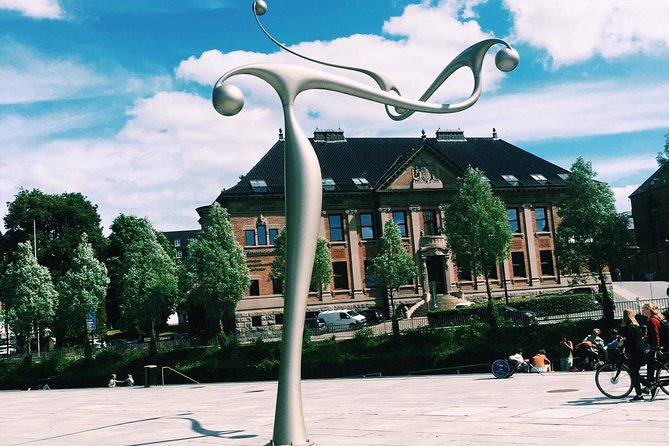
The price is $63.20 per person for an experience that runs about two hours, with a small group size capped at 10. That is not cheap, but it is also not overpriced for an art-focused guided walk in a city that is actively building its creative identity through public work.
Here is the value logic I see:
You are paying for guided interpretation, which is the difference between seeing street art and understanding street art.
You get a route that mixes streets, neighbourhoods, and an art space conversion, so the time does not feel wasted.
No entry tickets are required for the attractions you visit, so you are not stacking hidden costs.
Food and drinks are not included, so plan a small budget if you want that rooftop coffee stop or a snack during breaks. If you go in expecting a guided art lesson rather than a checklist tour, you will feel the value more quickly.
Who Should Book This Tour, and Who Might Skip It
This tour is a great fit if you:
Love street art, murals, and public installations
Want context and stories, not just photos and location names
Like small-group walks where you can ask questions
It may not be the best fit if you:
Strongly prefer museums only, with no street time
Need very limited walking and short stops, because the tour is built around movement and viewing points
- Want food included, since meals and drinks are not part of the package
One more small but important point: the tour is offered in English. If you are traveling with someone who does not speak English, you may still be okay because it can be operated by a multi-lingual guide, but you should confirm what language support you are getting at booking time.
Should You Book This Street Art and Rooftops Tour?
Yes, if Aarhus is your only stop for learning the city by foot, this is a smart use of time. It gives you a compact loop that links harbour-side streets, the Latin Quarter’s charm, rooftop culture, an industrial-to-art transformation, and a payoff viewpoint opened in 2017. Most importantly, the guide-led approach makes the art feel like a story you can follow.
Book it especially if you enjoy asking why things look the way they do, and if you want your street art photos to come with meaning, not just a location tag. If you hate walking or want totally indoor sightseeing, you may want to pass and choose a museum-heavy day instead.
All Our Denmark Reviews




Aarhus, A Few More Ways In
Other Danish days out we have written up

Aarhus Tours, compared.
 ★ 4.8Aarhus Walking Tour: From Viking Village to MetropolisFrom $31122 reviews
 ★ 4.0The Ancient Viking Stronghold of Aros: A Self-Guided Audio Tour in AarhusFrom $1136 reviews
 ★ 4.0Aarhus Walking Tour: Explore Top Sights & Hidden GemsFrom $3934 reviews
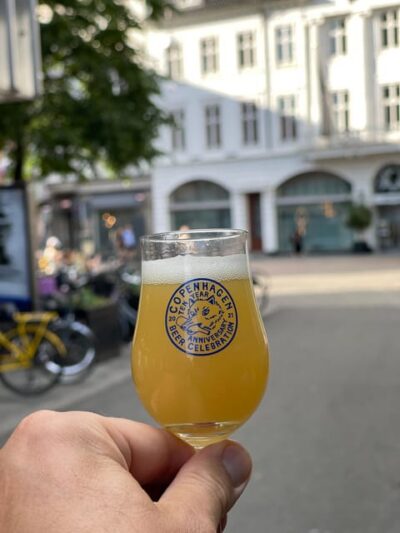 ★ 4.7Aarhus Craft BeerWalkFrom $5919 reviews
 ★ 4.5Time travel in AarhusFrom $16018 reviews
 ★ 4.0Explore Aarhus in 60 minutes with a LocalFrom $9414 reviews
 ★ 4.0Aarhus Private Walking Tour with a LocalFrom $6612 reviews
 ★ 4.2Aarhus: Surprise City Walking Tour with Local GuideFrom $1289 reviews
Browse the lists this tour appears in