
REVIEW · COPENHAGEN ARCHITECTURE TOURS
Copenhagen Architecture and Sustainability Tour with local Guide
Copenhagen makes you pedal with purpose. This eco-focused Copenhagen architecture and sustainability tour turns the city into a living design lab, with a local guide and about 11 km of cycling that beats a slow walking slog. I like the bike-first routing and the fact that almost every stop is ticket-free, so you are paying for access and context, not just entry fees. One heads-up, the inner harbor area can get packed in summer, especially around the first canal-style segment.
I found the pacing to be smart for time-poor visitors: 13 stops in about 3 hours, with quick looks that still feel connected. The small group cap of 15 keeps things calmer, and the guide can steer you away from the worst crush when needed. At $72.57 per person, it is also a solid value if you want architecture plus practical city living, not just photo ops.
In This Review
- Quick highlights: what makes this Copenhagen bike tour worth your time
- Starting point at Vester Voldgade, and the setup you actually need
- What you are really doing: architecture plus sustainability, on wheels
- The ride, stop by stop: what each place teaches you
- Stop 1: Blox, sustainability with exhibitions attached
- Stop 2: Lille Langebro, the harbor crossing designed for people
- Stop 3: Havnebadet (Islands Brygge), when the harbor becomes a destination
- Stop 4: Tietgen Residence Hall, social sustainability you can feel
- Stop 5: DR Koncerthuset, architecture built for sound and civic culture
- Stop 6: Amager Fælled, reclaimed land with a controversial past
- Stop 7: Cykelslangen, cycling-only harbor infrastructure
- Stop 8: Enghave Park, turning rain control into public design
- Stop 9: Folkehuset Absalon, reusing a former church for community
- Stop 10: Kødbyen (Meatpacking District), sanitary planning meets industrial architecture
- Stop 11: Israel’s Square and Torvehallerne area, food culture after changing land use
- Stop 12: Ørstedsparken, defensive reuse turned into a park with character
- Final stretch: cycling time to connect the dots
- Bicycle details and upgrades, what to know before you pick gear
- Pace, group size, and how to make the most of the shorter stops
- Value check: is $72.57 worth it for a 3-hour architecture ride?
- Who this tour suits best (and who should choose something else)
- Should you book this Copenhagen Architecture and Sustainability Tour with local guide?
Quick highlights: what makes this Copenhagen bike tour worth your time
- Real-world sustainability stops, from housing design to harbor redevelopment
- Cycling confidence with a guide, you get the routes and the reasoning
- Mostly free entry moments, great for budget control in Copenhagen
- Small group size (max 15), easier to hear explanations and ask questions
- 11 km ride in ~3 hours, efficient coverage without feeling rushed
Starting point at Vester Voldgade, and the setup you actually need
You meet at Vester Voldgade 2 (1552 Copenhagen). It’s a simple, central start, and the tour notes that it is near public transportation, which matters in Copenhagen where timing is everything.
The practical stuff is handled before you roll: bicycle included, and you can request a bike helmet for extra peace of mind. If you are traveling with kids, they offer children bikes in different sizes, with availability handled by contacting the operator. There are also toilets at the store, which is worth caring about on a 3-hour ride.
Because this is a cycling tour, your “fitness check” is mostly about comfort on a bike for about 11 km with moderate effort. If you can handle a good city bike ride, you are in the right place.
More of Copenhagen, reviewed one tour at a time
- Copenhagen: Canal Cruise with Guide
★ 4.6 · 9,115 reviews - Copenhagen: Hop-On Hop-Off Bus Tour with Boat Tour Option
★ 3.9 · 4,122 reviews - Private Walking Grand Tour of Copenhagen
★ 5.0 · 3,953 reviews - From Copenhagen: Lund and Malmö 2-Country Tour
★ 4.7 · 2,772 reviews
What you are really doing: architecture plus sustainability, on wheels
This tour is built around modern Copenhagen thinking. Yes, you get recognizable city landmarks like the concert hall, but the bigger theme is how the city uses design to shape daily life and reduce harm. You are not just looking at buildings, you are learning why they exist and who they serve.
A key benefit is that you keep moving. Instead of spending 30 minutes in one spot, you get short on-the-ground visits that add up fast. That means you can fit Copenhagen’s design story into a half-day, and still have time left for food, museums, or a canal cruise on your own.
The ride, stop by stop: what each place teaches you
Stop 1: Blox, sustainability with exhibitions attached
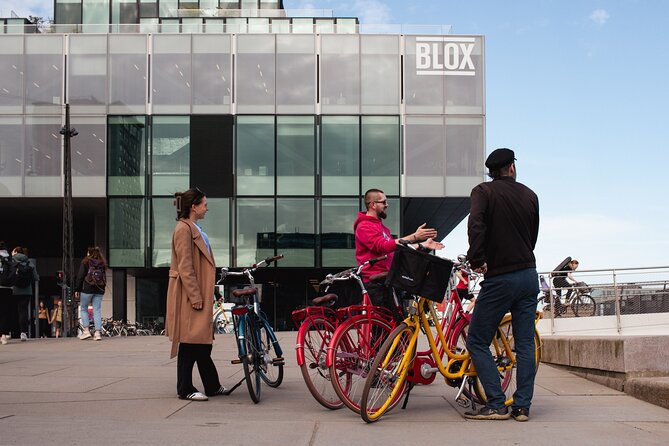
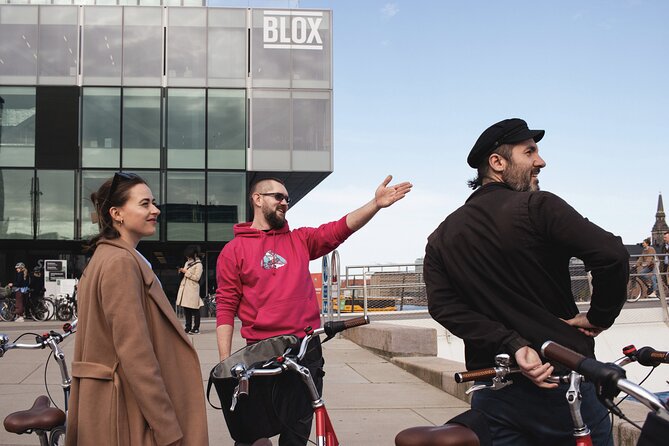
You start at Blox, a mixed-use building developed with sustainability in mind, both technically and socially. Translation: it is not only about the materials and systems, it is also about how a building supports culture and community.
The most practical reason to stop here is what is inside. Blox is a home base for DAC, which runs exhibitions about Copenhagen architecture. Admission is free for your visit, and the key tip is to check what is currently on, so you do not walk in hoping for a specific exhibit that might not match the day.
How this helps you: early on, you get a framework for everything else. You start seeing sustainability as more than energy. It is also about how spaces function in real life.
More Copenhagen buildings, harbourfront and new
- Copenhagen: Danish Architecture Center Entrance Ticket★ 4.4 · 169 reviews
- Copenhagen: Guided Architecture and Sustainability Tour★ 4.8 · 73 reviews
- Copenhagen Architecture and Sustainability Tour with local Guide★ 5.0 · 39 reviews
- Urban Design and Livability E-bike Tour★ 4.8 · 4 reviews
Stop 2: Lille Langebro, the harbor crossing designed for people
Next up is Lille Langebro, a bridge built for pedestrians and cyclists connecting across the harbor. Copenhagen has always had water as a defining feature, but these newer bridges represent the city’s shift toward treating the harbor like public space, not just infrastructure.
Admission is free, and the value is in the perspective. Stand where bikes and walkers mix, and you see the city’s design philosophy at street level: movement is part of the plan, not an afterthought.
Stop 3: Havnebadet (Islands Brygge), when the harbor becomes a destination
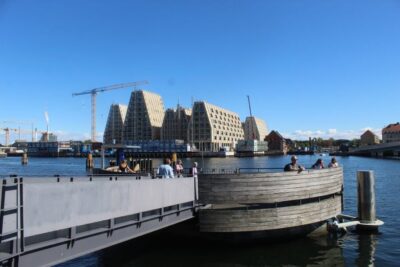
Havnebadet opened in 2003, a turning point in Copenhagen’s relationship with the harbor. This is where you see sustainability as a lifestyle change. The harbor is no longer only for shipping and work. It is also for leisure, with a purpose-built harbor bath.
Admission is free, and the best way to enjoy this stop is to look for contrast. Notice how public recreation has been grafted onto an industrial setting. That is Copenhagen doing what it does well, repurposing space without pretending history did not exist.
Stop 4: Tietgen Residence Hall, social sustainability you can feel
Then you hit housing design, at The Tietgen Residence Hall. This is where the tour earns its sustainability label in a concrete way.
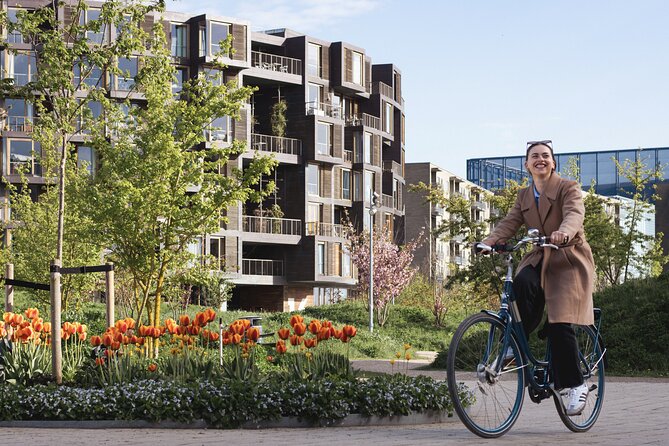
The building houses 400 residents and aims to support personal development while balancing the individual and the community. You will see the plan in the layout: private rooms are small and have a washroom, while living rooms, kitchens, and many other amenities are shared by some or all inhabitants.
Admission is free, and the takeaway is huge. You get a different kind of sustainability than solar panels. It is about reducing isolation, encouraging community use of space, and making smaller private areas work better through shared facilities.
A quick consideration: because these are housing areas, you should be respectful and keep your attention on observing, not interrupting daily life.
Stop 5: DR Koncerthuset, architecture built for sound and civic culture
DR Koncerthuset is a concert venue with a large main hall for 1800 seats, home to the Royal Symphony Orchestra, plus smaller stages and recording studios. Admission is free for the time you spend there on the tour.
What makes this stop useful is the mix. Sustainability is not only about environmental tech. It is also about buildings designed for long-term cultural value. This hall is a civic machine: it supports performances, practice, and recording, all anchored in a real public institution.
If you love music architecture, you will likely enjoy the scale and the sense of public purpose. If you do not, it still works as a contrast point to the housing and harbor stops.
Stop 6: Amager Fælled, reclaimed land with a controversial past
Amager Fælled is one of those Copenhagen places that makes you look twice. Historically, it was used by the military as training grounds and a shooting range from the 1700s until the 1950s. After that, it became a garbage dump, and Copenhageners joke about it with the nickname lorteøen, the shit island.
Today, it is presented as a rare pocket of relatively untouched nature in Copenhagen, even though much of it sits on artificially reclaimed land.
Admission is free. This stop is for thinking. You look at a park and realize it is the product of layers: conflict, cleanup, and eventually public nature.
Stop 7: Cykelslangen, cycling-only harbor infrastructure
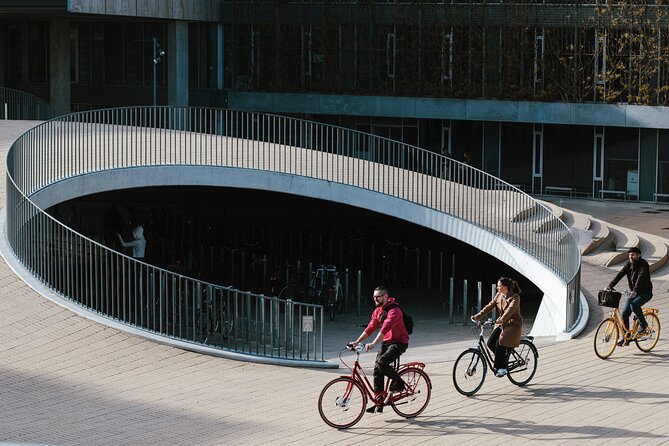
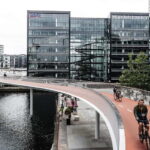
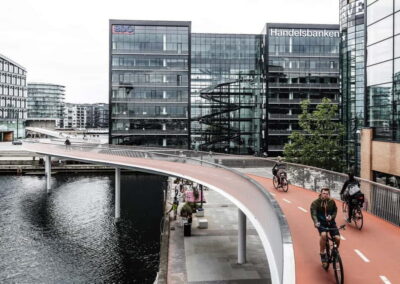
Now you get into the bike-specific infrastructure. Cykelslangen and Bryggebroen together were among the first new harbor crossings built exclusively for cyclists. Admission is free, but the point is what you learn by riding and looking.
You can literally see how Copenhagen treats cycling as a first-class transport system. You are not sharing space with every other mode. You get dedicated pathways where flow is built into the design.
This is one of the most satisfying parts of the tour if you like the city as a system. It makes Copenhagen’s bike culture feel planned, not accidental.
Stop 8: Enghave Park, turning rain control into public design
Enghave Park began life in the late 1920s on former allotment gardens. The original design was neoclassical, with a bandstand, playground, and fields for sports. Between 2017 and 2019 it underwent a complete redesign to help manage torrential rains in Copenhagen.
Admission is free, and this stop is a great sustainability lesson. Climate stress is not just an environmental issue, it becomes urban design. You see how a park can function as infrastructure during heavy rain, not only as a place to relax.
If you visit on a wet day, you might find the design logic clicks even faster. Even on a dry day, ask yourself where water would go if conditions worsen.
Stop 9: Folkehuset Absalon, reusing a former church for community
Folkehuset Absalon is a former church converted to a privately run community center. Admission is free.
This is reuse with a mission. The architecture starts with old space, then the city repurposes it for new social function. You get a sense of Copenhagen’s practical habit: keep the useful shell, update the community role.
It is also a good reminder that sustainability includes cultural continuity, not just new construction.
Stop 10: Kødbyen (Meatpacking District), sanitary planning meets industrial architecture
The Meatpacking District, known as Kødbyen, was planned by the city to create more sanitary and healthier conditions for the meat business as Copenhagen grew fast. The district expanded through additions over time, reaching its impressive size while showing industrial architecture from the 19th and 20th centuries.
Admission is free. This stop feels like a reality check after the lighter harbor and park moments.
You get to see how a city tried to solve public health problems through planning, then how the industrial forms aged into something new. It is not always pretty at first glance, but it is honest city development.
Stop 11: Israel’s Square and Torvehallerne area, food culture after changing land use
Israel’s Square (Israels Plads) and the adjacent Torvehallerne area is a current meeting point for foodies. Admission is free for your stop, and the context is what makes it interesting.
This location hosted a farmer’s market beginning after the strict no-building policy of the walled city ended in the 1890s, continuing until the 1950s. Then the entire area became a parking lot.
So you get a lesson in land use cycles: market function, then car dominance, then a return to walkable public life focused on food and gathering.
Practical tip: if you like food stops, this is the moment to note it for later. Even if you do not eat during the tour, you are setting up your next move.
Stop 12: Ørstedsparken, defensive reuse turned into a park with character
Ørsteds Park is an early example of reuse. It used to be part of the city’s defenses outside the walls. After the wall was demolished, the area transformed into a park, while parts of the former moat were retained as a lake inside the park.
It also has dramatic hills and crooked paths. Admission is free, and this is one of those stops where you can feel the design choices even if you only get a short look.
This park adds another sustainability angle. Not just rebuilding, but preserving traces of what was there and giving it a new public purpose.
Final stretch: cycling time to connect the dots
After Ørstedsparken, you spend the remaining time cycling between locations. The tour notes that you cover that time riding, and that is where you feel the rhythm of the route.
This matters because Copenhagen’s architecture story is spread out. The bike rides knit the stops into one experience instead of 13 separate checkboxes.
Bicycle details and upgrades, what to know before you pick gear
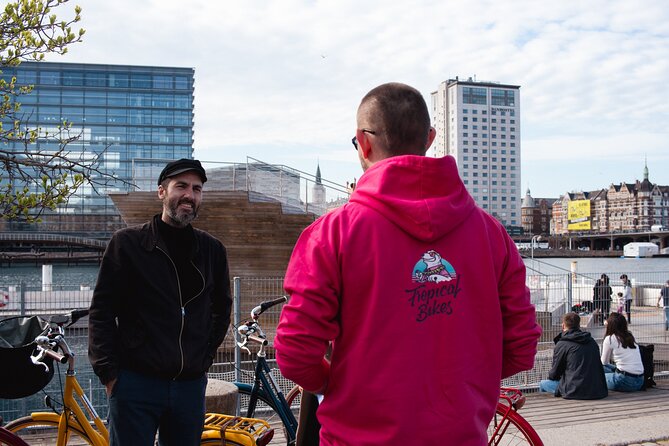
The tour includes bicycle use and says bike extras like phone holders and baskets can be booked for an extra fee (49 DKK per item). If you want less effort, there are special bike upgrades you can reserve in advance, including e-bike (249 DKK), e-cargo (649 DKK), and child-seat (119 DKK). There are also cargo and tandem options (449 DKK).
If you are not sure what you need, start with the included bike and add upgrades only if they solve a real comfort problem. A phone holder helps for navigation and photos. An e-bike helps if you are worried about energy, not if you just want to go faster.
Also, toilets at the store can be a lifesaver early in the ride.
Pace, group size, and how to make the most of the shorter stops
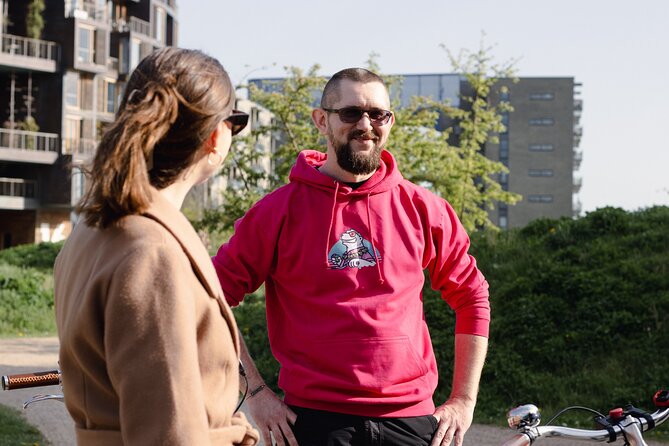
Expect quick visits, not long museum-style stays. Several stops are around 5 to 15 minutes, so you are there to observe and learn, not to linger.
With a maximum of 15 travelers, you usually get time for questions, but keep it focused. If you ask good, specific questions, the guide can connect the stop back to Copenhagen’s bigger sustainability and design themes.
On that note, one recurring detail from past departures is that the guide experience can make or break the vibe. Names that have shown up include Jörn, described as friendly and competent, and Julia, praised for being interesting and fachlich, meaning technically solid and satisfying. If you get a guide with that style, you will get more than facts. You get the city’s logic.
And about crowds: one sensible move is to dress for summer and keep your expectations flexible near the harbor first stretch. If the area feels packed, the route planning matters, and a good guide helps you adjust your viewing spots.
Value check: is $72.57 worth it for a 3-hour architecture ride?
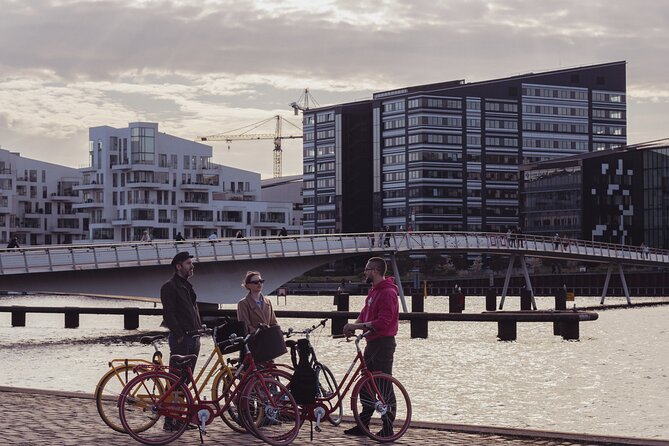
At $72.57 per person, you are paying for more than a bike rental. You are paying for:
- A local guide to explain what you are seeing and why it matters
- Efficient coverage of multiple Copenhagen sustainability and architecture themes
- A mostly ticket-free itinerary, so you are not shelling out extra entry fees at each stop
- The friction removal that comes from having a planned cycling route rather than figuring it out yourself
If you try to do this on your own, you would still need to get bike access, navigate routes safely, and spend extra time piecing together explanations for each building. The tour is value-strong for people who want direction.
This is not the cheapest option in Copenhagen, but it is also not a luxury price. It sits in the sweet spot for first-time visitors who care about how the city works.
Who this tour suits best (and who should choose something else)
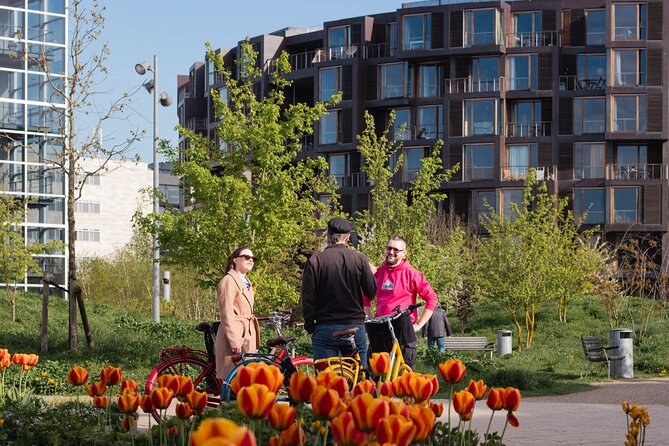
This is a great fit if you:
- Like cycling and want a confident route with a guide
- Care about sustainability as design, not only as recycling talk
- Prefer seeing many sites in a short time
- Want an eco-focused Copenhagen architecture overview that moves beyond the usual tourist pins
It might be less ideal if you:
- Want long stops and deep interior access, because visits are short by design
- Feel uncomfortable biking around a busy city, even with a guide
- Plan to arrive in heavy rain, since the tour requires good weather
Should you book this Copenhagen Architecture and Sustainability Tour with local guide?
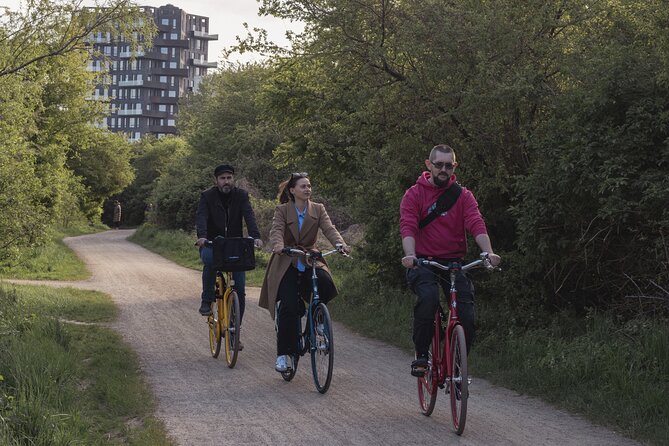
If your goal is to understand Copenhagen’s design thinking in one efficient ride, I would book it. The mix of housing design (Tietgen), civic culture (DR Koncerthuset), harbor transformation (Havnebadet), and pragmatic climate planning (Enghave Park) makes the sustainability theme feel real.
I would choose this especially if you value off-the-main-route stops, like Blox and the reuse stories, and you want to cover serious distance without doing the planning work. Just come ready for summer crowds near the harbor, and treat each stop like a quick lesson you can carry into the rest of your day.
If you want a guided, bike-powered architecture tour that actually explains Copenhagen’s choices, this one is a strong bet.
All Our Denmark Reviews

Copenhagen Architecture, A Few More Routes

Copenhagen, Reviewed
Other Danish days out we have written up


Copenhagen Architecture Tours, compared.
 ★ 4.4Danish Architecture Center Entrance TicketFrom $19169 reviews
 ★ 4.8Guided Architecture and Sustainability TourFrom $7073 reviews
 ★ 4.8Urban Design and Livability E-bike TourFrom $844 reviews
 ★ 4.8Harbor Architecture Private Walking TourFrom $3944 reviews
Browse the lists this tour appears in