
REVIEW · COPENHAGEN ARCHITECTURE TOURS
Copenhagen: Guided Architecture and Sustainability Tour
Copenhagen turns sustainability into architecture you can ride. This guided bike tour has you learning the story behind the city’s design choices, with local guides like Rene’, Jörn, and Josephine bringing the details to life in English and German. I especially like the way it blends modern architecture with human needs, so the buildings feel connected to real daily life, not just pretty photos.
I also like that you cycle past off-the-beaten-track areas where Copenhagen’s planning looks practical, not staged. A possible drawback: the focus leans heavily toward modern design and urban strategy, so if you want lots of deep historical architecture earlier than the 21st-century shift, you might leave wishing for more background.
In This Review
- Key things I’d highlight before you go
- Why Copenhagen’s sustainable architecture fits a bike tour
- Riding with Tropical Bikes: getting comfortable fast
- What to watch for
- From Blox and Lille Langebro into modern city thinking
- Havnebadet Islands Brygge and Karen Blixens Plads: seeing the harbor as a living idea
- A practical tip
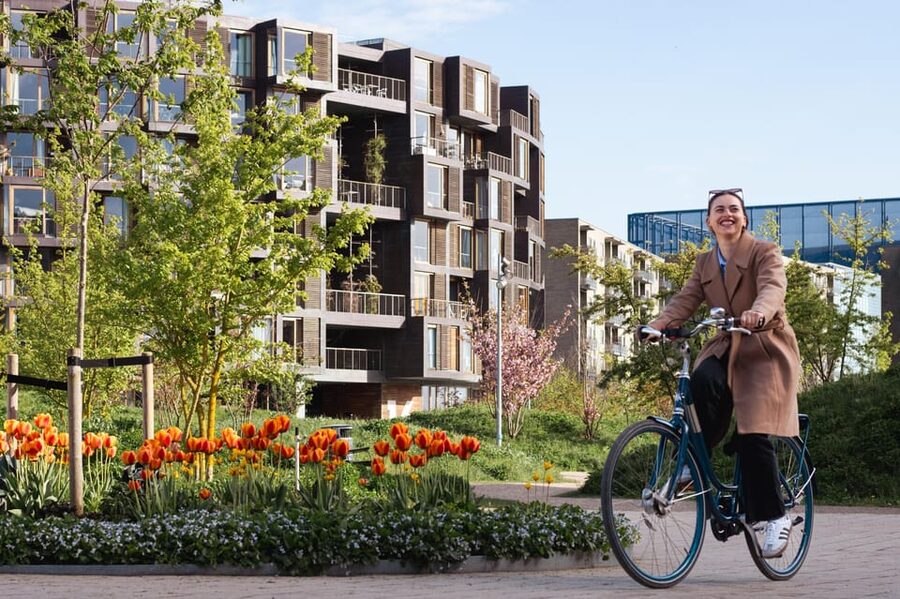
- Ørestad’s views plus Tietgen Residence Hall: when modern design means practical living
- Amager Fælled and E/F Gemini Residence: sustainability you can spot in housing form
- Cykelslangen and Kaktus Towers: the city’s energy built for movement
- Enghave Plads and Israels Plads: historic places turned greener
- A possible downside to plan around
- Price, time, and who this 3-hour ride is worth it for
- This is a great match if you
- This might not be ideal if you
- Should you book this Copenhagen architecture and sustainability bike tour
- FAQ
- How long is the Copenhagen architecture and sustainability bike tour?
- How far will I cycle during the tour?
- Where does the tour start?
- What’s included with the booking?
- What languages are the guides available in?
- Are there options for children?
- What if it rains?
- What extra gear can I buy on-site?
- Can I upgrade to a different type of bike?
- Is there free cancellation?
Key things I’d highlight before you go
- Local guide storytelling that connects buildings to how people live, with clear safety attention on the bike
- A bike-first way to move through Copenhagen, covering about 17 km without feeling rushed
- Harbor and former industrial area revitalization you can actually see in motion
- Ørestad and modern residence stops where sustainability is built into daily routines
- Signature cycling infrastructure moments, including Cykelslangen, plus lots of photo-friendly viewpoints
- Comfort extras like helmets, rain ponchos, luggage storage, and a lounge before and after (with toilets)
Why Copenhagen’s sustainable architecture fits a bike tour
Copenhagen has a talent for making big planning ideas feel normal. You see it in the way streets, housing, and public spaces line up with daily routines, not just grand design statements. On a bike, those connections click fast because you’re moving like the city moves.
What works for you here is the mix of perspectives. You get architecture and sustainability at the same time, which is the only way it truly makes sense. Denmark’s green reputation can sound like a slogan, but on this route you get concrete examples of how choices affect neighborhoods.
This tour is also a good match if you already like Copenhagen’s classic sights but want the city that happens between them. The ride takes you into areas where design is more about function and community than postcard landmarks.
More of Copenhagen, reviewed one tour at a time
- Copenhagen: Canal Cruise with Guide
★ 4.6 · 9,115 reviews - Copenhagen: Hop-On Hop-Off Bus Tour with Boat Tour Option
★ 3.9 · 4,122 reviews - Private Walking Grand Tour of Copenhagen
★ 5.0 · 3,953 reviews - From Copenhagen: Lund and Malmö 2-Country Tour
★ 4.7 · 2,772 reviews
Riding with Tropical Bikes: getting comfortable fast
The experience starts with equipment that helps you enjoy the city instead of wrestling it. You’ll get a bike in different sizes (48 cm, 51 cm, 56 cm frames), plus a children’s bike option (24-inch and 26-inch) if you reserve ahead. Helmets and luggage storage are included, and you can use a rain poncho if weather turns.
One smart detail is the lounge before and after the tour, including toilets. That matters more than it sounds, because it keeps the “start” from feeling chaotic, and it gives you a reset once you’re done.
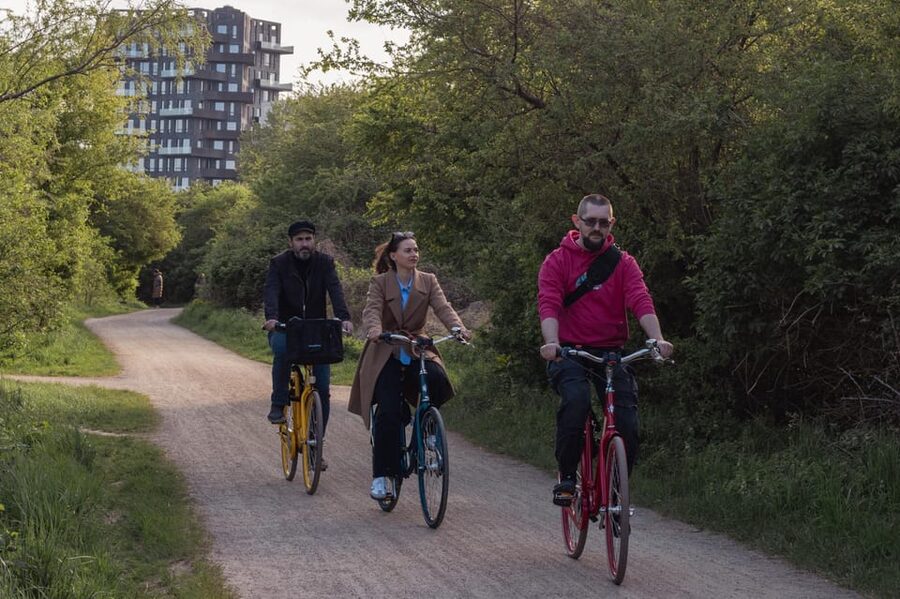
Bikes can also become part of the comfort story. In feedback, people repeatedly mention the bikes were a good fit and easy to ride, and that the guide checks safety while you cycle.
What to watch for
This is not for you if you can’t ride a bike confidently. Also plan for real cycling time: you’ll cover roughly 17 km in about 3 hours, so comfortable shoes and weather-appropriate clothing matter.
From Blox and Lille Langebro into modern city thinking
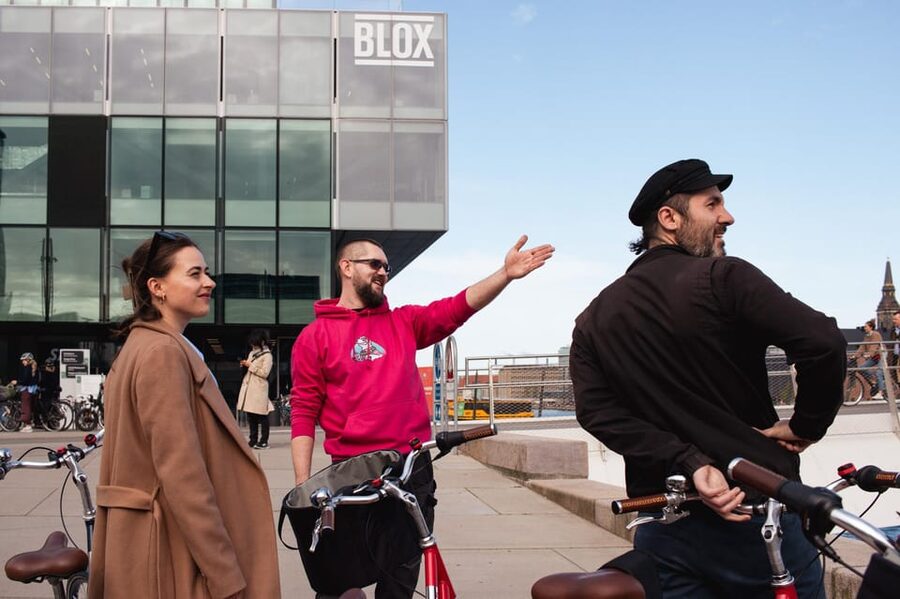
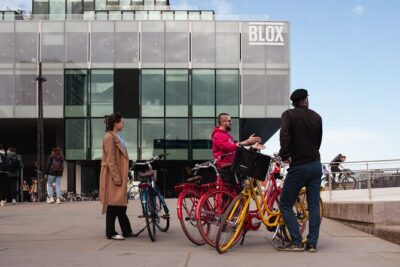
Your ride begins with stops that set the theme quickly: city design isn’t just about individual buildings. Blox is your first taste of modern Copenhagen, and it’s a useful opening because the tour frames architecture as a public service.
Then you roll toward Lille Langebro, which works like a pause point. You can take in how the city connects areas and how movement is built into the experience. When you’re on wheels, bridges and routes stop being background and become part of the design lesson.
This is also where the tour’s main promise becomes clear. You’re not just looking at shapes, you’re learning what planning decisions aim to do for daily life, including sustainability goals. Guides often explain the city’s choices in a way that feels personal, not textbook.
More Copenhagen buildings, harbourfront and new
- Copenhagen: Danish Architecture Center Entrance Ticket★ 4.4 · 169 reviews
- Copenhagen: Guided Architecture and Sustainability Tour★ 4.8 · 73 reviews
- Copenhagen Architecture and Sustainability Tour with local Guide★ 5.0 · 39 reviews
- Urban Design and Livability E-bike Tour★ 4.8 · 4 reviews
Havnebadet Islands Brygge and Karen Blixens Plads: seeing the harbor as a living idea
Copenhagen’s harbor isn’t only a view. It’s a setting that has been reshaped to serve people, and you’ll feel that theme as you pass through.
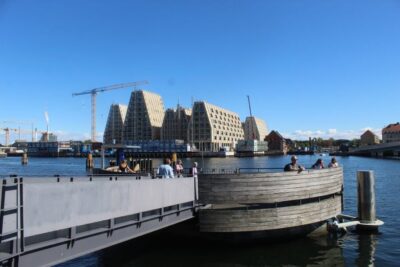
At Havnebadet Islands Brygge, the stop helps you understand how water-adjacent spaces have changed the city’s relationship to the shore. Instead of thinking of the harbor as something separate, you see it treated like part of everyday urban life.
Karen Blixens Plads adds another angle. It’s a moment to connect design with neighborhood energy, and it’s also a breathing spot during the ride. You’re cycling, but the guide stops you enough to absorb how the city’s layout supports people being outside.
A practical tip
If you want photos, aim to take them during guided stops rather than while cycling. The pacing is set up for learning, and guides do their best to keep the group safe and together.
Ørestad’s views plus Tietgen Residence Hall: when modern design means practical living
Ørestad shows up as a turning point, and the quick scenic portion on the way matters. You get a sense of how newer districts are planned differently, with geometry and density that look more intentional than organic.
Then you get to the Tietgen Residence Hall area. This is where the tour turns from architecture as appearance into architecture as lifestyle. People live here, study here, and move through it daily, so it’s an ideal place to talk about sustainable and human-focused city thinking without it feeling theoretical.
In guides’ explanations, you often hear the idea that sustainability is not only about technology. It’s also about how space supports living, commuting, and community. That theme shows up across multiple stops on this route, and Ørestad is one of the easiest places to understand it visually.
Amager Fælled and E/F Gemini Residence: sustainability you can spot in housing form
Amager Fælled is another step away from the tourist core. The value here is perspective. You see how Copenhagen handles the balance between built areas and more open, nature-adjacent space.
Then you move to E/F Gemini Residence. Residential architecture is where sustainability becomes personal. Heating, design choices, and the way buildings fit into their surroundings all affect how comfortable and functional life feels day to day.
What I like about these stops is that they don’t treat sustainability as a separate topic. It’s woven into the city pattern. When you’re riding between them, the city feels like one connected system rather than a list of impressive points.
If you’re the kind of visitor who likes to understand how a city actually works, these housing-focused moments are the payoff.
Cykelslangen and Kaktus Towers: the city’s energy built for movement
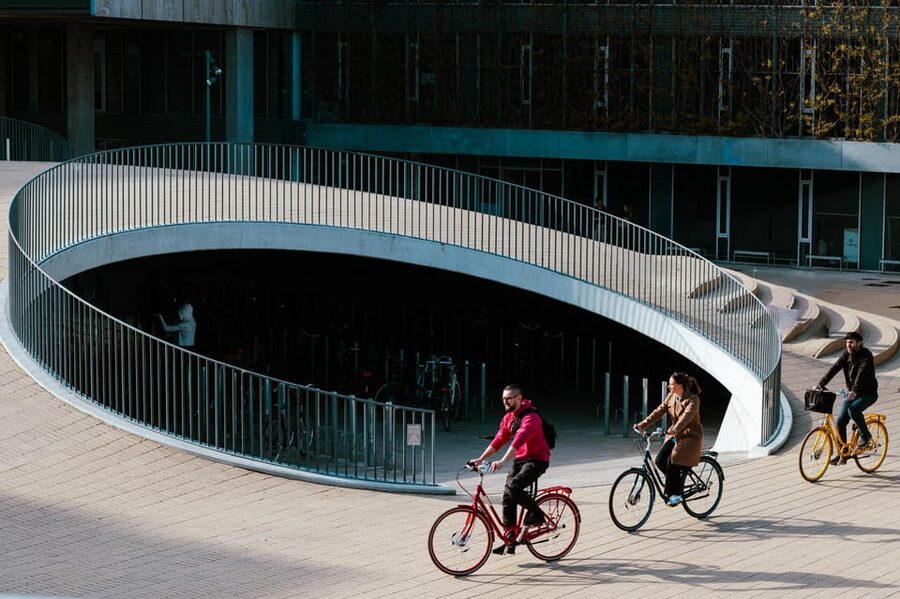
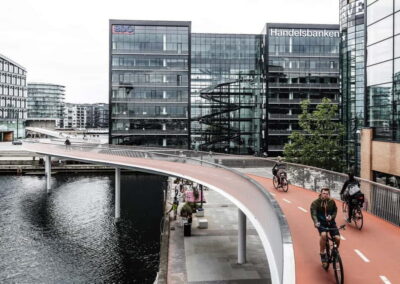
Cykelslangen is a standout stop, even if you’re not chasing architecture nerd cred. You get a scenic drive moment, and it’s the kind of route feature that makes cyclists feel like they belong. It also reinforces the tour’s core idea: Copenhagen’s sustainability shows up in how people are guided to move.
Then Kaktus Towers brings the focus back to architecture. Tower design sounds simple until you connect it to urban planning. On this tour, you get explanations tied to how the district works, not just what the buildings look like.
This is also a good section for anyone who loves design but worries it will become dry. In feedback, guides are praised for making the stories feel friendly and informative, with enough humor to keep the ride light while still focused.
Enghave Plads and Israels Plads: historic places turned greener
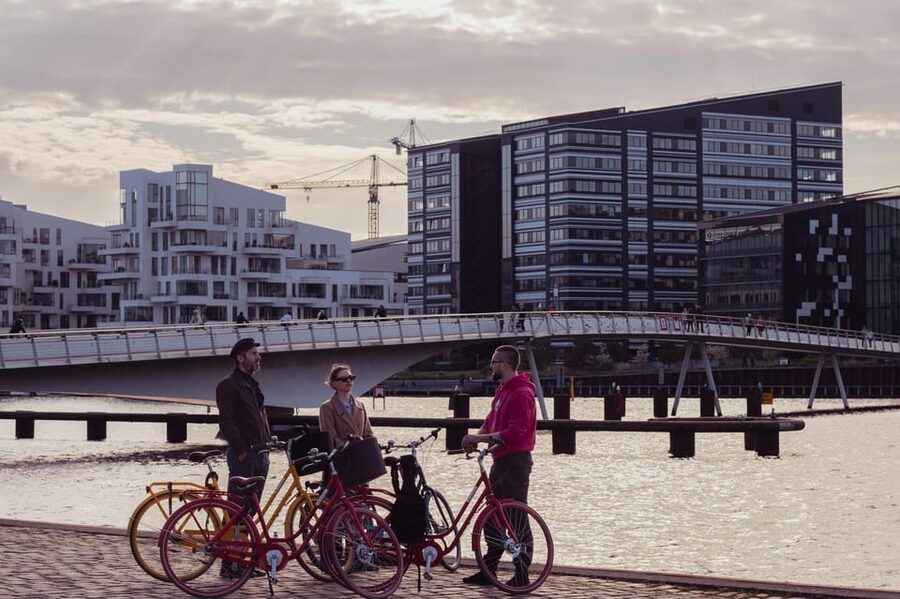
The route finishes with a strong theme: transformation. You get a stop at Enghave Plads, then you roll into Israels Plads.
Israels Plads is where the tour ties sustainability to the idea of honoring history while changing how space is used. Copenhagen has examples of former industrial or older areas evolving into community-oriented spots, and the tour frames this as part of the city’s wider planning logic. Kødbyen is one such example referenced in the tour’s overall approach, and you’ll come away with a clearer picture of the pattern the city follows.
These final stops are also a good reality check. It’s easy to admire brand-new design in pictures. It’s harder, and more interesting, to see how older sites can be repurposed with environmental consciousness and city living in mind.
A possible downside to plan around
One piece of feedback flagged group management issues, where a few people got separated. That’s the one thing you should take seriously. If you’re traveling with friends or you want to keep a steady pace, stay close to the guide at every stop so the group stays together.
Price, time, and who this 3-hour ride is worth it for
At $70 per person for a 3-hour guided bike tour, the value comes from what’s included. You’re not paying extra just to get a functioning bike setup. Bikes in multiple sizes, helmets, rain ponchos, luggage storage, and a pre and post tour lounge are all part of the package.
You’re also buying expertise. The guide is the difference between seeing architecture and understanding architecture. In multiple ratings, guides are described as friendly, competent, and safe-focused, and the route is praised for showing Copenhagen beyond the obvious tourist loops.
In terms of time and effort, you’ll cycle about 17 km. That’s doable for most people who can ride a bike comfortably, but it’s not a casual stroll. If you’re likely to get tired, plan for the ride as your main activity for the half day.
This is a great match if you
- Want architecture and sustainability explained through real places, not only building photos
- Prefer covering ground by bike in a city that’s built for it
- Like urban design stories that connect to how citizens live and move
This might not be ideal if you
- Can’t ride a bike, or you expect lots of walking instead
- Want mostly older, far more historical architecture content, since the focus is modern design and urban strategy
- Prefer total freedom to set your own pace, because this tour is structured and guide-led
Should you book this Copenhagen architecture and sustainability bike tour
Book it if you want Copenhagen in motion and you like learning what design choices do for people. The biggest strength is the way the tour links sustainable city planning to places you can see and feel, especially in Ørestad, the harbor area, and the residential architecture stops.
I’d still keep one expectation in check: it’s not a deep history lecture. It’s a modern-focused architecture tour built around how Copenhagen became the city it is through planning decisions. If that matches your style, you’ll get a lot from the 3 hours.
If you’re curious about the bike-friendly side of the city, and you want a local guide to point out what matters, this is a strong pick at the price. Add in the included helmet, poncho, storage, and the lounge with toilets, and it becomes an easy decision for a half day in Copenhagen.
FAQ
How long is the Copenhagen architecture and sustainability bike tour?
The tour lasts 3 hours.
How far will I cycle during the tour?
You will cycle a total of roughly 17 km.
Where does the tour start?
The meeting point can vary depending on the option booked. Starting location options include Vester Voldgade 2A at Tropical Bikes, Blox, and Lille Langebro.
What’s included with the booking?
The tour includes a local guide, bikes in different sizes, helmet, rain poncho, luggage storage, and a comfy lounge before and after the tour with toilets.
What languages are the guides available in?
Guided tours are available in English and German.
Are there options for children?
Yes. A children’s bike is available with 24-inch and 26-inch frames, but you need to reserve the bike beforehand.
What if it rains?
The tour starts in any weather, and you’ll receive a rain poncho.
What extra gear can I buy on-site?
You can purchase baskets and phone holders on-site for 49 DKK each.
Can I upgrade to a different type of bike?
Special bike upgrades are available for an additional fee, including cargo/tandem (449 DKK), e-bike (249 DKK), e-cargo (649 DKK), and a child-seat (119 DKK). You need to reserve in advance.
Is there free cancellation?
Yes. You can cancel up to 24 hours in advance for a full refund.
All Our Denmark Reviews



Copenhagen Architecture, A Few More Routes



Copenhagen, Reviewed
Other Danish days out we have written up


Copenhagen Architecture Tours, compared.
 ★ 4.4Danish Architecture Center Entrance TicketFrom $19169 reviews
 ★ 5.0Copenhagen Architecture and Sustainability Tour with local GuideFrom $7239 reviews
 ★ 4.8Urban Design and Livability E-bike TourFrom $844 reviews
 ★ 4.8Harbor Architecture Private Walking TourFrom $3944 reviews
Browse the lists this tour appears in